

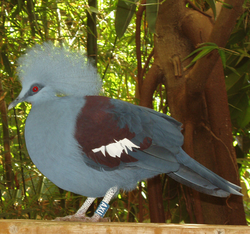
The western crowned pigeon, also known as the common crowned pigeon or blue crowned pigeon, is a large, blue-grey pigeon with blue lacy crests over the head and dark blue mask feathers around its eyes. Both sexes are almost similar but males are often larger than females. It is on average 70 cm (28 in) long and weighs 2.1 kg (4.6 lbs).
Region
New Guinea (West Papua)
Typical Environment
Occupies primary and well-regenerated secondary lowland rainforests, especially on alluvial plains and along river systems. Frequently uses swamp forest, sago palm stands, and seasonally flooded areas with dense understory. Forages on the forest floor in shaded interiors and along quiet forest tracks, moving to trees to roost and nest. Tolerates light logging but declines with heavy disturbance and intense hunting pressure.
Altitude Range
Sea level to 500 m
Climate Zone
Tropical
Ease of Keeping
Beginner friendly: 2/5
One of the world's largest pigeons, the western crowned pigeon is notable for its intricate, lacy blue crest and striking red eyes. It forages mostly on the forest floor but roosts and nests in trees, typically laying a single egg. Heavily hunted for meat and trapped for the pet trade, it has declined in many accessible areas. It can be confused with the Victoria crowned pigeon but lacks the prominent white wing bar of that species.




Temperament
wary but relatively calm in undisturbed forest
Flight Pattern
short rapid wingbeats with explosive takeoffs
Social Behavior
Often seen in pairs or small family groups, sometimes loosely associating with other ground-foraging pigeons. Monogamous pairs build a simple twig platform nest in trees and typically lay a single egg. Both sexes share incubation and chick-rearing duties. Displays include deep bowing and crest-fanning during courtship.
Migratory Pattern
Resident
Song Description
Produces low, resonant booming hoots that carry through the forest understory. Also gives soft grunts and clapping wing sounds during alarmed flights. Vocalizations are usually delivered from a concealed perch.
Plumage
Overall blue-grey with a velvety, darker mask on the face and a deep maroon-wine breast. The hallmark feature is a delicate, lacy blue crest forming a broad crown. Feathers are smooth and satiny, with subtle darker scapulars and back.
Diet
Feeds mainly on fallen fruits and berries, particularly figs and drupes, supplemented with seeds and tender plant material. Will also take small invertebrates such as insects and worms, especially when feeding young. Gathers food by walking slowly and deliberately across the forest floor, picking items from leaf litter.
Preferred Environment
Prefers shaded forest interiors, edges of swamp forest, and riverine corridors where fruiting trees are abundant. Often forages near sago stands and along quiet trails or natural gaps where fruit drops are concentrated.


