

The western bluebird is a small North American thrush.
Region
Western North America
Typical Environment
Found from southern British Columbia and the western United States into central Mexico. Occupies open woodlands, oak savannas, pinyon-juniper and ponderosa pine forests, riparian corridors, and park-like suburban areas with scattered trees. Prefers habitats with natural cavities or nest boxes and nearby open ground for foraging. In winter, it often shifts to lower elevations and more open habitats with fruiting shrubs. Local movements respond to food availability and weather.
Altitude Range
Sea level to 3000 m
Climate Zone
Temperate
Ease of Keeping
Beginner friendly: 2/5
Western bluebirds are cavity nesters that readily use nest boxes, a key factor in their recovery in many areas. They often perch low and sally to the ground to catch insects, returning to the same perch repeatedly. Competition with invasive European Starlings and House Sparrows for nest cavities can limit breeding opportunities. Community nest-box programs have helped stabilize and increase local populations.


Nest in a nest box

Western Bluebird in backyard birdhouse
Western Bluebirds nesting in backyard birdhouse May 2023, Sunnyvale CA


Temperament
social and active
Flight Pattern
short rapid wingbeats with brief glides; frequent perch-to-ground sallies
Social Behavior
Often forms small flocks outside the breeding season and may roost communally in winter. Generally monogamous; pairs defend nesting territories centered on a cavity or nest box. Nests are in natural tree cavities, woodpecker holes, or nest boxes; two broods per season are common when conditions allow. In some populations, older offspring or unrelated helpers may assist at the nest.
Migratory Pattern
Partial migrant
Song Description
Soft, melodious warbles and whistles with a sweet, murmuring quality; phrases are short and repeated. Calls include a mellow chew or few note, often given in flight or when foraging.
Plumage
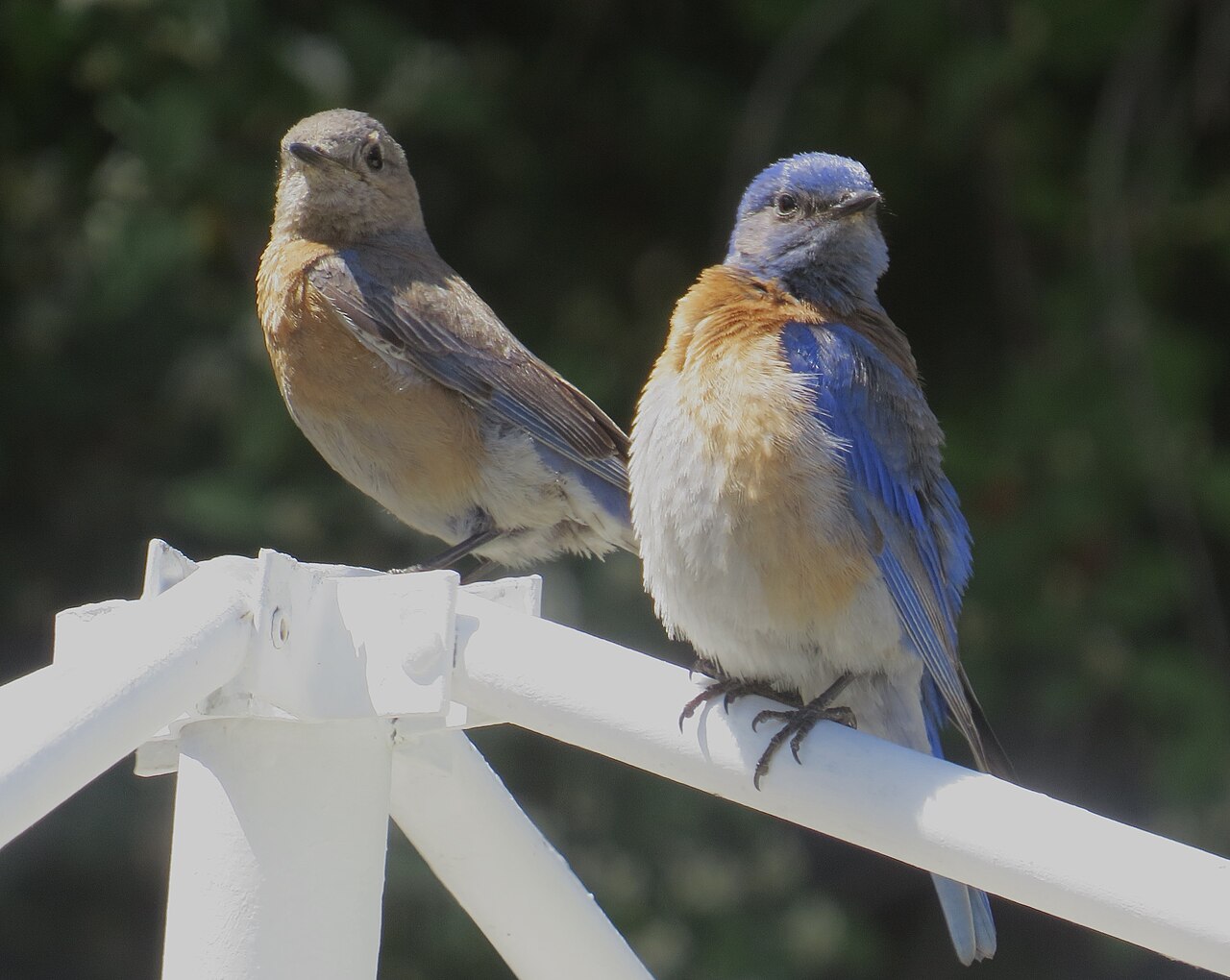
Males show bright blue upperparts with a rich rusty-orange breast and sides, and a grayish to whitish belly; females are gray-brown with bluish wings and tail and a softer orange wash on the breast. Feathers are smooth and unspotted, giving a clean, crisp appearance.
Diet
Primarily eats insects such as beetles, caterpillars, grasshoppers, and spiders during the breeding season. In fall and winter, it switches heavily to berries and small fruits, including mistletoe, juniper, toyon, and elderberry. Occasionally takes other small invertebrates and seeds.
Preferred Environment
Forages from low perches in open habitats, dropping to the ground to snatch prey or making short aerial sallies. Frequently feeds along woodland edges, meadows, pastures, and within open parks where grass and scattered shrubs provide hunting grounds.


