

The western barn owl is a species of barn owl native to Europe, southwestern Asia, and Africa. It was formerly considered a subspecies group together with barn owls native to other parts of the world, but this classification was found to be paraphyletic with respect to some other members of the genus.
Region
Europe, North Africa and Southwest Asia
Typical Environment
Found across much of Europe, North Africa, and into the Middle East, favoring open landscapes. It frequents farmland, grasslands, marsh edges, and semi-arid scrub, often near human structures such as barns, churches, and ruins for roosting and nesting. The species uses cavities in trees, cliffs, and buildings, readily adopting nest boxes. It avoids dense forests and high mountains with persistent snow cover. Local abundance often tracks rodent availability.
Altitude Range
0–2500 m
Climate Zone
Temperate
Ease of Keeping
Beginner friendly: 2/5
The Western Barn Owl is famed for its heart-shaped facial disk and exceptionally silent flight, aided by specialized feather structure. It hunts mainly by sound, using asymmetrical ears to pinpoint prey in complete darkness. Farmers often install nest boxes because the species provides natural rodent control. It typically remains near its territory year-round, though juveniles may disperse widely.


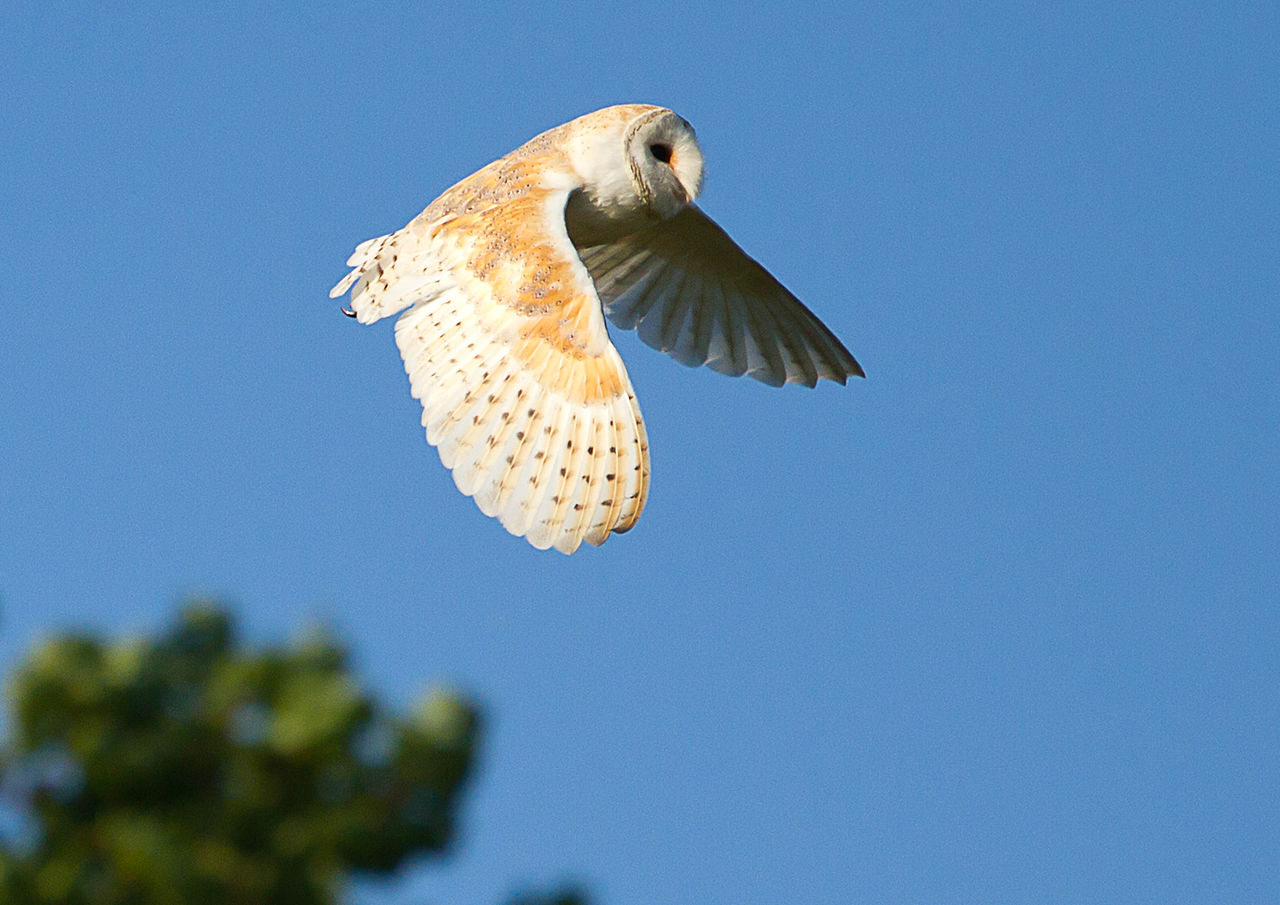
Barn owl in flight

In southwest Scotland

In the Netherlands

In Namibia

In Madagascar

Skull, showing the beak

Egg, Collection Museum Wiesbaden, Germany

An eulenloch ("owl-hole") in northern Germany lets barn owls access the attic for nesting

Landing on a handler's gloved hand. Captive birds often live longer than wild ones.

Barn owl on Lithuanian silver coin of 5 litas (2002)
Temperament
solitary and territorial
Flight Pattern
buoyant, silent flier
Social Behavior
Typically forms long-term monogamous pairs and defends a nesting territory. Nests in cavities or buildings, lining sites with pellets rather than fresh vegetation. Breeding timing can be flexible and may track rodent population booms. Roosts by day and becomes active near dusk.
Migratory Pattern
Resident
Song Description
Vocalizations are harsh, drawn-out screeches rather than musical songs. Also produces hisses, snores, and clicks at the nest. Young beg with rasping calls.
Plumage
Smooth, finely speckled upperparts in buff and grey with pale, unbarred underparts. The facial disk is clean white and heart-shaped, bordered by buff. Flight feathers are adapted for silent flight with soft edges. Upperparts often show delicate grey mottling and small black-and-white speckles.
Diet
Feeds mainly on small mammals, especially voles, mice, and shrews. Will take small birds, amphibians, and large insects when available. Swallows prey whole and later regurgitates indigestible material as pellets. Hunting success is aided by acute hearing and low-noise flight.
Preferred Environment
Hunts over open fields, rough grassland, hedgerows, and marsh margins, often quartering low over the ground. Frequently uses fence posts or low perches to scan for prey and may hover briefly before dropping onto targets.


