

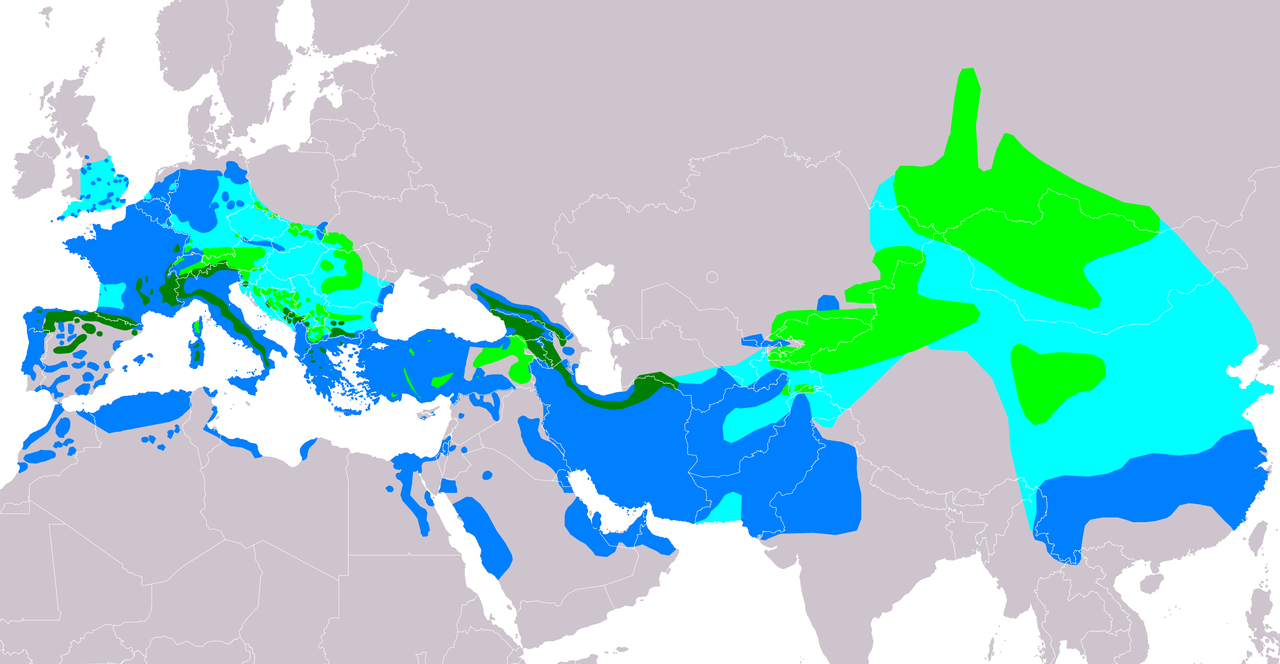
The water pipit is a small passerine bird which breeds in the mountains of Southern Europe and the Palearctic eastwards to China. It is a short-distance migrant; many birds move to lower altitudes or wet open lowlands in winter.
Region
Southern Europe and Central Asia
Typical Environment
Breeds in the mountains of southern and central Europe east through the Caucasus and Central Asian ranges to western China. Prefers alpine and subalpine meadows with short grass, damp hollows, and stream edges above or near the treeline. In winter it descends to lowland wetlands, flooded fields, riverbanks, estuaries, and sewage treatment lagoons. Uses open habitats with sparse vegetation and muddy margins for foraging. Outside the breeding season it may occur in coastal areas and large river valleys.
Altitude Range
Sea level to 3500 m
Climate Zone
Highland
Ease of Keeping
Beginner friendly: 1/5
The water pipit breeds on alpine and subalpine meadows and moves to lower, wetter lowlands in winter. In breeding plumage, males show a grey head and pinkish-washed underparts, while non-breeding birds look browner and more streaked. It often performs buoyant song-flights over mountain grasslands and frequently wags its tail while foraging.


Wintering Anthus spinoletta blakistoni at Tal Chhapar Sanctuary

Conspicuous head markings

In typical breeding habitat

Eggs in the Muséum de Toulouse

Glacier fleas are a prey item found on snow fields
Temperament
wary and unobtrusive
Flight Pattern
short rapid wingbeats with undulating, bounding flight
Social Behavior
Typically breeds in dispersed pairs on mountain meadows, nesting on or near the ground concealed in grass tussocks. Clutch size is usually 4–6, with both parents feeding the young. Outside the breeding season it forms loose flocks, often with other pipits, in open wet habitats.
Migratory Pattern
Seasonal migrant
Song Description
Song is a bright, twittering series of notes often delivered during a buoyant song-flight. Calls are thin, high ‘tseep’ or ‘sist’ notes, given in flight and while foraging.
Plumage
Non-breeding birds show grey-brown, finely streaked upperparts with pale, lightly streaked underparts. In breeding plumage, the head and upper breast turn greyer with a pinkish to rosy wash on the underparts and reduced streaking.
Diet
Feeds mainly on small invertebrates such as insects, larvae, spiders, and small worms. During winter and poor weather it may supplement its diet with seeds and other plant material. It picks prey from the ground and low vegetation, occasionally making short sallies to catch flying insects.
Preferred Environment
Forages on short turf, muddy margins, and shallow puddles in alpine meadows during breeding. In winter it favors wet grasslands, river edges, flooded fields, and sewage farms where invertebrates are abundant.


