
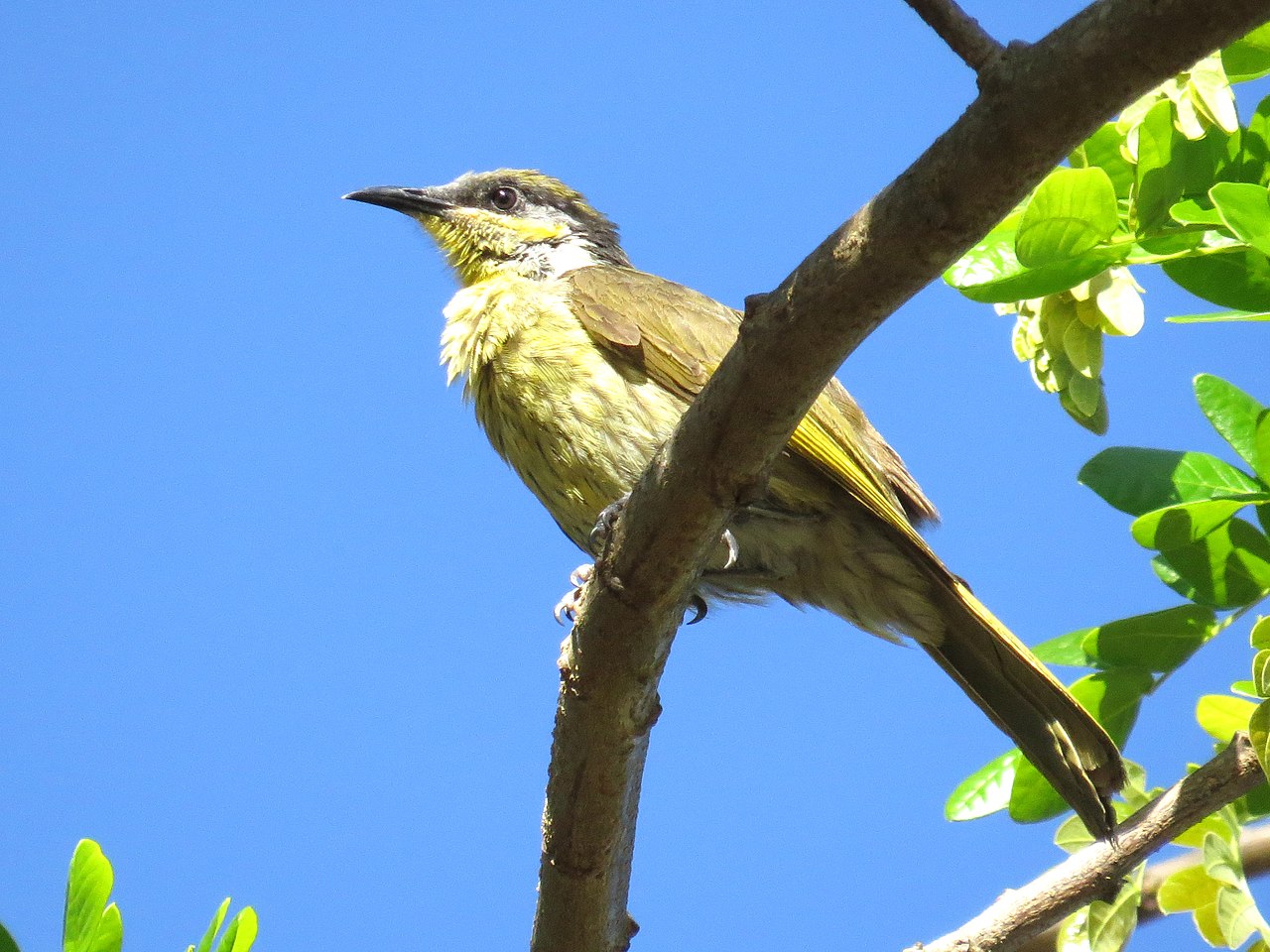
The varied honeyeater is a species of bird in the family Meliphagidae. It is found in coastal areas of New Guinea and eastern Cape York Peninsula in Queensland, Australia. Its natural habitat is subtropical or tropical mangrove forests.
Region
New Guinea and northeastern Australia
Typical Environment
Found along the coasts of New Guinea (including Papua New Guinea and West Papua) and the eastern Cape York Peninsula in Queensland, Australia. It is most commonly associated with mangrove forests and tidal creeks but also uses adjacent coastal scrub and paperbark (Melaleuca) fringes. Birds occasionally move into nearby woodlands and beach ridge thickets when nectar is abundant. It remains close to shorelines and estuaries throughout the year.
Altitude Range
Sea level to 200 m
Climate Zone
Tropical
Ease of Keeping
Beginner friendly: 2/5
This honeyeater is strongly tied to coastal mangroves, where it follows flowering cycles for nectar. It often defends rich nectar sources vigorously from other birds and will supplement its diet with insects gleaned from foliage. Subspecies show subtle variation in streaking and tone across New Guinea and Cape York. Its presence is a good indicator of healthy mangrove ecosystems.


Temperament
active and territorial
Flight Pattern
short rapid wingbeats with direct, low coastal flights
Social Behavior
Usually seen singly, in pairs, or small family groups. Pairs defend flowering mangroves and rich nectar trees against other honeyeaters. The nest is a small, neat cup slung in a fork or suspended from fine branches, with breeding linked to peak flowering and wet-season conditions. Both parents participate in care.
Migratory Pattern
Resident
Song Description
Vocalizations are a mix of sharp chattering notes, scolding calls, and nasal, piping phrases. Song bouts are delivered from exposed perches in mangroves and may intensify around feeding territories.
Plumage
Olive-brown to grey-brown above with pale, heavily streaked underparts; feathering appears slightly shaggy around the throat. Plumage shows fine dark streaks on the breast and flanks with paler centers. Face features a pale cheek contrasted by darker lores and ear-coverts.
Diet
Primarily consumes nectar from mangrove blossoms such as Avicennia, Sonneratia, and Bruguiera. It also takes insects and other arthropods by gleaning from leaves and branches or by brief sallies. Small fruits and sugary exudates may be eaten when available. Its flexible diet allows it to persist through fluctuations in flower availability.
Preferred Environment
Forages in the mid to upper mangrove canopy and along flowering edges of tidal creeks. It also visits coastal paperbark stands and beach scrub adjacent to mangroves, especially when these are in bloom.


