
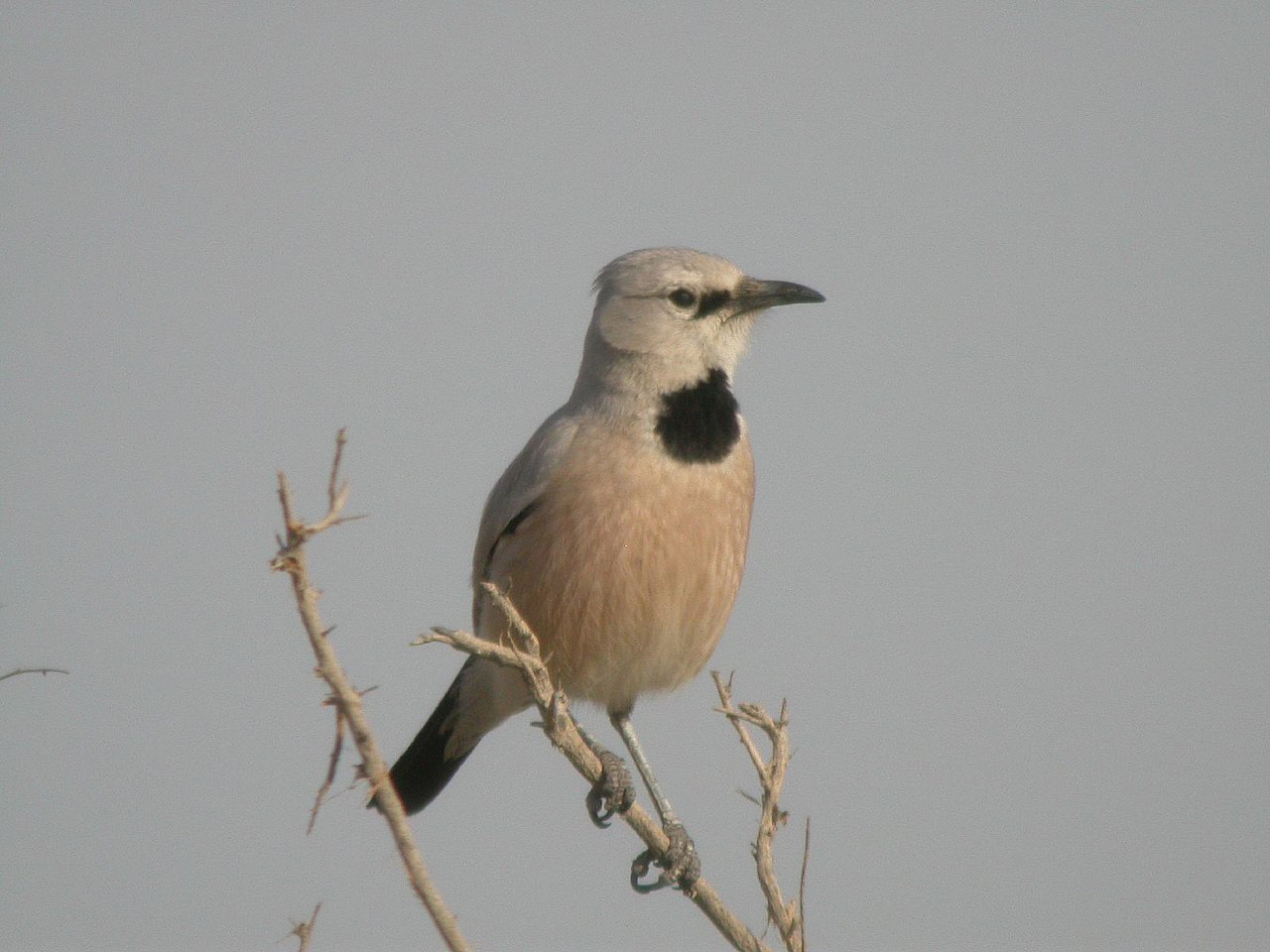
The Turkestan ground jay, grey ground jay or Pander's ground-jay is a species of bird in the crow and jay family, Corvidae. It is found in central Asia, particularly Kazakhstan, Turkmenistan, and Uzbekistan. More specifically, they tend to be found in Astragalus, Calligonum and southern Salsola vegetation zones. It is closely related to the Iranian ground jay. Its natural habitat is sandy desert with low shrub cover. It also forages around human settlements and roads.
Region
Central Asia
Typical Environment
Occurs in sandy and semi-desert habitats with sparse shrub cover, especially in areas dominated by Astragalus, Calligonum, Salsola, and saxaul. It favors dune margins, sandy plains, and patches of low shrubs interspersed with open ground. The species also uses road verges, dry wadis, and edges of small settlements where food is easier to find. Nests are typically placed low in shrubs or small desert trees.
Altitude Range
Sea level to 1500 m
Climate Zone
Arid
Ease of Keeping
Beginner friendly: 1/5
This desert-adapted corvid spends most of its time on the ground, sprinting between low shrubs and foraging in sandy soils. It often forages along tracks and near human settlements, taking advantage of disturbed ground. The species is closely related to the Iranian ground jay and shows similar behaviors, including cooperative nest defense. Its pale sandy plumage provides excellent camouflage in open desert landscapes.

Temperament
wary and active
Flight Pattern
short rapid wingbeats with low, bounding flights
Social Behavior
Typically seen singly or in pairs, sometimes in small family groups. Monogamous pairs nest in low shrubs, with both sexes participating in nest building and chick rearing. They defend territories and may mob intruders near the nest.
Migratory Pattern
Resident
Song Description
Vocalizations are harsh, chattering notes interspersed with whistles. Alarm calls are rasping and abrupt, while contact calls are softer and more nasal.
Plumage
Sandy-grey to pale fawn upperparts with paler underparts, contrasting blackish flight feathers and a prominent white wing patch visible in flight. Long tail with white outer feathers and darker central rectrices. Feathers are smooth and close-fitting, enhancing a sleek, ground-adapted look.
Diet
Feeds on a wide range of invertebrates such as beetles, ants, and grasshoppers, supplemented by seeds, berries, and occasional small vertebrates. It probes sand and leaf litter at the bases of shrubs and flips debris to uncover prey. Around roads and settlements it opportunistically takes spilled grain and other scraps.
Preferred Environment
Open sandy desert with scattered shrubs where it can run and forage on the ground. Frequently works along shrub edges, dune bases, and disturbed ground near tracks or habitations.


