The tundra swan is a small swan of the Holarctic. The two taxa within it are usually regarded as conspecific, but are also sometimes split into two species: Bewick's swan of the Palaearctic and the whistling swan proper of the Nearctic. Birds from eastern Russia are sometimes separated as the subspecies C. c. jankowskii, but this is not widely accepted as distinct, with most authors including them in C. c. bewickii.
Region
Holarctic
Typical Environment
Breeds on low-lying Arctic tundra of North America and Eurasia, favoring shallow lakes, ponds, river deltas, and marshy coastal plains. Winters along ice-free coasts, large inland lakes, estuaries, and flooded fields in temperate North America, Europe, and East Asia. Uses agricultural landscapes in winter, especially harvested grain fields. During migration, gathers at major wetlands, often forming large, noisy flocks.
Altitude Range
Sea level to 1000 m
Climate Zone
Polar
Ease of Keeping
Beginner friendly: 1/5
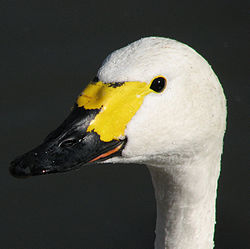
Tundra swans breed across the high Arctic and migrate long distances to temperate coasts and inland wetlands. Two forms are recognized: the Nearctic 'whistling swan' (C. c. columbianus) and the Palearctic 'Bewick’s swan' (C. c. bewickii), differing mainly in bill pattern and voice. They are often confused with trumpeter and whooper swans; the tundra swan typically shows a smaller size and a variable yellow patch at the bill base. Family groups remain together on migration and throughout winter.


Woodcut by Robert Elliot Bewick of the swan named in memory of his father by William Yarrell. 1847 edition of Thomas Bewick's A History of British Birds.
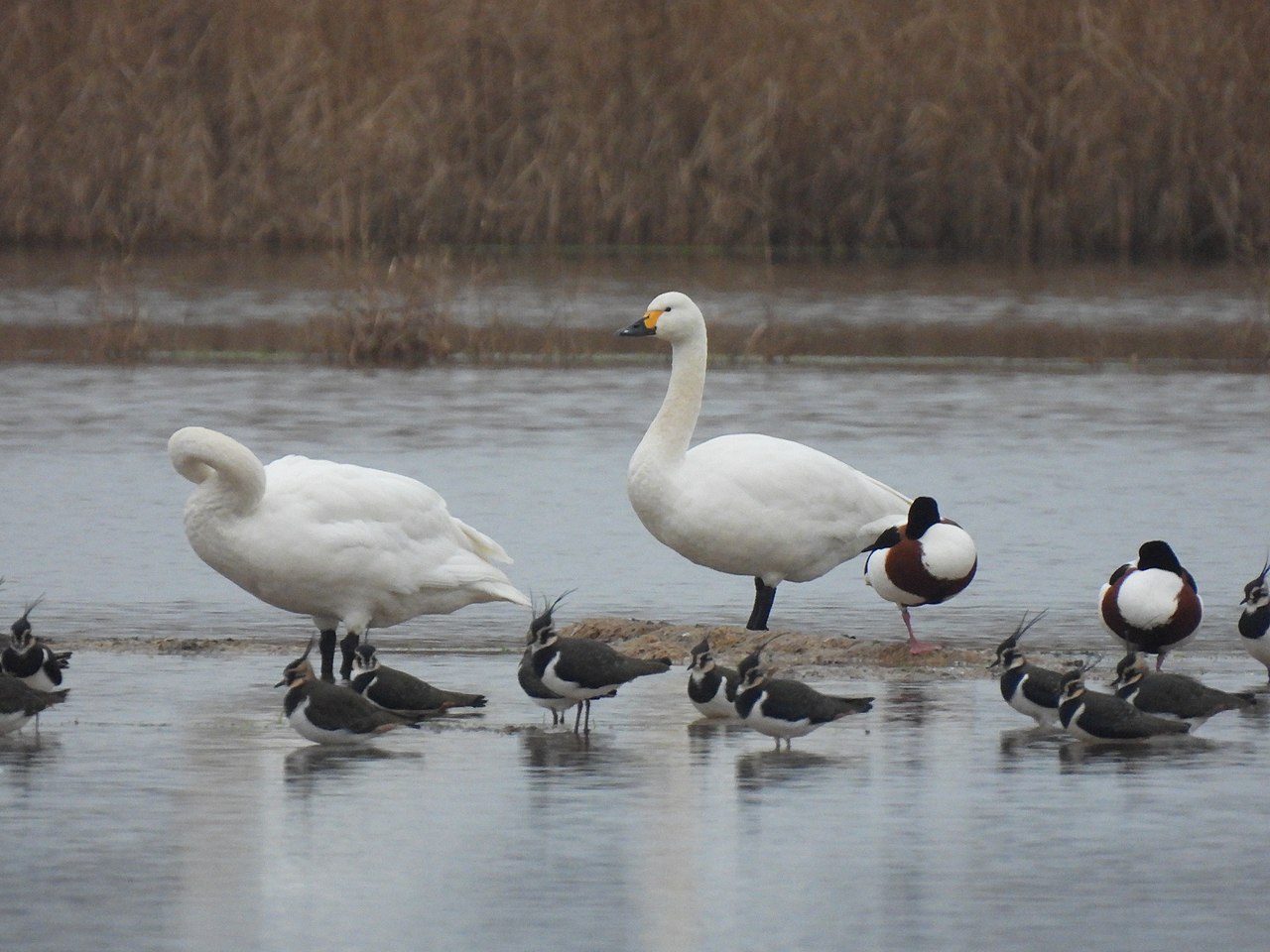
Bewick's swan (Cygnus bewickii) with northern lapwing and common shelduck, at Hickling Broad, Stalham, Norfolk UK

Whistling swan with yellow patch at base of bill
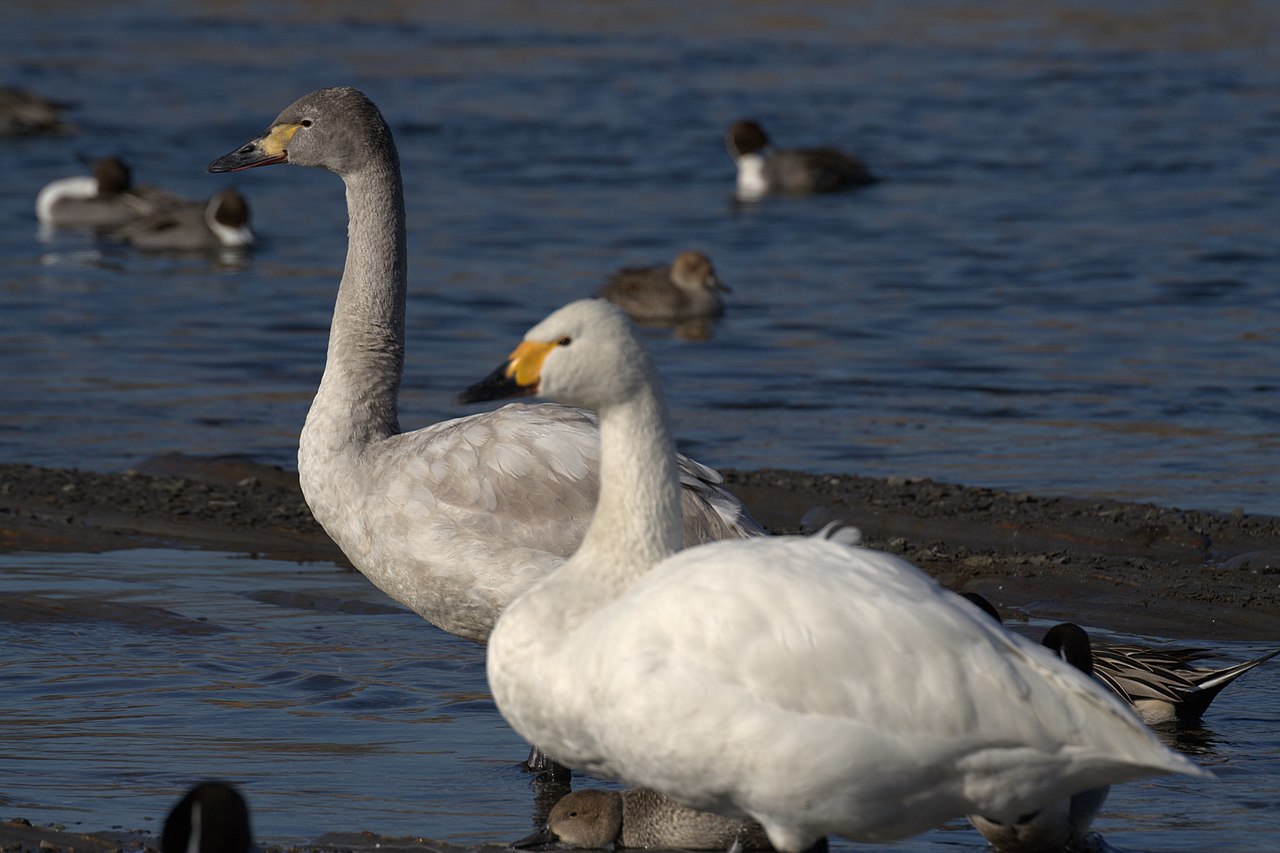
Adult (front) and half-year-old immature Bewick's swans (C. c. bewickii) wintering in Saitama (Japan)

Adult whistling swans (C. c. columbianus). Click to magnify for seeing variation in the yellow bill spots.

The egg
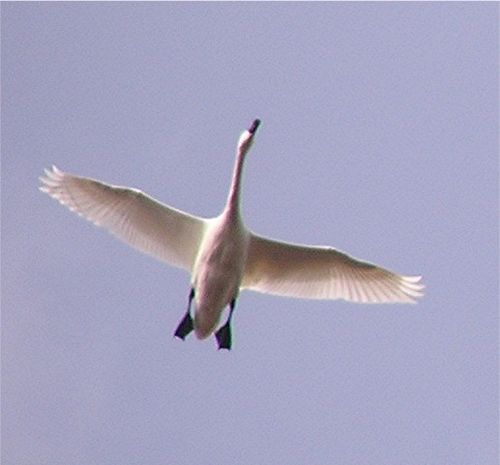
Adult whistling swan in flight. Seen from below, all "Arctic" swans look almost identical


Temperament
social and wary
Flight Pattern
powerful flier with steady wingbeats
Social Behavior
Strongly gregarious outside the breeding season, forming large flocks on staging and wintering grounds. Pairs are largely monogamous and nest in isolated territories on tundra wetlands, often on low islands or hummocks. Cygnets remain with parents through migration and into winter.
Migratory Pattern
Seasonal migrant
Song Description
Vocal, with clear, high-pitched honks and bugling calls that carry over long distances. Bewick’s gives more musical, fluting notes, while the whistling swan has sharper, higher calls. Flocks call frequently in flight and at roosts.
Plumage
Entirely white plumage with dense, sleek body feathers; juveniles are gray-brown, paling through the first winter.
Diet
Primarily feeds on aquatic vegetation, including leaves, stems, rhizomes, and tubers of pondweeds, sedges, and other marsh plants. In winter it often grazes on pasture and consumes waste grain, especially corn and barley. Occasionally takes small invertebrates incidentally while foraging. Forages by dabbling, up-ending, and neck-dipping in shallow water.
Preferred Environment
Shallow freshwater or brackish wetlands, estuaries, and quiet lake margins. In winter, also feeds in flooded fields and agricultural lands near large roost waters.