The trumpet manucode is a species of bird in the family Paradisaeidae.
Region
New Guinea and nearby islands
Typical Environment
Occurs widely across lowland and hill rainforests of New Guinea, including both Papua New Guinea and Indonesian Papua. Also found on adjacent islands such as the Aru Islands and parts of the Raja Ampat group. It inhabits primary and secondary evergreen forests, swamp and riverine forests, and forest edges. The species typically uses the mid- to upper canopy and may venture into disturbed habitats where fruiting trees are abundant.
Altitude Range
0–1450 m
Climate Zone
Tropical
Ease of Keeping
Beginner friendly: 1/5
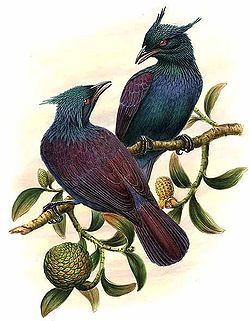
The trumpet manucode is a bird-of-paradise known for its loud, resonant, trumpet-like calls produced by an elongated, coiled trachea. Unlike many relatives, manucodes are largely monogamous and do not form leks. Both sexes look similar with glossy, iridescent plumage and a red iris. By consuming fruits and figs, they play an important role in seed dispersal in New Guinea’s forests.


Temperament
shy and territorial
Flight Pattern
strong flier with rapid, direct wingbeats through the canopy
Social Behavior
Usually seen singly, in pairs, or small family groups. Pairs maintain territories and are thought to be largely monogamous, unlike many other birds-of-paradise. Nests are placed in trees, and both parents may participate in caring for the young.
Migratory Pattern
Resident
Song Description
Vocalizations are loud, far-carrying, and trumpet-like, consisting of resonant fluty notes and booming calls. Sequences can include harsh squawks and ringing notes delivered from high perches.
Plumage
Sleek, glossy plumage with strong iridescence that shifts green, blue, and purple, especially on the head and neck; tail is long and graduated.
Diet
Primarily frugivorous, taking a wide variety of fruits and figs from canopy trees. Also consumes insects and other arthropods gleaned from foliage and bark. May occasionally take nectar or small invertebrates flushed by foraging. Its fruit-eating habits make it an effective seed disperser.
Preferred Environment
Feeds mainly in the mid- to upper canopy at fruiting trees, including forest edges and gaps. Will use secondary growth and gardens where native fruiting species persist. Often forages by moving methodically along branches and making short sallies.