
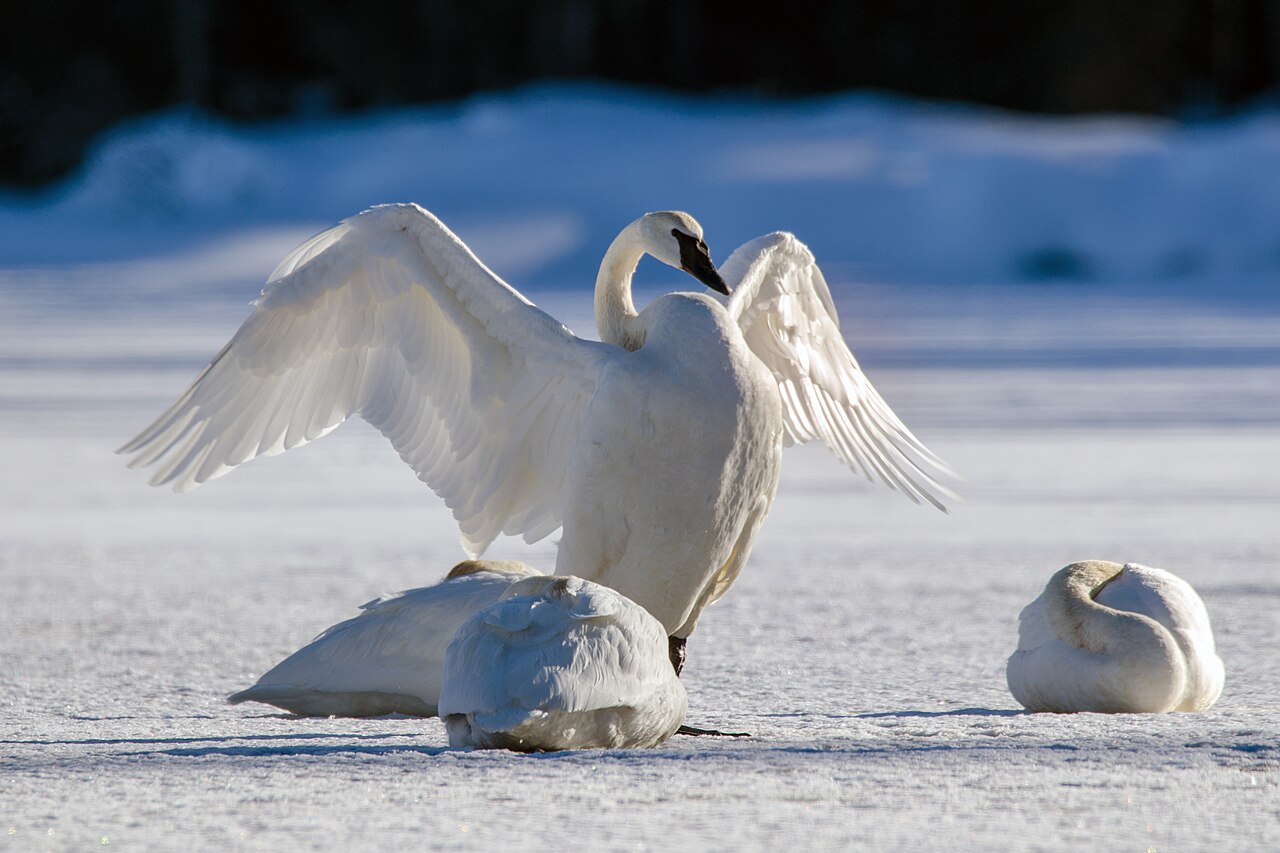
The trumpeter swan is a species of swan found in North America. The heaviest living bird native to North America, it is also the largest extant species of waterfowl, with a wingspan of 185 to 304.8 cm. It is the American counterpart and a close relative of the whooper swan of Eurasia, and even has been considered the same species by some authorities. By 1933, fewer than 70 wild individuals were known to exist; extinction seemed imminent until aerial surveys discovered a Pacific population of several thousand trumpeter swans around Alaska's Copper River. Careful reintroductions by wildlife agencies and the Trumpeter Swan Society gradually restored the North American wild population to over 46,000 birds by 2010.
Region
North America
Typical Environment
Breeds primarily in Alaska, western and central Canada, and parts of the northern United States, with reintroduced populations in the Great Lakes, Rockies, and the Interior West. Winters on large, ice-free lakes, estuaries, and slow rivers in the Pacific Northwest, interior western states, and parts of the Midwest. Prefers broad, shallow wetlands with abundant submerged and emergent aquatic vegetation. Uses protected refuges and agricultural landscapes in winter where open water and food are available.
Altitude Range
Sea level to 2500 m
Climate Zone
Temperate
Ease of Keeping
Beginner friendly: 1/5
The trumpeter swan is North America’s heaviest native bird and the largest living waterfowl. Its deep, resonant trumpet-like call carries over long distances and helps flocks stay coordinated. Once near extinction, intensive protection and reintroduction programs have restored populations across much of their former range.


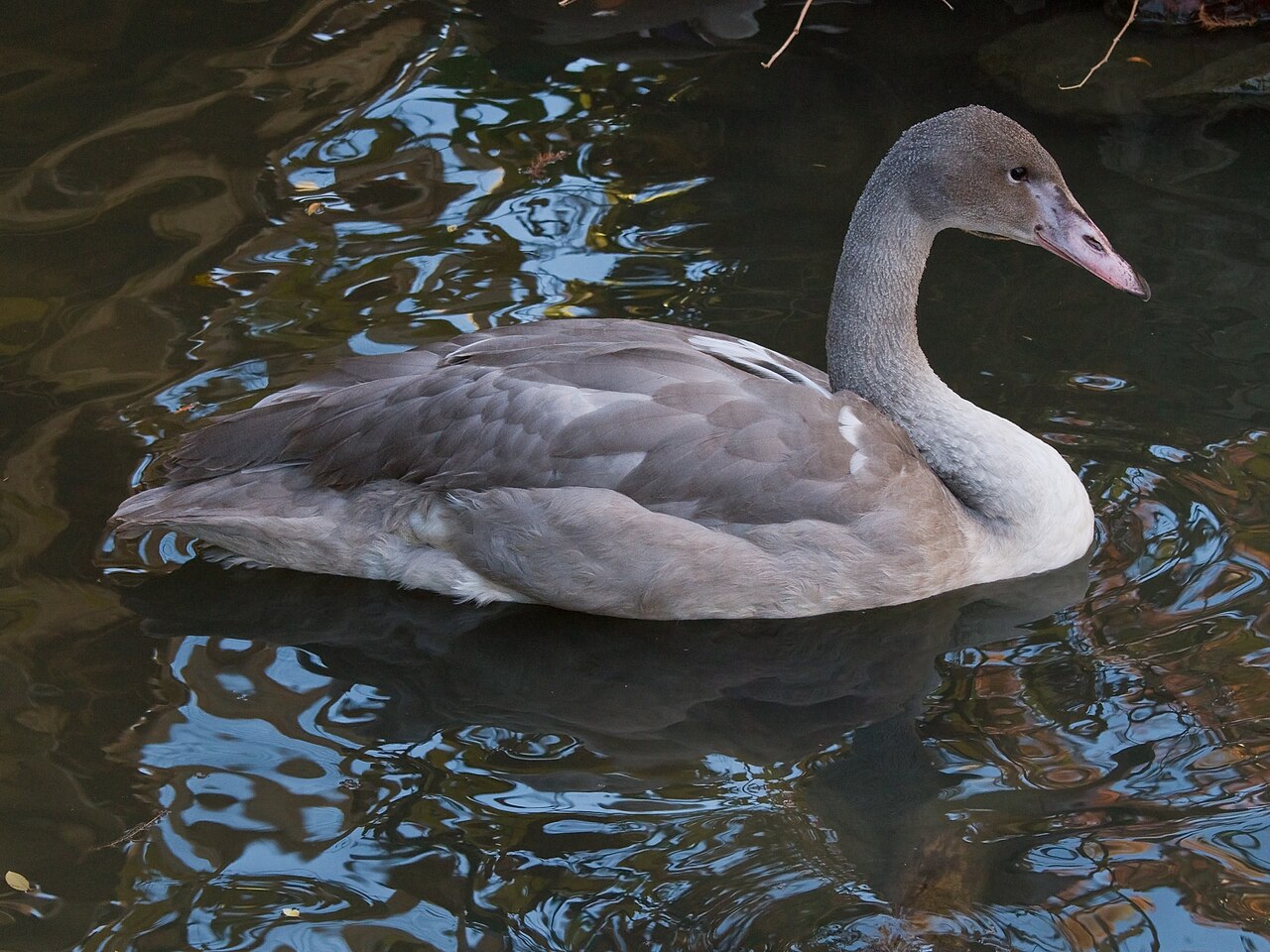
Juvenile at the Cincinnati Zoo
![Its black bill is useful in distinguishing the trumpeter swan from the introduced mute swan.[13]](https://upload.wikimedia.org/wikipedia/commons/thumb/5/5d/Cygnus_buccinator_-_close_up.jpg/1280px-Cygnus_buccinator_-_close_up.jpg)
Its black bill is useful in distinguishing the trumpeter swan from the introduced mute swan.[13]

Plate 406 of the Birds of America by John James Audubon, depicting the trumpeter swan

Approximate summer range of the three regional populations of trumpeter swans in North America

In winter, they may eat crop remnants in agricultural fields, but more commonly they feed while swimming

Trumpeter swan and a common raccoon (Procyon lotor). Healthy adults are largely invulnerable to predation, but chicks and eggs are targeted by raccoons.

Trumpeter swan pair in Riverlands Migratory Bird Sanctuary.

Trumpeter swan courtship in Seedskadee National Wildlife Refuge.

Trumpeter swan incubation.

Trumpeter swan brood

Three flying in Missouri

Wintering in British Columbia
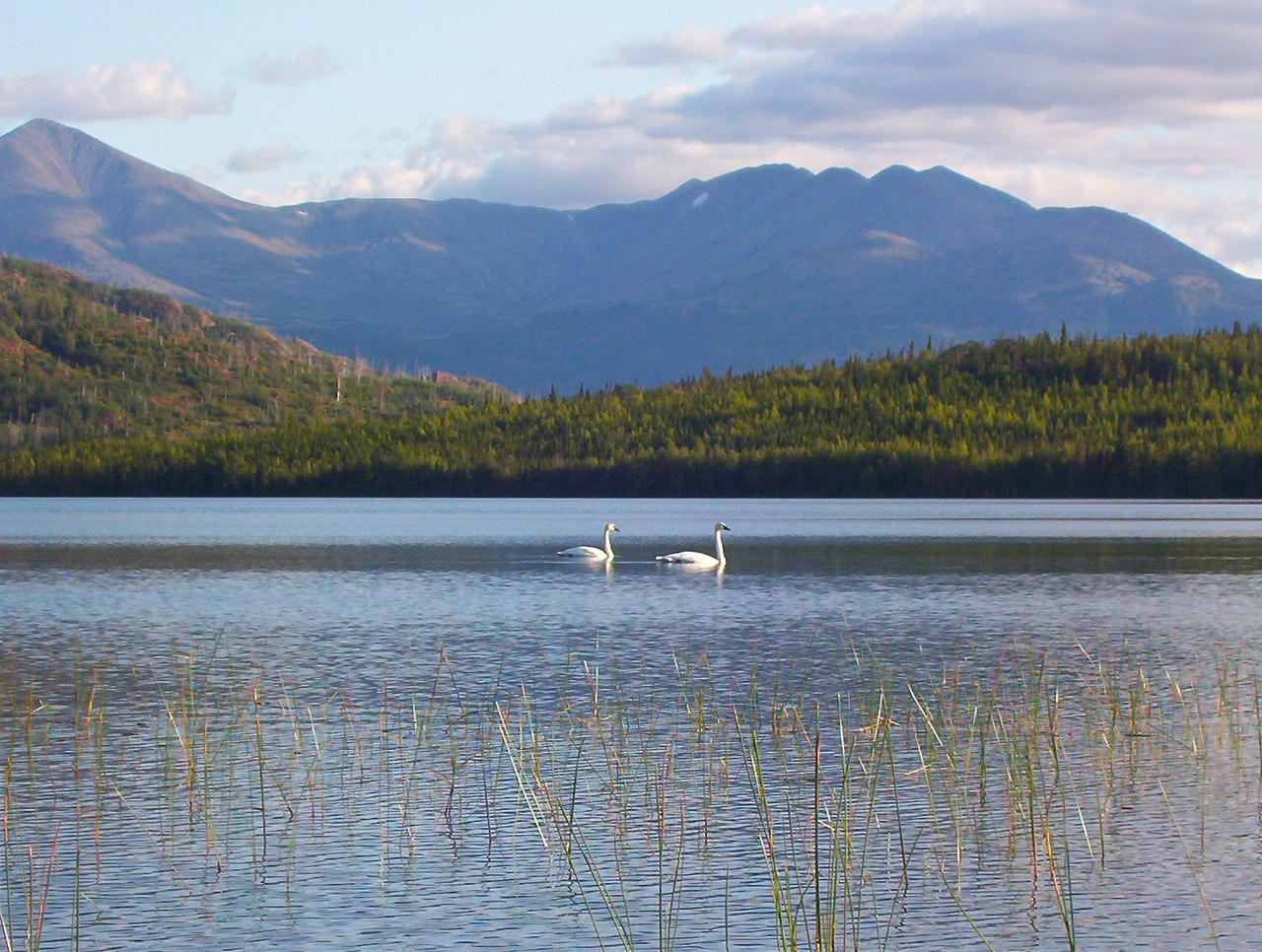
Mated pair on a lake, Kenai National Wildlife Refuge, Alaska

Adult and three juvenile trumpeter swans on the shore of Wood Lake, near Oyama, British Columbia
Temperament
social and alert
Flight Pattern
strong flier with powerful, steady wingbeats and long takeoffs
Social Behavior
Forms long-term pair bonds and maintains tight family groups with cygnets through their first year. Nests on mounded platforms of vegetation in shallow water, often on isolated wetlands. Outside breeding, gathers in small to large flocks on open water and feeding sites.
Migratory Pattern
Partial migrant
Song Description
Deep, resonant trumpet-like calls in rhythmic sequences used for contact and display. Wingbeats produce a distinctive whooshing sound in flight that can be heard at a distance.
Plumage
Adults are entirely white with dense, sleek plumage; juveniles (cygnets) are gray-brown until their second year.
Diet
Feeds mainly on aquatic vegetation, including pondweeds, waterweed, sedges, and the roots and tubers of submerged plants. Will graze on grasses and waste grain in agricultural fields during winter. Occasionally ingests small invertebrates incidentally while foraging.
Preferred Environment
Shallow lakes, marshes, and slow-moving rivers where they can up-end or reach vegetation with their long necks. In winter, frequents unfrozen ponds, estuaries, and adjacent fields for supplemental grazing.


