

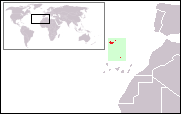
The trocaz pigeon, Madeira laurel pigeon or long-toed pigeon is a pigeon which is endemic to the island of Madeira, Portugal. It is a mainly grey bird with a pinkish breast; its silvery neck patch and lack of white wing markings distinguish it from its close relative and probable ancestor, the common wood pigeon. Its call is a characteristic six-note cooing, weaker and lower-pitched than that of the wood pigeon. Despite its bulky, long-tailed appearance, this pigeon has a fast, direct flight.
Region
Macaronesia (Madeira Archipelago)
Typical Environment
Primarily inhabits native evergreen laurel (laurisilva) forests on Madeira, especially in moist ravines and on steep, forested slopes. It also uses adjacent scrub, secondary growth, and occasionally orchards or cultivated valleys for feeding. During non-breeding periods it may descend to lower elevations to forage. Conservation of mature laurel forest is critical to its presence and density.
Altitude Range
100–1400 m
Climate Zone
Subtropical
Ease of Keeping
Beginner friendly: 1/5
Also called the Madeira laurel pigeon, it is confined to the island of Madeira and is a key seed disperser for the native laurel forest. Once heavily persecuted, it has rebounded thanks to legal protection and habitat conservation. Its six-note, low-pitched coo is a signature sound of Madeira’s laurisilva.


Trocaz Pigeon at Monte Palace Tropical Garden, Madeira on June 8, 2019.

Old illustration based on a specimen obtained by Mr Carruthers of Madeira in 1827

C L Bonaparte described the trocaz pigeon as Trocaza bouvryi in 1855
Temperament
shy and wary
Flight Pattern
fast, direct flight
Social Behavior
Usually seen singly or in pairs within forest, with small loose groups forming at rich food sources. Nests on trees within dense laurel forest, building a simple platform of twigs. Clutches are typically a single egg, and both parents share incubation and chick-rearing.
Migratory Pattern
Resident
Song Description
A soft, resonant, six-note cooing phrase, lower and weaker than the common wood pigeon's call. Notes are delivered in steady rhythm and carry through forested ravines.
Plumage
Mainly slate-grey with a pinkish-washed breast and subtle iridescence on the neck; plumage is smooth and uniform without wing bars.
Diet
Feeds mainly on fruits and berries of laurel forest trees such as Laurus, Persea, and Ocotea, and will also take Ilex and other native fruits. When fruit is scarce, it supplements with young leaves, buds, and occasionally agricultural produce. By swallowing fruits whole and later dispersing seeds, it plays an important ecological role in forest regeneration.
Preferred Environment
Forages in the canopy and mid-story of mature laurel forest and along forest edges. It may venture into adjacent farmland, orchards, and valleys, especially outside the breeding season.


