

The three-banded plover, or three-banded sandplover, is a small wader. This plover is resident and generally sedentary in much of East Africa, southern Africa and Madagascar. It occurs mainly on inland rivers, pools, lakes and pans, frequenting their exposed shores. This species is often seen as single individuals, but it will form small flocks. It hunts by sight for insects, worms and other invertebrates. Three-banded plovers have a sharp whistled weeet-weet call. Its larger and darker-plumaged sister species, Forbes's plover, replaces it in West Africa and in the moist tropics. The two species have largely allopatric breeding ranges. Both species present a distinctively elongated profile, due to their proportionally long tail and wings.
Region
Sub-Saharan Africa and Madagascar
Typical Environment
Occurs widely on inland freshwater bodies, including rivers, streams, lakes, reservoirs, and pans with exposed mud or sandy margins. It favors open shorelines, gravel bars, and islets with minimal vegetation. Also uses man-made water bodies such as farm dams and wastewater ponds when undisturbed. Rarely found on marine shores, preferring fresh to brackish habitats.
Altitude Range
Sea level to 2500 m
Climate Zone
Tropical
Ease of Keeping
Beginner friendly: 1/5
The three-banded plover is a small wader noted for its elongated profile, with relatively long wings and tail for a plover. It gives a sharp, whistled ‘weet-weet’ call and often forages alone or in pairs along exposed freshwater shorelines. It hunts by sight using a run-and-pause technique to pick small invertebrates from wet mud and sand. In West Africa, the similar Forbes’s plover replaces it, and birds on Madagascar are often treated as a closely related split.


Temperament
solitary and territorial
Flight Pattern
low, swift flight with rapid wingbeats
Social Behavior
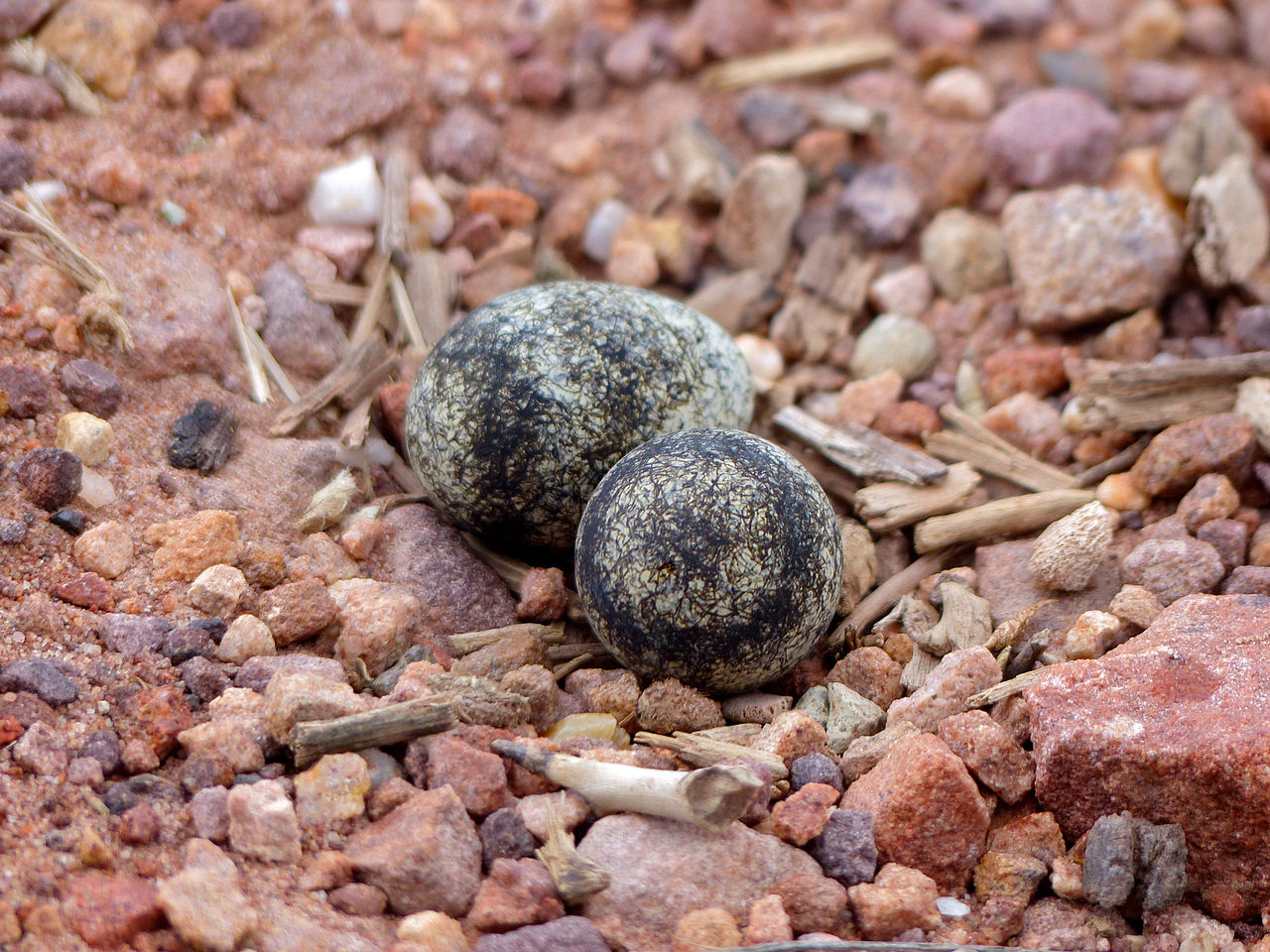
Often seen singly or in pairs, though small loose flocks may form outside the breeding season. Nests on the ground in a shallow scrape on gravel or sand near water, typically laying two eggs. Both sexes incubate and guard the precocial young, which can feed themselves soon after hatching.
Migratory Pattern
Resident
Song Description
Vocalizations are sharp, whistled notes, commonly rendered as ‘weet-weet’ or ‘pee-weep’. Calls are given in flight and when alarmed, carrying well over open water.
Plumage
Brownish-grey upperparts with clean white underparts and two crisp black breast bands separated by a white band. Head pattern shows strong black-and-white contrasts with a bold white supercilium. Feathers are sleek and smooth, aiding a neat, compact look.
Diet
Feeds mainly on aquatic and shoreline invertebrates, including insects, larvae, worms, small crustaceans, and mollusks. Uses a run-stop-peck method, picking prey from the surface or just below it. May employ subtle foot-trembling to stir prey in soft substrates.
Preferred Environment
Forages along exposed mudflats, sandy or gravelly banks, and shallow margins of inland waters. Often uses recently lowered waterlines where prey is concentrated, and will exploit man-made ponds if disturbance is low.


