

The stripe-throated hermit is a species of hummingbird from Central America and north-western South America. It is generally fairly common and considered Least Concern by BirdLife International.
Region
Central America and northwestern South America
Typical Environment
Occurs from southern Nicaragua and Costa Rica through Panama into western Colombia and northwestern Ecuador. It favors humid lowland and foothill forests, forest edges, and well-vegetated second growth. Often found along shaded streams, in heliconia thickets, and in overgrown plantations and gardens near forest. It generally keeps to the understory and midstory, moving rapidly between widely spaced nectar sources.
Altitude Range
0–1200 m
Climate Zone
Tropical
Ease of Keeping
Beginner friendly: 1/5
This small hermit hummingbird practices trapline foraging, visiting a repeating circuit of flowering plants for nectar. Its long, decurved bill is adapted to tubular flowers such as Heliconia and Costus, and it also takes tiny arthropods for protein. Males often sing from low perches and may gather in loose leks. As a frequent flower visitor, it is an important pollinator in humid tropical forests.


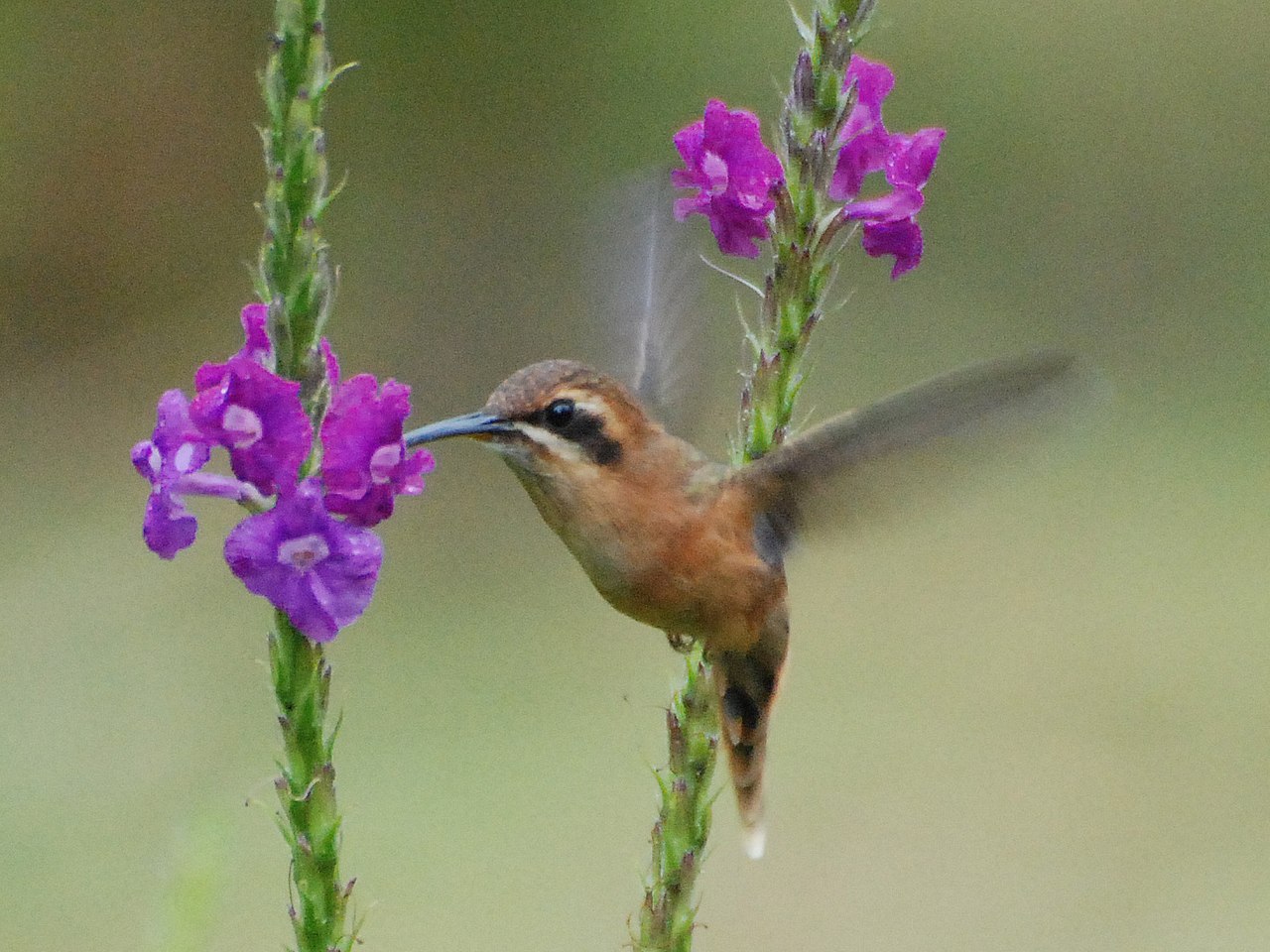
Phaethornis striigularis

Juvenile at Selva Verde Lodge
Temperament
solitary and territorial
Flight Pattern
short rapid wingbeats with agile hovering and brief darting flights
Social Behavior
Typically forages alone on a trapline, defending favored nectar sources in the understory. Males sing persistently from low, shaded perches and may participate in loose leks to attract females. The nest is a small conical cup suspended under broad leaves or palm fronds, often overhanging water.
Migratory Pattern
Resident
Song Description
Song is a thin, repetitive, high-pitched series of tsi or see notes delivered at regular intervals. Calls include sharp chips and buzzy twitters during chases around nectar sources.
Plumage
Dusky olive-brown upperparts with warmer rufous tones on the rump and undertail; underparts buffy with fine dark streaking concentrated on the throat. Tail is relatively long with narrow central feathers and pale or whitish tips on the outer rectrices. Typical hermit facial pattern with a bold pale supercilium and malar stripe separated by a dark mask.
Diet
Primarily consumes nectar from tubular flowers such as Heliconia, Costus, and other understory blooms. Supplements its diet with small arthropods gleaned from foliage or taken in brief aerial sallies, providing essential proteins. Follows a trapline route to efficiently exploit widely spaced floral resources and reduce competition.
Preferred Environment
Feeds in shaded forest understory, along streamside tangles, and in dense thickets with abundant flowering plants. Also visits edges, secondary growth, and forested gardens where suitable flowers are available.


