The standard-winged nightjar is a nocturnal bird in the nightjar family. Previously placed with the pennant-winged nightjar in their own genus, Macrodipteryx, it is native to Africa and displays extreme sexual dimorphism. During the breeding season, males will grow broad ornamental flight feathers longer than their body.
Region
Sahel and savanna belt of sub-Saharan Africa
Typical Environment
Occurs from West Africa east across the Sahel and Sudanian savannas to parts of East Africa. Prefers open dry savanna, lightly wooded grasslands, and scrub with patches of bare ground. Often found along tracks, airstrips, and recently burned areas where flying insects concentrate. Breeding is tied to rainy seasons, and birds may shift locally following insect flushes.
Altitude Range
0–1800 m
Climate Zone
Tropical
Ease of Keeping
Beginner friendly: 1/5
This nocturnal nightjar shows extreme sexual dimorphism: breeding males grow extraordinary rectangular 'standards' on the outer primaries that can exceed body length. It hawks insects on the wing with a wide gape and tactile bristles around the bill. By day it relies on cryptic plumage to roost motionless on the ground or low open soil. Nests are simple ground scrapes with highly camouflaged eggs.


Male standard-winged nightjar in flight displaying its ornamental feathers
Temperament
solitary and crepuscular
Flight Pattern
buoyant, moth-like flight with agile twists and short rapid wingbeats
Social Behavior
Usually roosts singly or in pairs on bare ground, relying on camouflage. Courtship involves aerial displays with raised standards and churring calls. Nests are unlined ground scrapes, typically with one or two eggs; both sexes participate in incubation and chick care.
Migratory Pattern
Seasonal migrant
Song Description
Produces a soft, repetitive churring and ticking series, often given at dusk and during display flights. Calls may include sharp chips and mellow whistles, carrying surprisingly far in still evening air.
Plumage
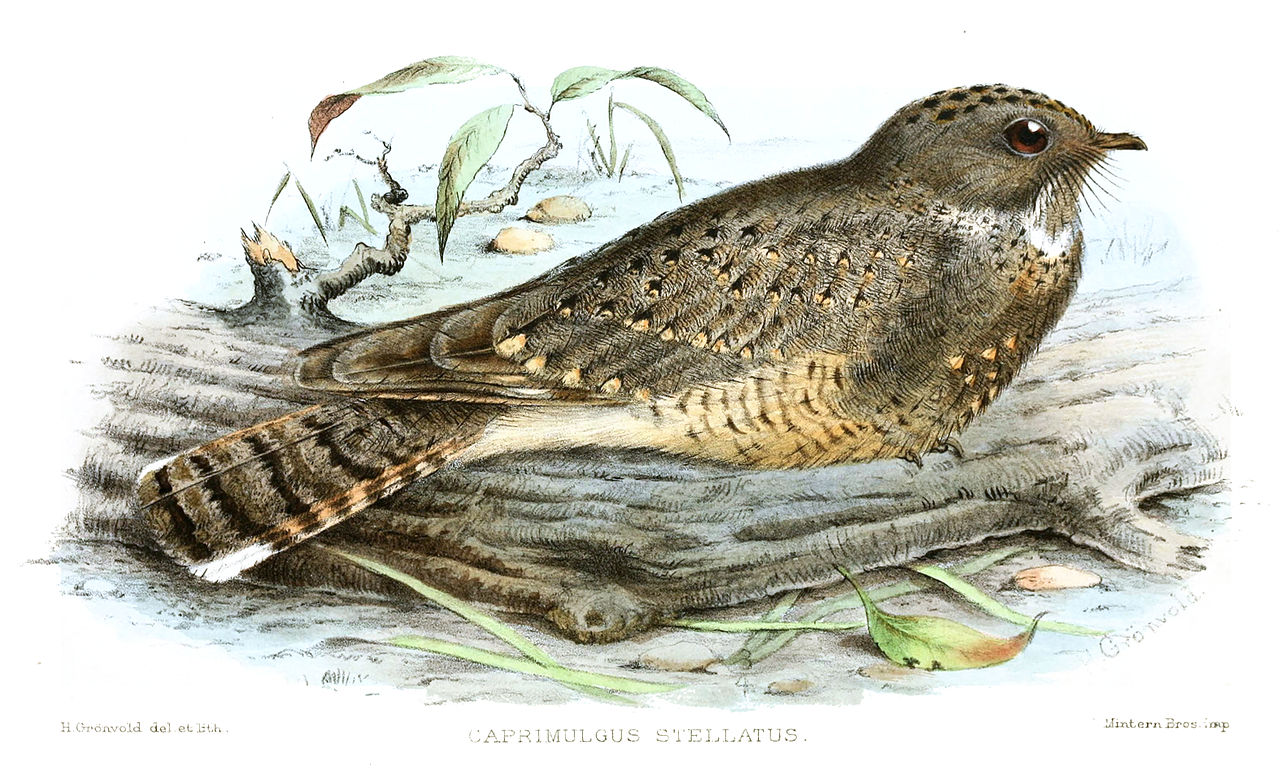
Cryptically mottled grey-brown and buff with fine barring and speckling, giving a leaf-litter effect. Tail and wings show pale bars; males in breeding dress have dramatically expanded outer primaries ('standards').
Diet
Feeds almost entirely on flying insects such as moths, beetles, termites, and flying ants. Captures prey on the wing using a very wide gape and sensory bristles. Often exploits insect swarms after rains, around lights, or over recently burned areas. Will make repeated sallies from low perches or hawk continuously above open ground.
Preferred Environment
Hunts over open savanna, along roads and tracks, around village lights, and edges of woodland clearings. Frequently forages low over ground where insect numbers are concentrated.