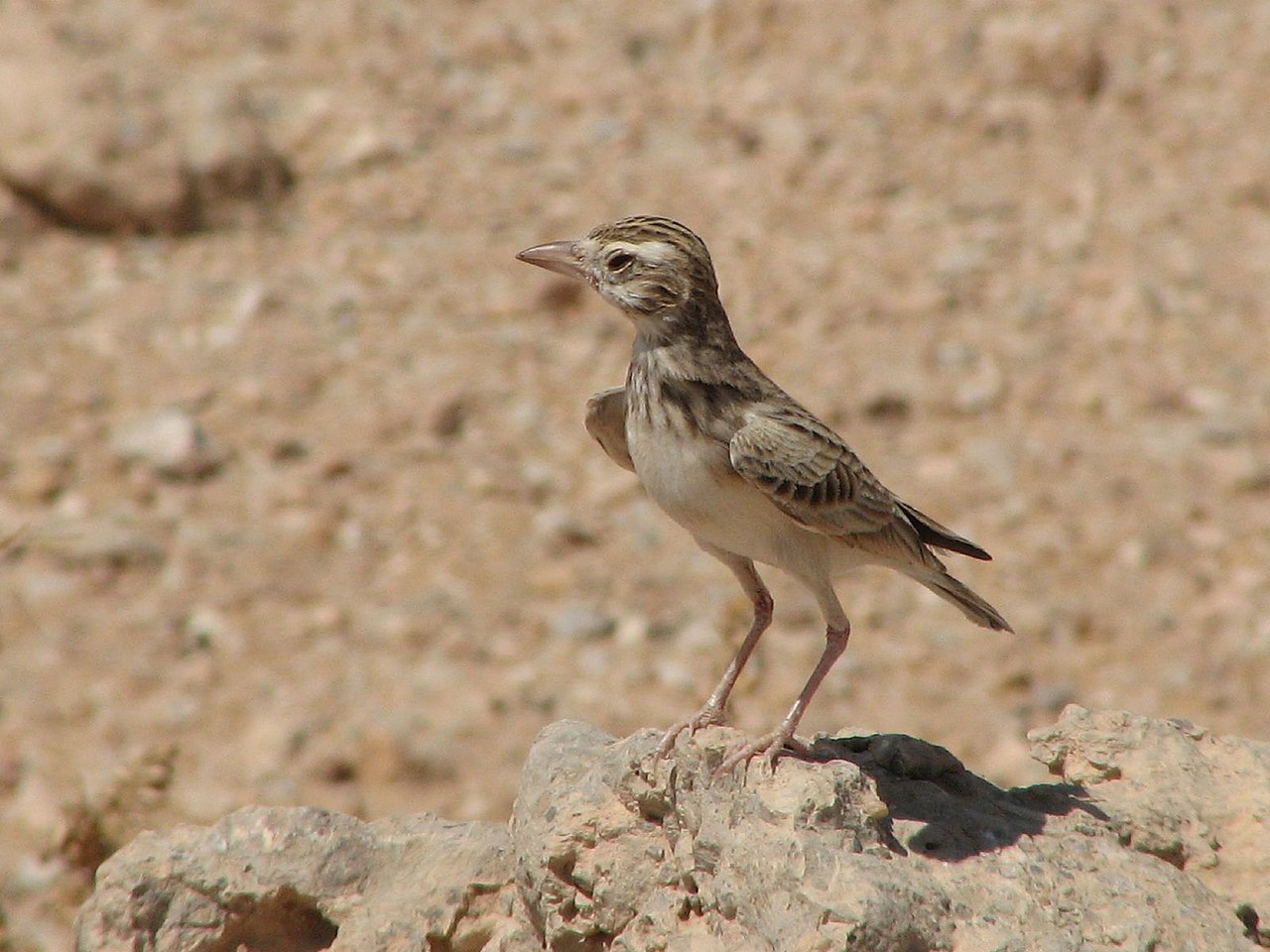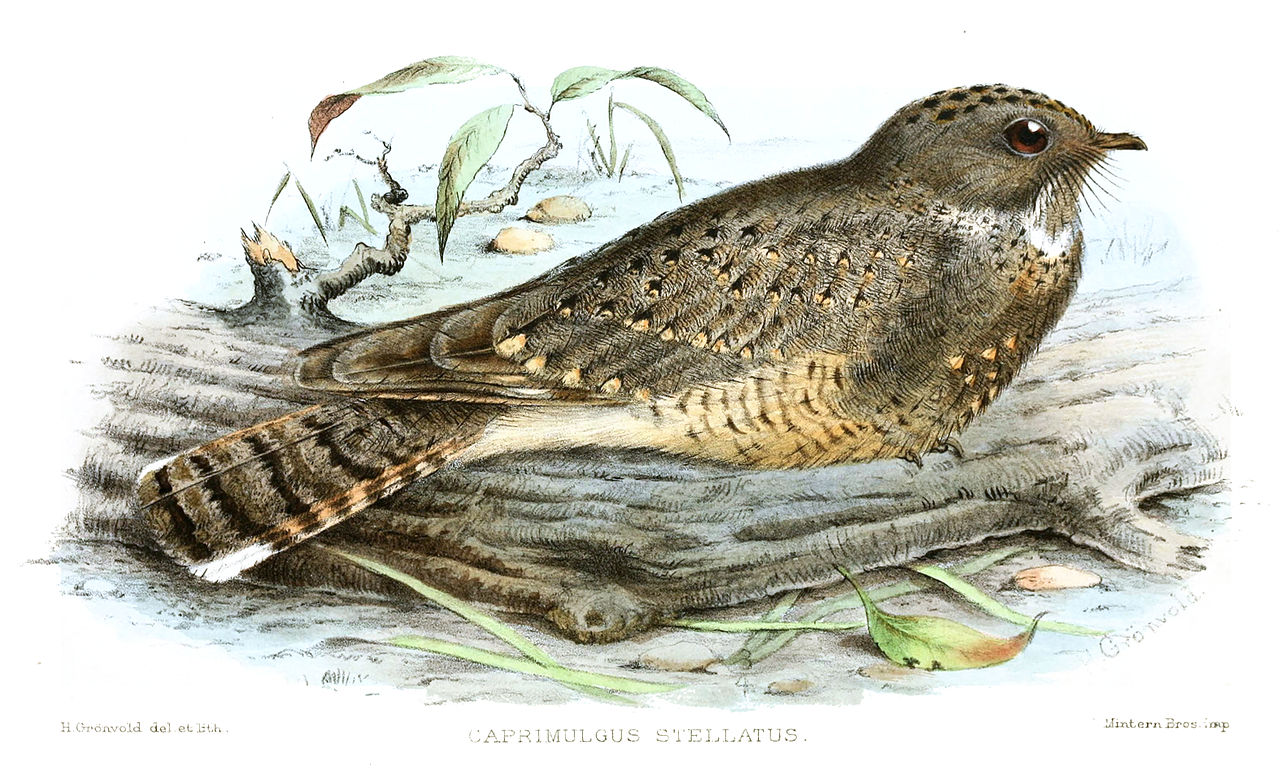
The star-spotted nightjar is a species of nightjar in the family Caprimulgidae. It is found in central Ethiopia, northern and northwestern Kenya and southern South Sudan.
Region
Horn of Africa and East Africa
Typical Environment
Occurs patchily in central Ethiopia, northern and northwestern Kenya, and southern South Sudan. It favors open dry savanna, semi-arid bushland, and lightly wooded Acacia-Commiphora habitats with bare or stony ground. Day roosts are typically on the ground under sparse cover where its mottled plumage provides excellent camouflage. It also uses rocky outcrops and open edges of woodland and can be found near seasonal watercourses.
Altitude Range
300–1800 m
Climate Zone
Tropical
Ease of Keeping
Beginner friendly: 1/5
The star-spotted nightjar is a cryptic, nocturnal bird whose upperparts are sprinkled with pale spots that resemble a starry sky, aiding in camouflage on the ground. It rests motionless by day and becomes active at dusk, sallying out to catch flying insects. Like other nightjars, it has a very wide gape and specialized bristles around the bill that help funnel prey into its mouth. It nests directly on bare ground without building a traditional nest.

Temperament
solitary and secretive
Flight Pattern
buoyant and agile with short rapid wingbeats and brief glides
Social Behavior
Usually solitary or in pairs, becoming active at dusk. Nests directly on bare ground, typically laying one or two eggs which rely on camouflage rather than structure. Both adults rely on stillness to avoid detection and will perform distraction displays if a nest is threatened.
Migratory Pattern
Resident
Song Description
Vocalizations are soft for a nightjar, including a low, repetitive churring and short, whistled notes given at dusk and night. Males may deliver a subdued territorial call from the ground or low perches during the breeding period.
Plumage
Finely mottled brown, grey, and buff with numerous small pale spots that create a starry, speckled effect; underparts are barred. Feathers are soft and fluffy with intricate cryptic patterning suited to ground roosting.
Diet
Feeds mainly on aerial insects such as moths, beetles, termites, and other flying invertebrates. It hunts by sallying from the ground or low perches and also by coursing low over open areas. The wide gape and rictal bristles help intercept prey in flight. Foraging often coincides with insect emergences after rains.
Preferred Environment
Open savanna, scrub, and rocky flats with sparse vegetation, often along tracks, clearings, or near water where insects concentrate. It may also forage around lights in rural settlements when available.