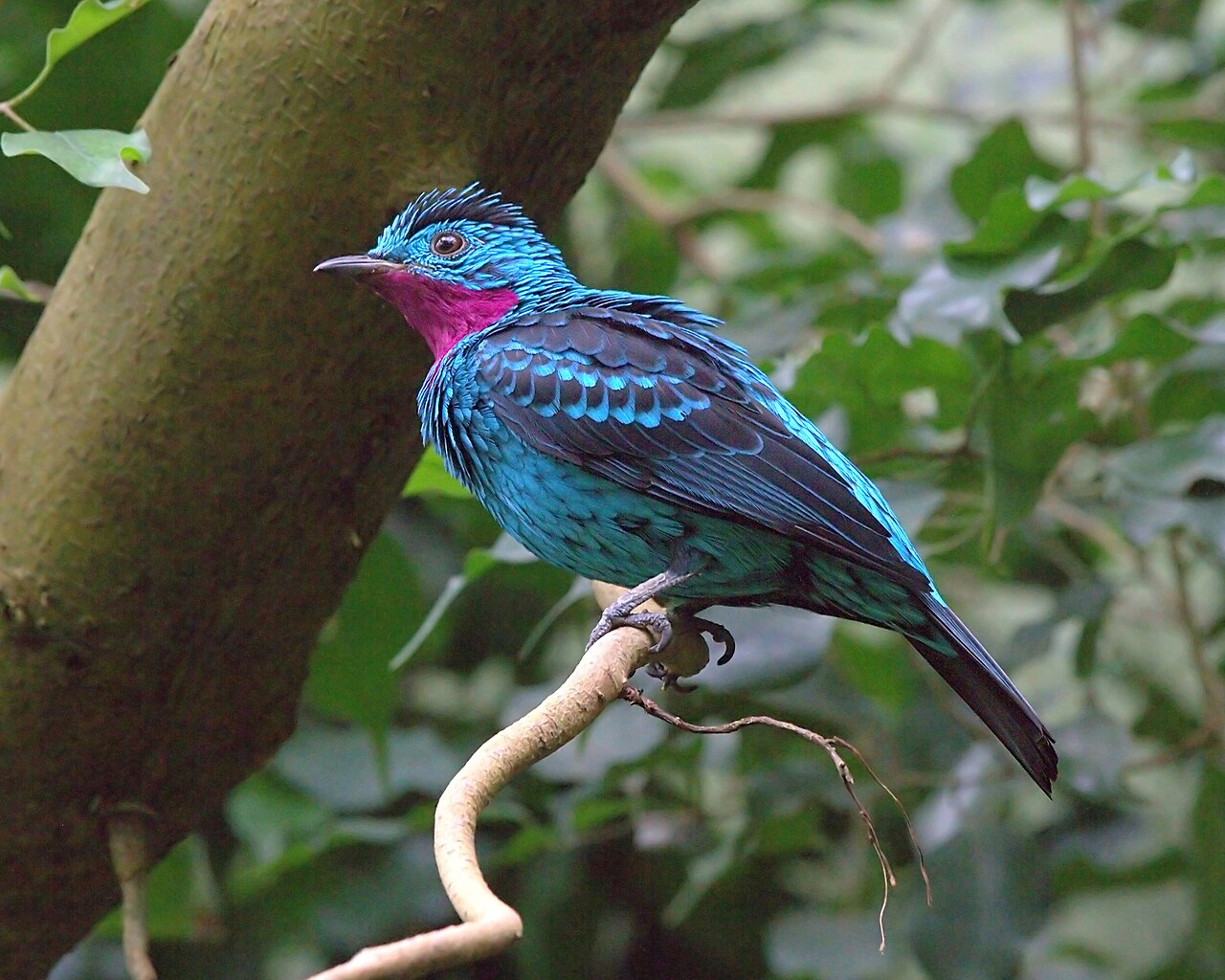
The spangled coquette, coquette pailletée (French), coqueta coronada, or coqueta lentejuelada is a species of hummingbird in the "coquettes", tribe Lesbiini of subfamily Lesbiinae. It is found in Brazil, Colombia, Ecuador, Peru, and Venezuela.
Region
Western Amazonia and Andean foothills
Typical Environment
Occurs from the Andean foothills of Colombia, Ecuador, and Peru into adjacent western Amazonia of Brazil and southern Venezuela. Prefers forest edges, riverine woodland, clearings with flowering trees, and secondary growth. Often forages in canopy and along sunny gaps, but also drops to midstory when blossoms are abundant. It adapts well to disturbed habitats with ample nectar sources. Generally local but can be fairly common where flowers are plentiful.
Altitude Range
100–1200 m
Climate Zone
Tropical
Ease of Keeping
Beginner friendly: 1/5
A tiny hummingbird with an ornate, spangled crest in males, the spangled coquette often goes unnoticed as it zips along forest edges and clearings. It favors flowering trees and shrubs and is remarkably agile, hovering precisely to probe blossoms. Females lack the prominent crest and are plainer, which helps them stay concealed at the nest. Despite its striking look, it is generally quiet and easily overlooked.


Copalinga Lodge, Ecuador / flash photo


Temperament
active and somewhat territorial at favored flowers
Flight Pattern
short rapid wingbeats with precise hovering
Social Behavior
Usually solitary while foraging, but several individuals may gather at rich flowering trees. Males display by hovering and flaring crest and tail around nectar sources. Nests are tiny cup-like structures of plant down bound with spider silk, placed on slender horizontal branches. Typical clutch is two pea-sized eggs.
Migratory Pattern
Resident
Song Description
Vocalizations are soft, high-pitched chips and thin trills, given intermittently while foraging. Wing hum is prominent and may be the most noticeable sound when the bird is nearby.
Plumage
Shimmering green upperparts with contrasting rufous tones on the rump and tail; underparts whitish to buff with green spangling. Male shows an erectile, dark crest densely spangled with whitish spots; female lacks the crest and is more uniformly green above with cleaner underparts.
Diet
Takes nectar from a wide variety of blossoms, including canopy trees and shrubs such as Inga and Erythrina, as well as epiphytes. Also hawks or gleans tiny arthropods for protein, especially during breeding. Feeds by hovering and making rapid, darting sallies between flowers. Defends rich nectar sources but is easily displaced by larger hummingbirds.
Preferred Environment
Flowering forest edges, riverbanks, clearings, and secondary growth where sunlit blossoms are abundant. Frequently visits isolated flowering trees and ornamental plantings near forest.