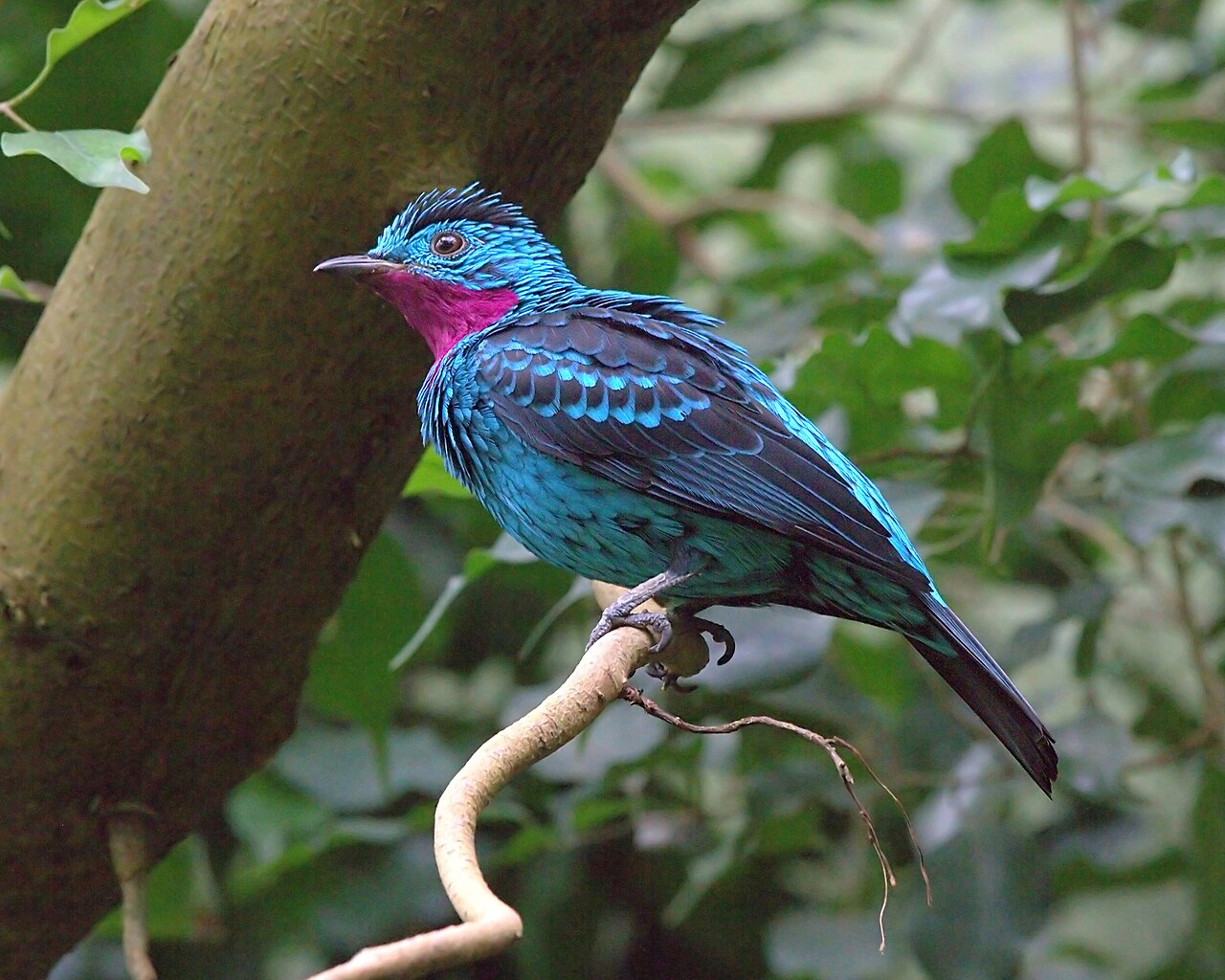
The spangled cotinga is a species of bird in the family Cotingidae, the cotingas. It is found in the canopy of the Amazon Rainforest in South America.
Region
Amazon Basin
Typical Environment
Occurs widely across lowland Amazonia, including Brazil, Colombia, Venezuela, Ecuador, Peru, Bolivia, the Guianas, and adjacent regions. Prefers mature terra firme and várzea forests, especially along rivers and at forest edges where fruiting trees are abundant. Typically occupies the upper canopy and emergent crowns, seldom descending to lower levels. It also uses selectively logged areas and forest clearings if large fruiting trees remain.
Altitude Range
0–1200 m
Climate Zone
Tropical
Ease of Keeping
Beginner friendly: 1/5
Males are dazzling turquoise-blue with dark 'spangles' that flash in full sun, while females are mottled gray-brown for camouflage. This species spends most of its time perched high in the Amazonian canopy and often visits fruiting fig trees. Despite the bright color of males, spangled cotingas are surprisingly quiet and can be overlooked without binoculars.


Temperament
solitary and canopy-dwelling
Flight Pattern
short direct flights with rapid wingbeats between canopy crowns
Social Behavior
Often solitary or in loose groups at fruiting trees. Males display from exposed canopy perches to attract females. Nest is a small, flimsy open cup placed on a horizontal branch; the female undertakes most nesting duties, with a clutch typically of 1–2 eggs.
Migratory Pattern
Resident
Song Description
Generally quiet; gives soft, thin whistles and short, high-pitched notes from high perches. Vocalizations are brief and can be easily missed amid insect noise and other canopy sounds.
Plumage
Male shows brilliant turquoise-blue plumage with dark spangled scaling on the upperparts and a contrasting deep purplish throat patch; wings and tail darker. Female is gray-brown with heavy pale scalloping and mottling on the underparts and upperparts, providing excellent camouflage. Both sexes have a short, broad-based bill and relatively short tail.
Diet
Primarily consumes small to medium fruits and berries, especially figs and other canopy fruit. It occasionally takes insects, likely for supplemental protein, but fruit dominates the diet. Feeds by picking fruit while perched or making short sallies to pluck items from nearby branches.
Preferred Environment
Forages almost exclusively in the upper canopy and emergent crowns of mature forest. Frequently visits isolated fruiting trees along rivers, forest edges, and clearings.