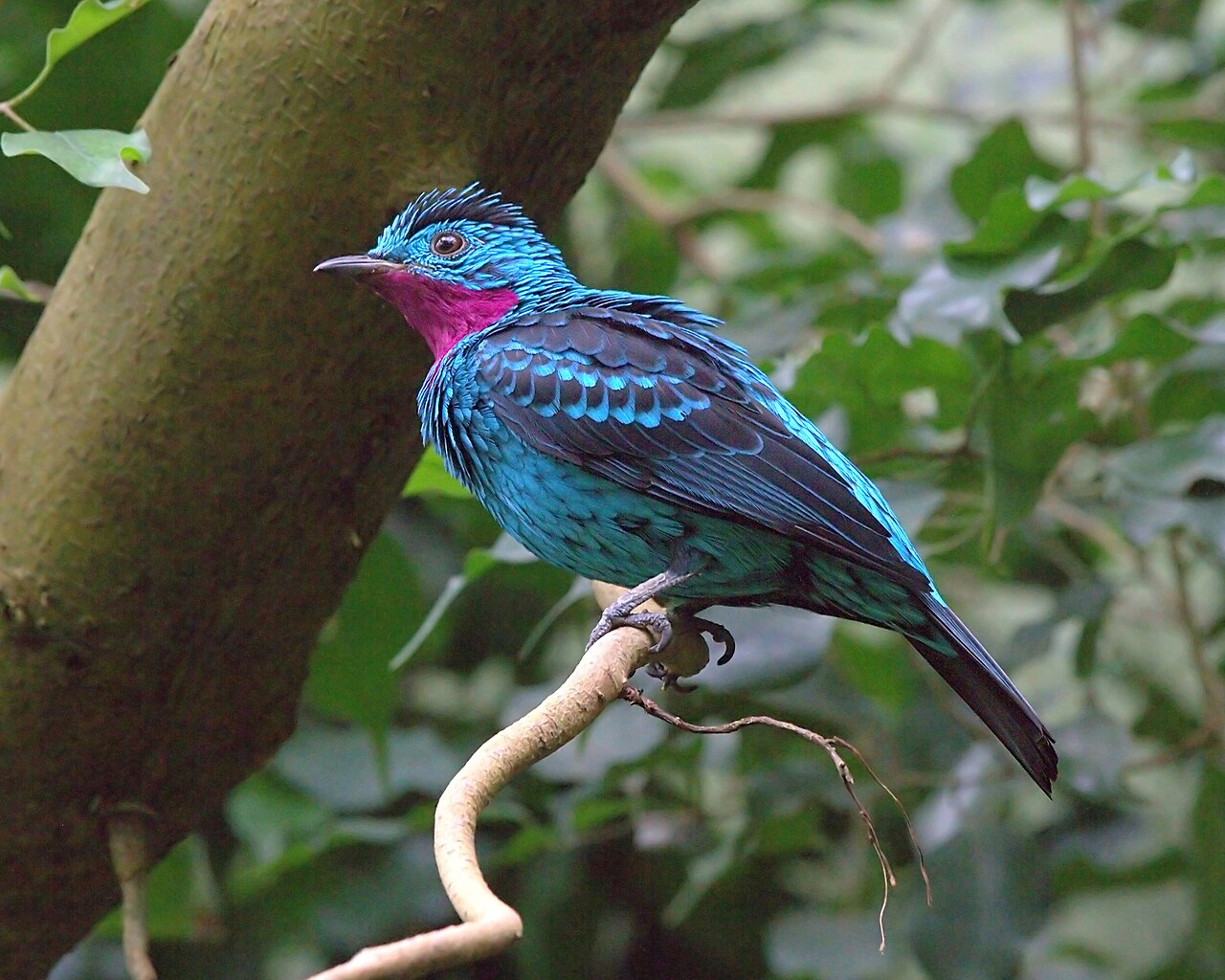
The spangle-cheeked tanager is a medium-sized passerine bird. This tanager is an endemic resident breeder in the highlands of Costa Rica and western Panama.
Region
Costa Rican and western Panamanian highlands
Typical Environment
Found in humid montane evergreen and cloud forests, especially along forest edges, gaps, and adjacent second growth. It forages mainly in the mid- to upper canopy but will descend to lower levels at forest borders and in gardens near intact habitat. The species is closely tied to fruiting trees and mixed-species foraging flocks. It tolerates some disturbance where mature forest patches persist.
Altitude Range
900–2800 m
Climate Zone
Highland
Ease of Keeping
Beginner friendly: 1/5
This striking tanager is a highland specialty of Costa Rica and western Panama, where its electric-blue facial 'spangles' stand out in dim cloud-forest light. It often joins mixed-species flocks moving through the canopy and readily visits fruiting trees—and occasionally high-elevation feeders. The sexes are similar, with females slightly duller. Pairs or small groups may remain on territories year-round.


Talamanca Mountains, Costa Rica, 21 March 2024.
Temperament
social and active
Flight Pattern
short rapid wingbeats
Social Behavior
Commonly travels in small groups and frequently joins mixed-species flocks in the canopy. Pairs are resident and defend breeding areas within suitable habitat. The nest is a neat cup placed well above ground, typically in dense foliage; both adults feed the young.
Migratory Pattern
Resident
Song Description
Vocalizations are thin, high-pitched chips and twitters, often given as contact notes within flocks. Song is a light, hurried series of sibilant notes that can be hard to pick out over background forest noise.
Plumage
Mostly dark slate to blackish with bright, iridescent blue spangling on the cheeks and shoulder area; subtle blue mottling can extend onto the underparts. Wings show bluish edgings on the coverts and tertials. Overall appearance is glossy and finely patterned, especially on the face.
Diet
Takes a variety of small fruits and berries and supplements with arthropods gleaned from foliage and twigs. Joins frugivorous flocks at fruiting trees and will sally short distances to snatch insects. Occasionally probes clusters of leaves and moss for hidden prey. Opportunistic at seasonally abundant food sources.
Preferred Environment
Feeds mostly in the mid- to upper canopy of humid montane forest, edges, and semi-open areas near intact forest. It also visits fruiting trees in clearings and high-elevation gardens.