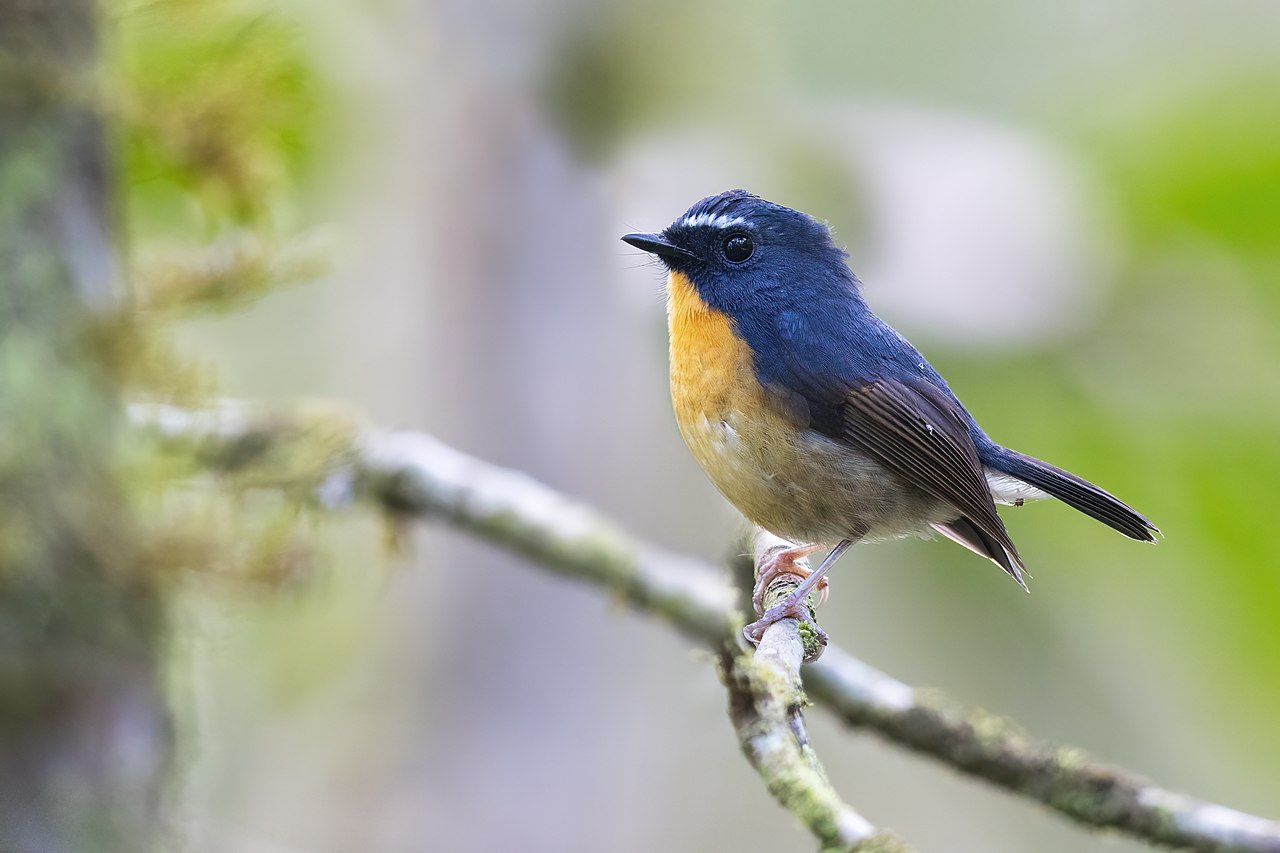
The snowy owl, also known as the polar owl, the white owl and the Arctic owl, is a large, white owl of the true owl family. Snowy owls are native to the Arctic regions of both North America and the Palearctic, breeding mostly on the tundra. It has a number of unique adaptations to its habitat and lifestyle, which are quite distinct from other extant owls. One of the largest species of owl, it is the only owl with mainly white plumage. Males tend to be a purer white overall while females tend to have more extensive flecks of dark brown. Juvenile male snowy owls have dark markings and may appear similar to females until maturity, at which point they typically turn whiter. The composition of brown markings about the wing, although not foolproof, is the most reliable technique for aging and sexing individual snowy owls.
Region
Circumpolar Arctic
Typical Environment
Snowy owls breed across the Arctic tundra of North America and Eurasia, including northern Canada, Alaska, Greenland, and Russia. They favor open, treeless landscapes with low vegetation and scattered mounds or hummocks for vantage points. In winter they disperse south to open coastal dunes, prairies, agricultural fields, and shores, sometimes reaching temperate latitudes. Irruptive movements occur when prey populations fluctuate, leading to irregular southward appearances.
Altitude Range
Sea level to 1000 m
Climate Zone
Polar
Ease of Keeping
Beginner friendly: 1/5
A large, mostly white owl adapted to the Arctic, the snowy owl breeds on open tundra and often hunts by day, unusual for owls. Its breeding success closely tracks lemming cycles, with large clutches in peak rodent years. Females and juveniles show heavy brown barring, while adult males can be nearly pure white. In winter, irruptions bring some birds far south into open farmlands, shorelines, and airports.


The engraving Snowy Owl, Plate 121 of The Birds of America by John James Audubon. Male (top) and female (bottom).

Male snowy owls such as this are particularly distinctive due to the more extensive covering of white feathers.

Female snowy owls are heavily marked compared to males.

Young owl on the tundra at Utqiaġvik, Alaska. Snowy owls lose their black feathers with age, although individual females may retain some.

Snowy owls have powerful feet that are heavily covered with feathering.

Juvenile snowy owl, about 12 weeks old

Bobby Tulloch, the Shetland RSPB warden, at the site of the snowy owl nest on the island of Fetlar, Shetland, in August 1967

Female with wings extended, showing the wing structure.

Snowy owls often seek out grassy and open habitats year around.

Juvenile owls do not mind associating with one another, especially during winter.

Snowy owls are often somewhat ponderous in movements but can be surprisingly and suddenly fast on the wing.

Snowy owls are usually awake, aware and not infrequently active during daytime.

Snowy Owl in Flight, Captive

A snowy owl engaging in the "sweep" hunting method.

A snowy owl flying with an unidentified prey item in winter.

Lemmings such as Norway lemmings are the primary prey of breeding snowy owls.

Snowy owl with prey.

An early illustration showing snowy owl predation upon a gyrfalcon.

Snowy owls often seek out polygons such as these in the tundra.

An illustration of 8 European owl species' eggs, with the snowy owl in the middle of the right row. Note the much larger egg of the Eurasian eagle-owl at bottom.
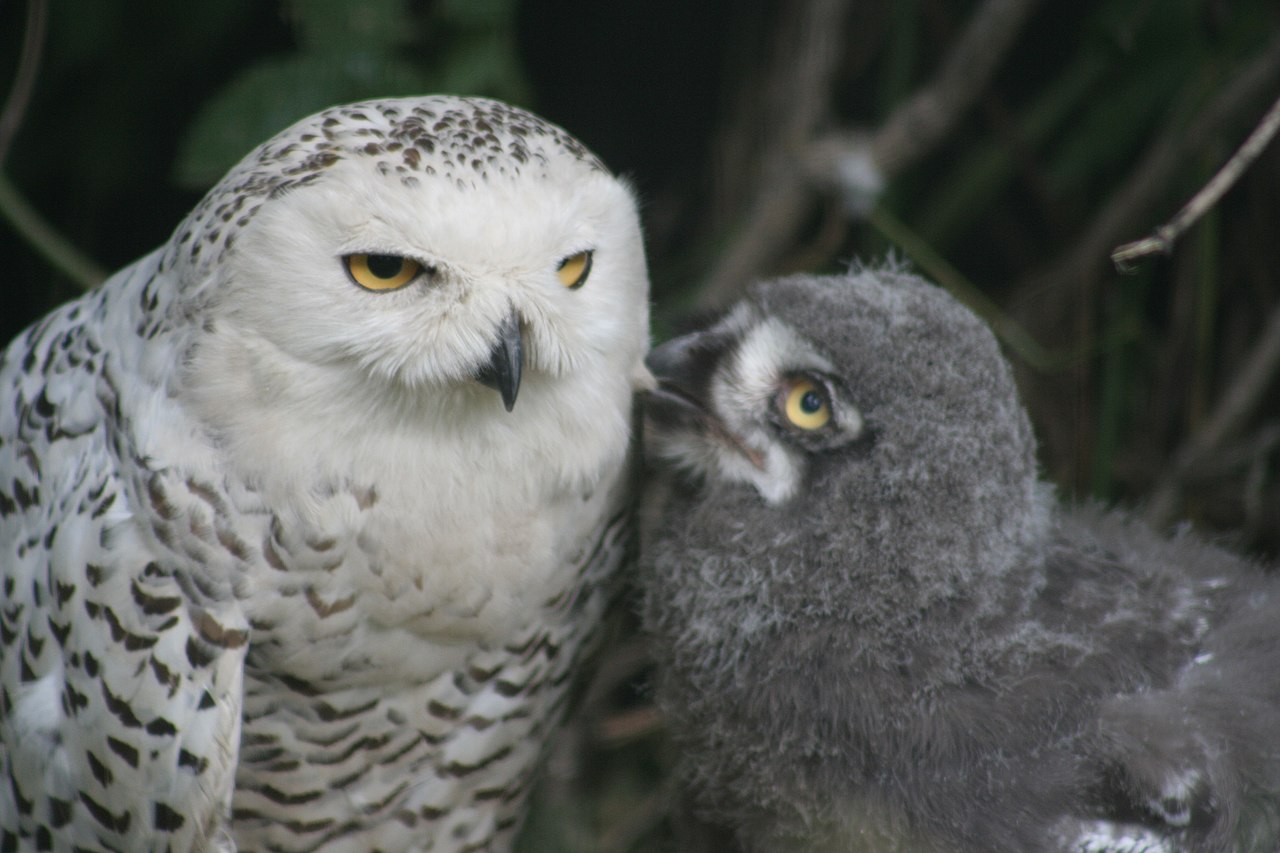
A captive mother snowy owl with her chick.

An old photo of snowy owl nestlings on Baffin Island.

Snowy owl, juvenile, in Ontario, Canada.

Snowy owls often favor airports, such as this one at Gerald R. Ford International Airport, in winter but the risk of birdstrike is high in such areas.
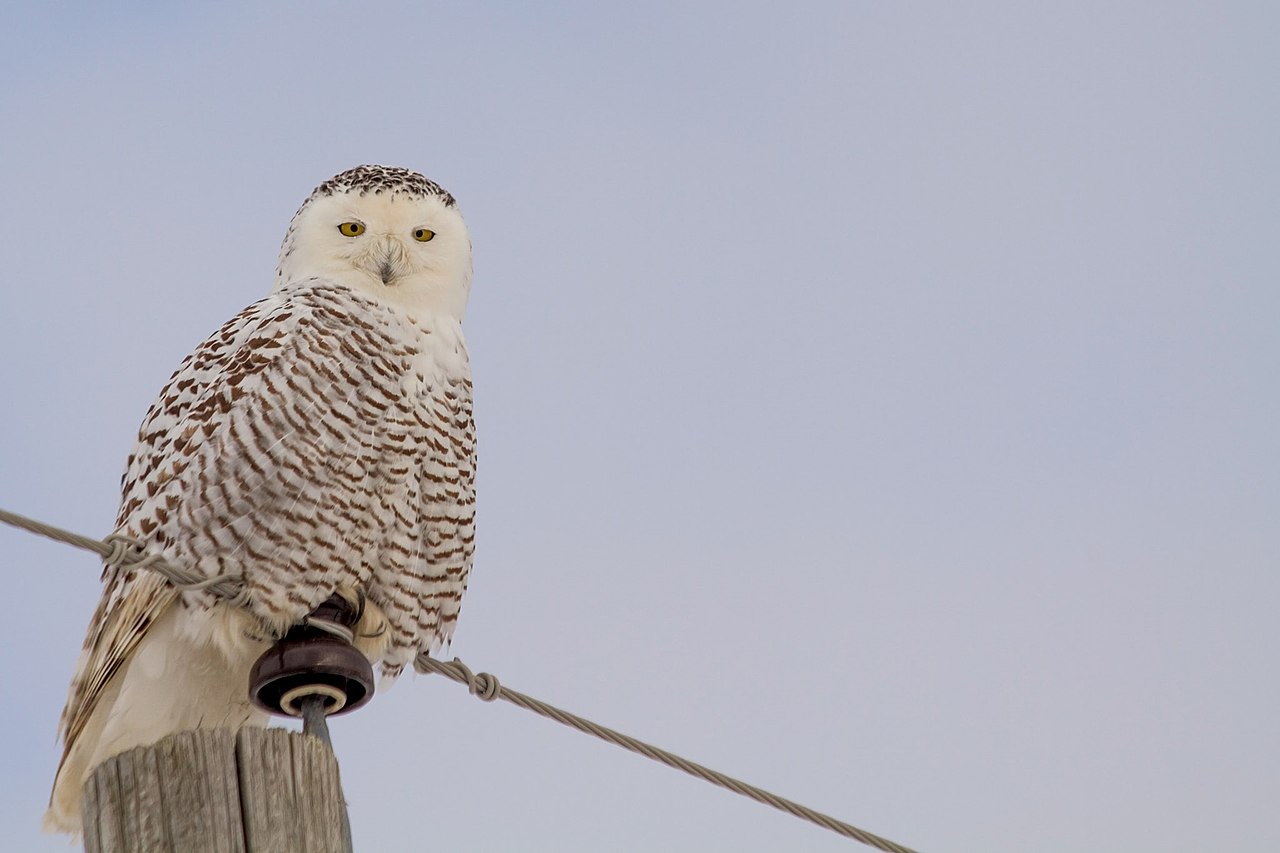
A potential high risk of electrocution exists for snowy owls in winter.
Temperament
solitary and territorial
Flight Pattern
strong, direct flight with steady wingbeats; capable of low, buoyant glides over open ground
Social Behavior
Typically monogamous in the breeding season, nesting on raised ground scrapes on the tundra. Clutch size varies with prey abundance, and females incubate while males provide food. Pairs defend nesting territories vigorously against predators and intruders.
Migratory Pattern
Seasonal migrant with irruptive movements
Song Description
Males give deep, resonant hoots, especially near nests and display sites. Both sexes produce barks, cackles, and harsh alarm calls when defending territories.
Plumage
Dense, insulating plumage that is predominantly white with variable brown barring; females and juveniles heavily barred, adult males much whiter.
Diet
Primarily preys on lemmings and voles, sometimes taking several per day during chick-rearing. Also hunts birds such as ptarmigan, ducks, shorebirds, and passerines, and occasionally rabbits or fish. Uses still-hunting from a perch or ground vantage, striking prey with a swift, direct pounce. Opportunistic and will switch targets based on local availability.
Preferred Environment
Open habitats with clear sightlines, including tundra, coastal flats, dunes, and wide agricultural fields. Often hunts from slightly elevated perches like hummocks, fenceposts, hay bales, or driftwood. In winter near coasts, may patrol shorelines and estuaries.