
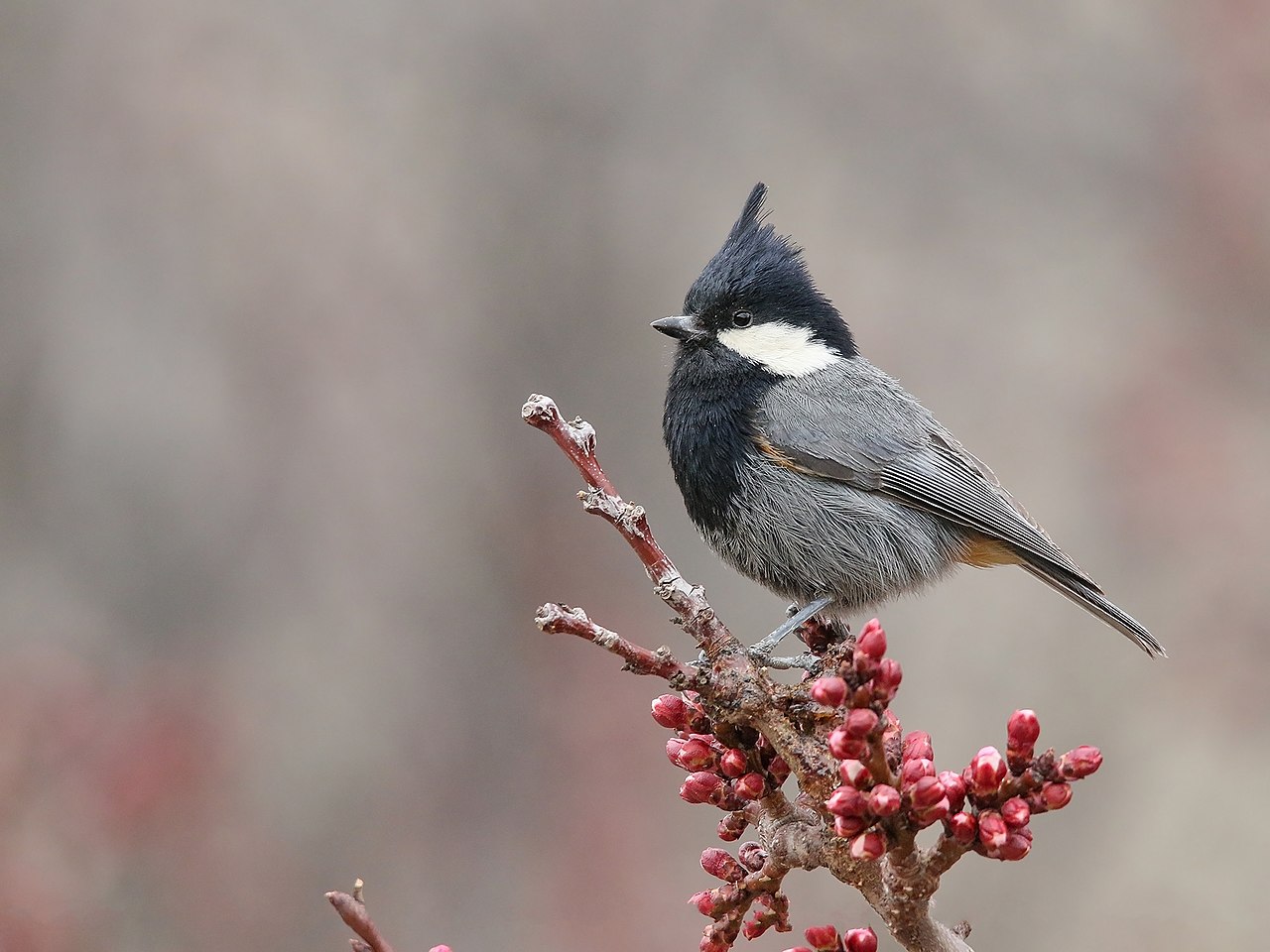
The rufous-naped tit, also known as the black-breasted tit or dark-grey tit, is an Asian songbird species in the tit and chickadee family (Paridae). It was sometimes considered conspecific with the rufous-vented tit, and was formerly placed in the genus Parus.
Region
Western Himalayas and adjoining ranges
Typical Environment
Occurs in montane coniferous and mixed forests, especially pine, deodar cedar, fir, and juniper scrub. It frequents forest edges, clearings, and nearby orchards and wooded valleys. Birds are largely sedentary but may make local altitudinal movements in winter. It is most often seen in small parties or mixed flocks moving through the mid to upper canopy.
Altitude Range
1500–3600 m
Climate Zone
Highland
Ease of Keeping
Beginner friendly: 2/5
This small tit of the western Himalayas is named for its distinctive rufous patch on the nape, set against a black head and breast. It often joins mixed-species flocks outside the breeding season and forages nimbly among conifers. It was once lumped with the rufous-vented tit but is now treated as a separate species. Formerly placed in Parus, it is currently in the genus Periparus.


Temperament
social and active
Flight Pattern
short rapid wingbeats
Social Behavior
Typically forages in pairs or small family groups, joining mixed-species flocks with other tits and warblers outside the breeding season. Nests in natural cavities or old woodpecker holes, lining them with soft fibers and hair. Clutches are usually several small white eggs speckled with reddish-brown.
Migratory Pattern
Resident
Song Description
Calls are high, thin tsee and tsee-tsee notes, often given in quick series. The song is a rapid, chattering sequence of whistles and scolds, repeated from mid-canopy perches.
Plumage
Dark grey upperparts with a black head and breast bib, contrasting white cheeks, and a distinct rufous patch on the nape; underparts greyish to buff-grey. Subtle pale wingbars may be evident, and a slight crest can be raised at times.
Diet
Feeds mainly on small insects and spiders gleaned from needles, twigs, and bark. In cooler months it supplements with seeds, conifer mast, and small berries. It may occasionally take larvae from cones and will visit orchards for invertebrates.
Preferred Environment
Forages in conifer and mixed woodlands, especially along edges and open canopy where foliage is accessible. Often works through trees in mixed flocks, moving methodically from branch to branch.


