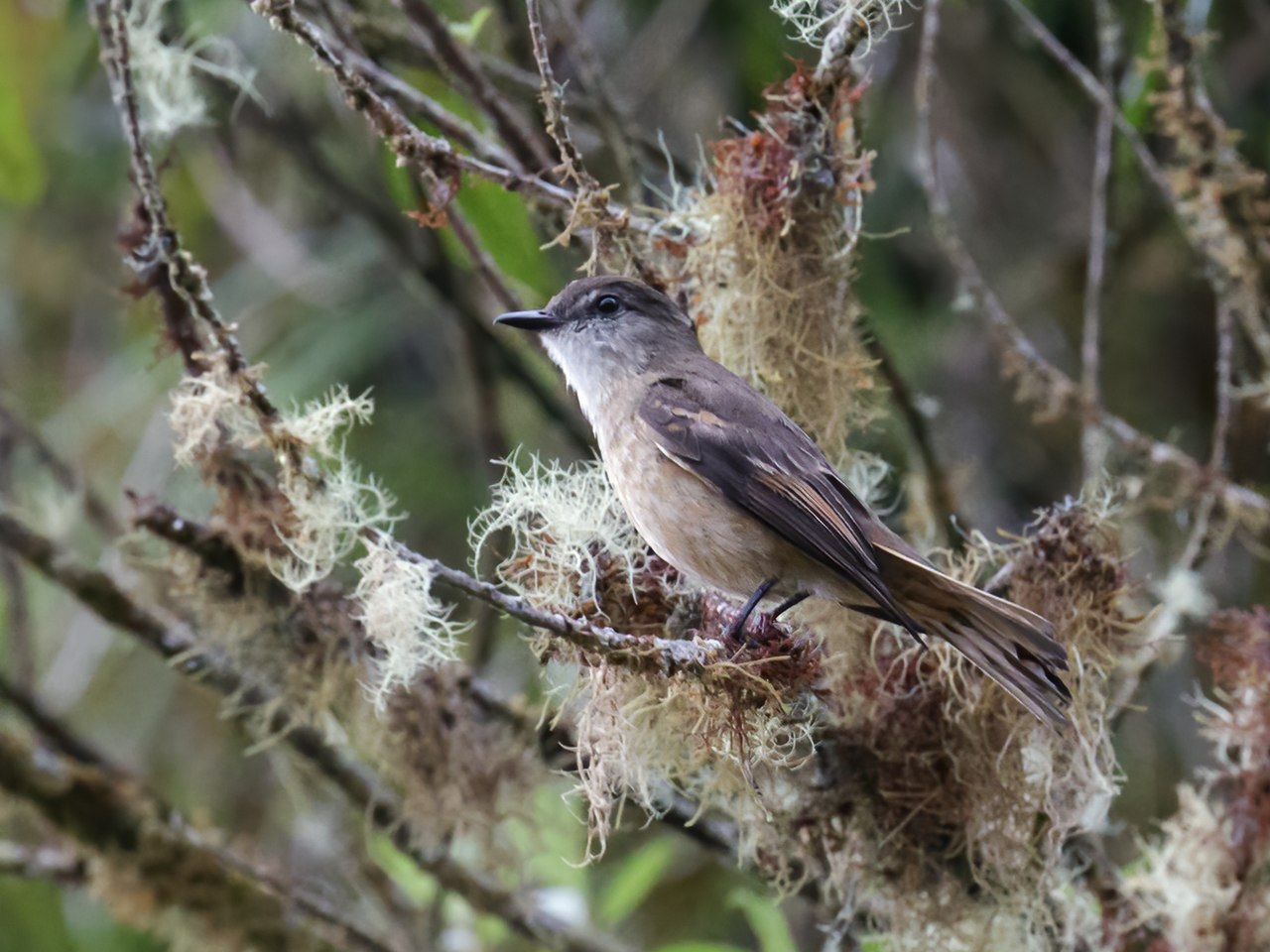
The rufous-banded owl is a species of owl in the family Strigidae. It is found in Bolivia, Colombia, Ecuador, Peru, and Venezuela.
Region
Northern Andes
Typical Environment
Occurs in montane cloud forests from Venezuela through Colombia and Ecuador to Peru and Bolivia. It favors mature, humid forests with dense understory, especially bamboo and mossy ravines, and occasionally edges and secondary growth near intact forest. The species is typically secretive, remaining within shaded interior forest by day and emerging to hunt at night. It is closely tied to intact montane habitats and is less common in heavily fragmented areas.
Altitude Range
1200–3500 m
Climate Zone
Highland
Ease of Keeping
Beginner friendly: 1/5
This medium-sized, earless owl inhabits Andean cloud forests and is more often detected by its haunting series of hoots than seen. It frequently occupies dense bamboo (Chusquea) thickets and ravines, where its barred, rufous-and-white underparts provide superb camouflage. Pairs often duet at night to advertise territory. Like many forest owls, it relies on stealthy, silent flight to ambush prey.


Temperament
solitary and territorial
Flight Pattern
silent flier with short, direct bursts through forest
Social Behavior
Typically seen alone or in pairs; pairs maintain territories and often duet at night. Nests in tree cavities or occasionally old nests of other birds; clutch is small, usually 1–2 eggs. The male provisions the incubating female and later the chicks.
Migratory Pattern
Resident
Song Description
A series of low, rhythmic hoots, often accelerating or given in evenly spaced pairs. Pairs may exchange antiphonal hoots that carry far through cloud forest at night.
Plumage
Dense, soft plumage with whitish underparts boldly barred and banded rufous and dark; upperparts brown with pale spotting and fine barring; round facial disc.
Diet
Feeds on small mammals such as rodents, as well as birds, large insects, and occasionally amphibians. Hunts from a perch, dropping onto prey with a short, silent glide. Uses acute hearing to locate prey in dense vegetation and leaf litter. Will take advantage of forest edges and trails where prey activity is concentrated.
Preferred Environment
Hunts within the interior of humid montane forest, along ravines, and in dense bamboo stands. Also forages along edges, clearings, and forest tracks adjacent to intact habitat. Prefers areas with ample perches and low-light cover.