
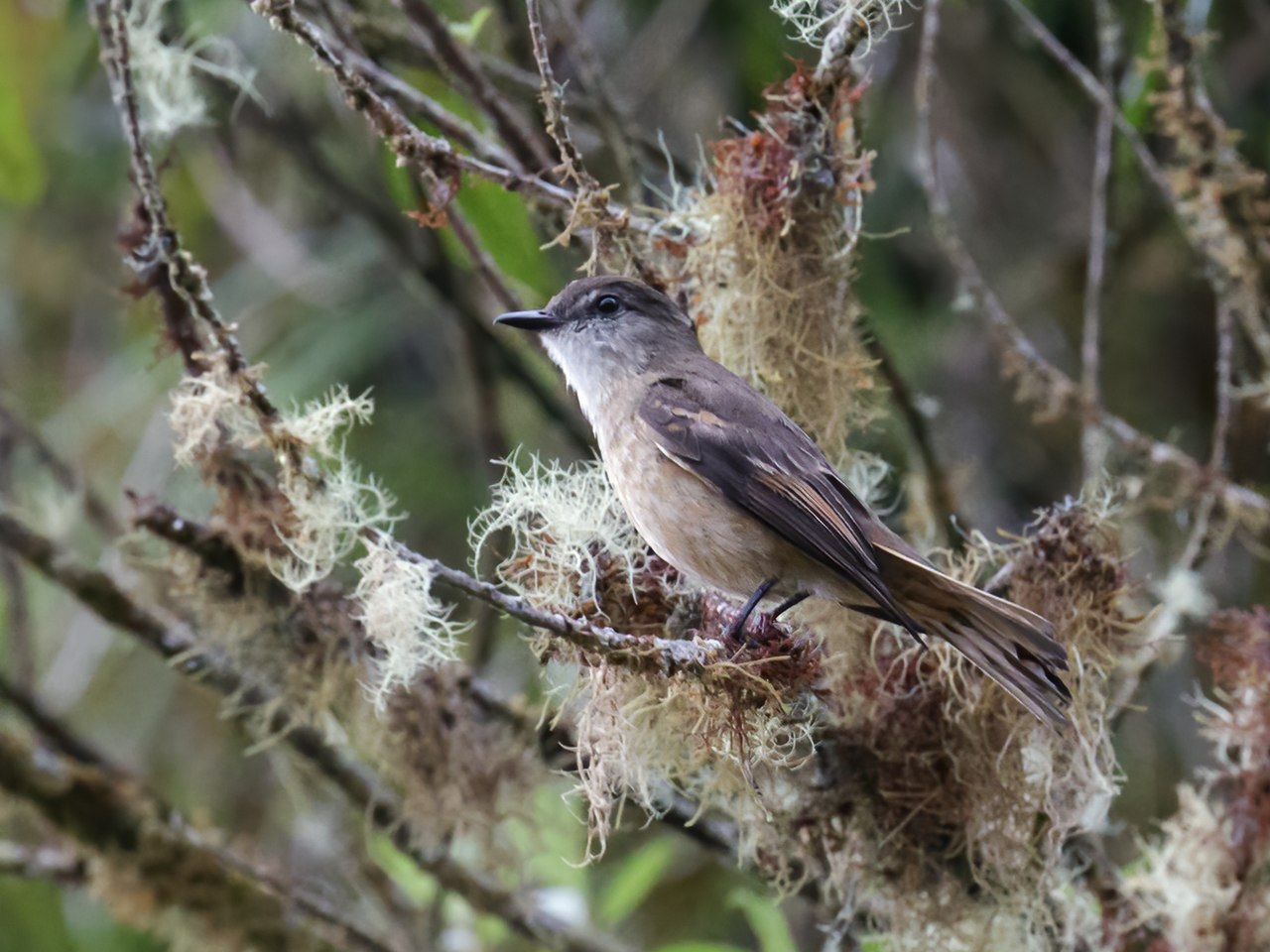
The rufous-bellied bush tyrant is a species of bird in the family Tyrannidae, the tyrant flycatchers. It is found in Bolivia and Peru.
Region
Andes Mountains
Typical Environment
Occurs in the eastern Andean slopes of southern Peru and western Bolivia. It favors the ecotone between humid montane forest and open, shrubby slopes, as well as elfin forest, ravines, and forest edge clearings. The species is frequently found near treeline where scattered bushes and small trees provide exposed perches. It tolerates lightly disturbed habitats, including roadsides and pastures with remnant shrubs.
Altitude Range
2500–3800 m
Climate Zone
Highland
Ease of Keeping
Beginner friendly: 1/5
A high-Andean tyrant flycatcher, the rufous-bellied bush tyrant often perches conspicuously on shrubs, fence posts, or rock outcrops along forest edges. Its rich rufous underparts make it one of the easier Myiotheretes to identify. It is typically seen in pairs, sallying out to catch flying insects before returning to the same perch. Despite living near treeline, it can adapt to partially cleared slopes and road cuts.


Illustration by Joseph Smit, 1888

Temperament
solitary and territorial
Flight Pattern
short rapid wingbeats with quick sallies from exposed perches
Social Behavior
Usually encountered alone or in pairs, especially during the breeding season when territories are defended. Perches prominently and returns repeatedly to favorite lookout spots. Nesting occurs in high-Andean habitats, with pairs selecting sheltered sites and both adults participating in care.
Migratory Pattern
Resident
Song Description
Vocalizations are a series of sharp, penetrating notes and short whistles, often delivered from an exposed perch. Calls can sound scolding or clipped, repeated in bursts with pauses between phrases.
Plumage
Upperparts slaty-brown to gray-brown with slightly darker wings and tail; underparts rich rufous from breast to undertail coverts. Throat and upper breast can appear duskier or lightly mottled, contrasting with the warm belly. Feathers are sleek with limited streaking, giving a clean, two-toned appearance.
Diet
Primarily hunts flying insects, captured in aerial sallies from a perch. Also gleans arthropods from foliage and branches when opportunities arise. May take beetles, flies, and other medium-sized insects typical of montane edges.
Preferred Environment
Feeds along forest edges, shrublands, and open slopes with scattered bushes that provide vantage points. Ravines and road cuts with perches are commonly used hunting spots.


