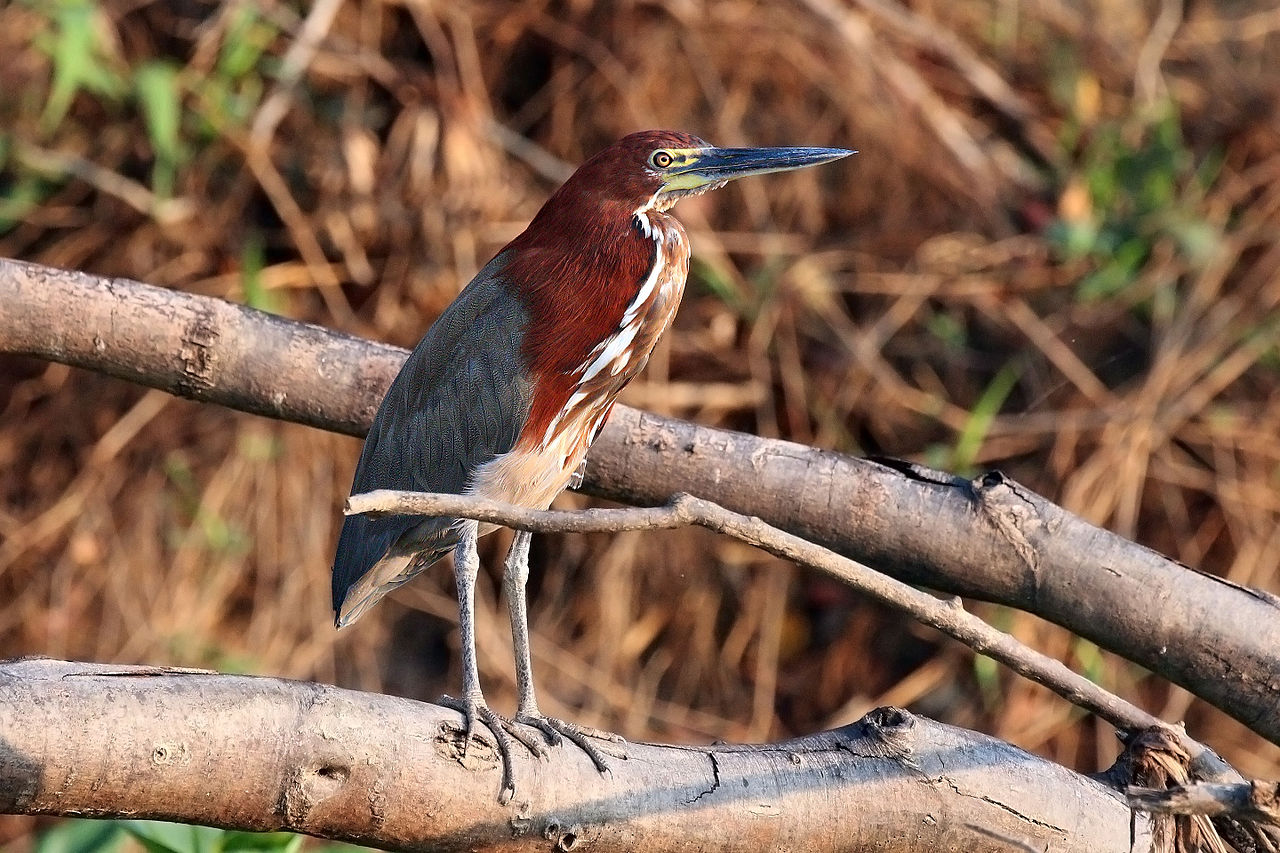
The Rufescent Imperial Pigeon, also known as the Shining Imperial Pigeon, is a rare species in the world of birds. According to The International Union for Conservative, this species is relatively unknown, and their concern is very minimal. The Union describes that this species is very stable and does not encounter threats from other species The trait of stability is vital in differentiating The Rufescent Imperial Pigeon from the other species confronting threats. This bird in specific does not frequently encounter threats because they are more reserved, quiet birds that tend to remain alone in their habitat. The habitat of these birds allows them to have the frequency of being independent but also gives them the chance to be with other birds. Rooting from the bird family in Columbidae, that also consists of pigeons and doves. In which this family is known for being frugivorous, meaning it primarily feeds on fruit, figs, and seeds.
Region
New Guinea and surrounding islands
Typical Environment
Primarily inhabits lowland and foothill rainforests, including riverine forest, forest edges, and tall secondary growth with abundant fruiting trees. It forages high in the canopy but may descend to mid-levels when food is plentiful. The species is patchy but widespread where intact forest remains. It tolerates lightly disturbed habitats provided large fruiting trees persist.
Altitude Range
Sea level to 1500 m
Climate Zone
Tropical
Ease of Keeping
Beginner friendly: 1/5
This large forest pigeon is often called the Shining Imperial Pigeon for its subtle metallic sheen on the upperparts. It spends most of its time high in the canopy, moving between fruiting trees and playing an important role as a seed disperser. Typically shy and quiet, it is more often detected by its deep, resonant coos than by sight. It usually occurs singly or in small groups rather than large flocks.
Temperament
reserved and wary
Flight Pattern
strong flier with direct, purposeful flight and powerful wingbeats
Social Behavior
Usually seen singly, in pairs, or small groups at fruiting trees. Nests are simple stick platforms placed high in trees, and like most pigeons it typically lays a single egg. Courtship includes soft coos and short display flights within the canopy.
Migratory Pattern
Resident
Song Description
A series of deep, far-carrying hoos or coos, often delivered from a concealed perch high in the canopy. Calls are mellow and resonant, sometimes given in slow sequences with pauses between notes.
Plumage
Bulky imperial pigeon with a glossy, dark gray-green mantle and wings, contrasting with a rich rufous to chestnut belly. Head and breast are paler gray with a slight sheen; tail is dark with a faint pale terminal band.
Diet
Feeds mainly on large fruits and figs, swallowing them whole and later dispersing seeds over long distances. Also takes smaller berries and occasionally seeds from forest trees. It moves widely to track fruiting events and may visit the same trees repeatedly while they are productive.
Preferred Environment
Forages in the upper canopy of mature rainforest and along forest edges where fruit is abundant. Will use secondary forest and tall riverine trees when suitable fruiting resources are available.