

The ruddy-capped nightingale-thrush is a small thrush which is a resident breeder in mountain forests from central Mexico to western Panama. A predominantly brown-plumaged bird, it has a rich song.
Region
Mesoamerican Highlands (Mexico to western Panama)
Typical Environment
Found in humid montane forests, especially cloud forests and mossy oak-pine forests with dense understory. It favors shaded ravines, bamboo or Chusquea thickets, and forest edges adjacent to primary forest. The species typically keeps close to the ground or low perches, moving quietly through leaf litter and shrub layers. Although most common in intact forest, it can persist in well-vegetated secondary growth near mature woodland.
Altitude Range
1200–3500 m
Climate Zone
Highland
Ease of Keeping
Beginner friendly: 1/5
This shy thrush is a denizen of cloud forests, where its rich, fluty song often carries farther than the bird can be seen. It forages low in dense understory, frequently along shaded ravines and stream edges. Several subspecies occur across the Mesoamerican highlands, showing minor variation in tone and extent of the rufous crown.


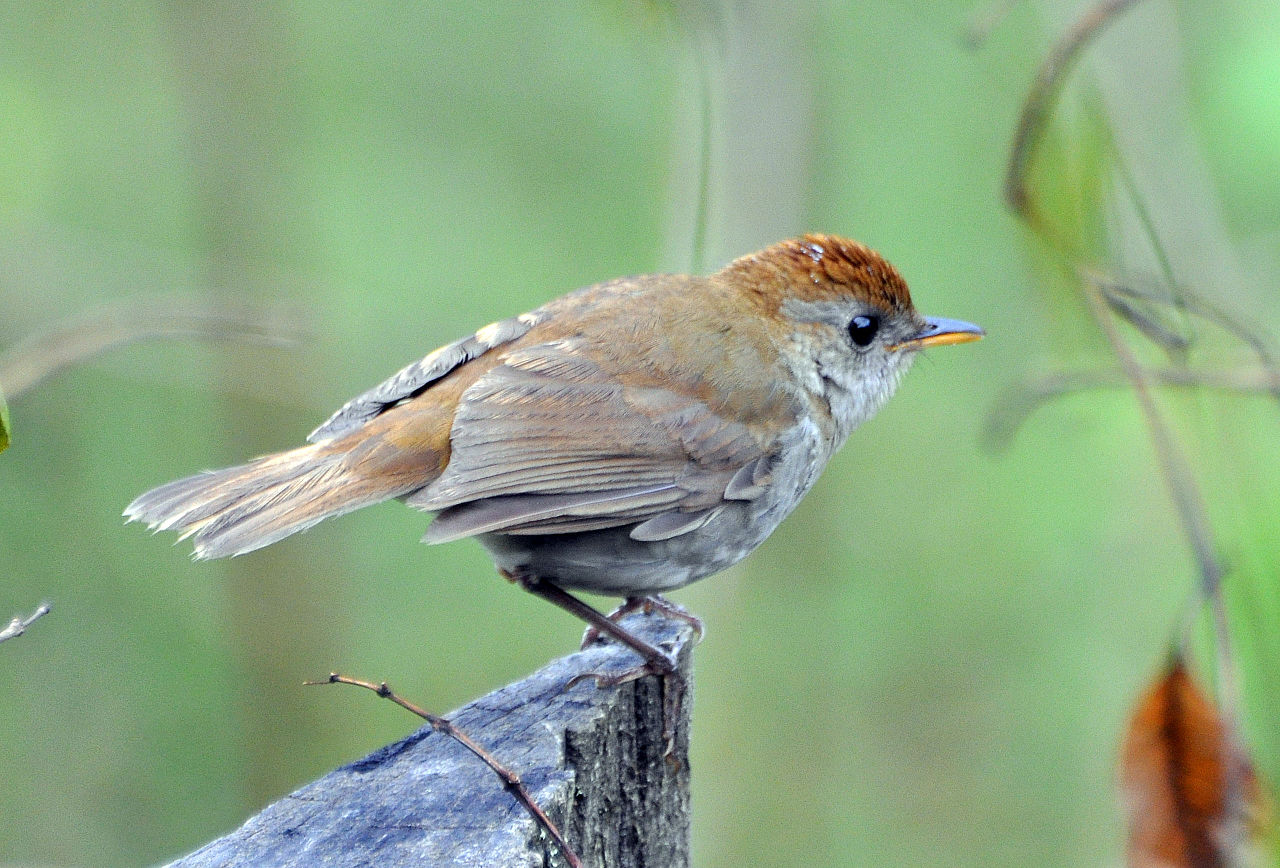
Ruddy-capped nightingale-thrush in Savegre Valley, Costa Rica
Temperament
shy and retiring
Flight Pattern
short rapid wingbeats through understory
Social Behavior
Typically seen singly or in pairs, especially during the breeding season. Builds a neat cup nest low in shrubs, ferns, or bank cavities; both parents help rear the young. Outside breeding, small family groups may forage together in dense cover.
Migratory Pattern
Resident
Song Description
A rich, fluty series of clear, bell-like notes delivered from concealed perches, often with a slightly descending or spiraled quality. The song carries well in misty forest and can seem ventriloquial. Calls include thin, high tseep notes and soft chuck sounds.
Plumage
Olive-brown upperparts with a distinct ruddy/rufous crown and nape; grayish face and throat grading to whitish central underparts with warmer brown flanks. Feathers appear soft and slightly fluffy in the cool, humid environment; subtle mottling may be present on the throat. A clean, pale eye-ring is usually evident.
Diet
Feeds on insects, spiders, and other small invertebrates gleaned from leaf litter and low foliage. Also consumes berries and small fruits, especially when arthropod prey is less abundant. Will occasionally sally a short distance to snatch prey from low vegetation.
Preferred Environment
Most often forages on or near the forest floor in dense, humid understory, along stream banks, and in shaded gullies. Uses tangles, bamboo patches, and fallen logs as cover while feeding.


