

The royal spoonbill, also known as the black-billed spoonbill lives in intertidal flats and shallows of fresh and saltwater wetlands in Australia, New Zealand, Indonesia, Papua New Guinea, and the Solomon Islands. It has also been recorded as a vagrant in New Caledonia. It is one of 6 spoonbill species world wide. The royal spoonbill lives in wetlands and feeds on crustaceans, fish and small insects by sweeping its bill from side to side. It always flies with its head extended. Widespread throughout its large range, the royal spoonbill is evaluated as Least Concern on the IUCN Red List of Threatened Species.
Region
Australasia and southwest Pacific
Typical Environment
Found across much of Australia, New Zealand, and New Guinea, with occurrences in parts of Indonesia and the Solomon Islands and as a vagrant to nearby islands. It frequents shallow freshwater and coastal wetlands, estuaries, tidal flats, lagoons, and floodplains. Breeding colonies are typically near water in trees, mangroves, or reedbeds. Outside breeding, birds disperse widely following rainfall and changing water levels.
Altitude Range
Sea level to 1000 m
Climate Zone
Subtropical
Ease of Keeping
Beginner friendly: 1/5
Also called the black-billed spoonbill, this species feeds by sweeping its spatulate bill side to side to detect prey by touch. It often nests colonially with ibises and herons and flies with neck and legs fully extended. In breeding season it grows a dramatic white crest and shows bright facial colors. It is one of six spoonbill species worldwide and is assessed as Least Concern.

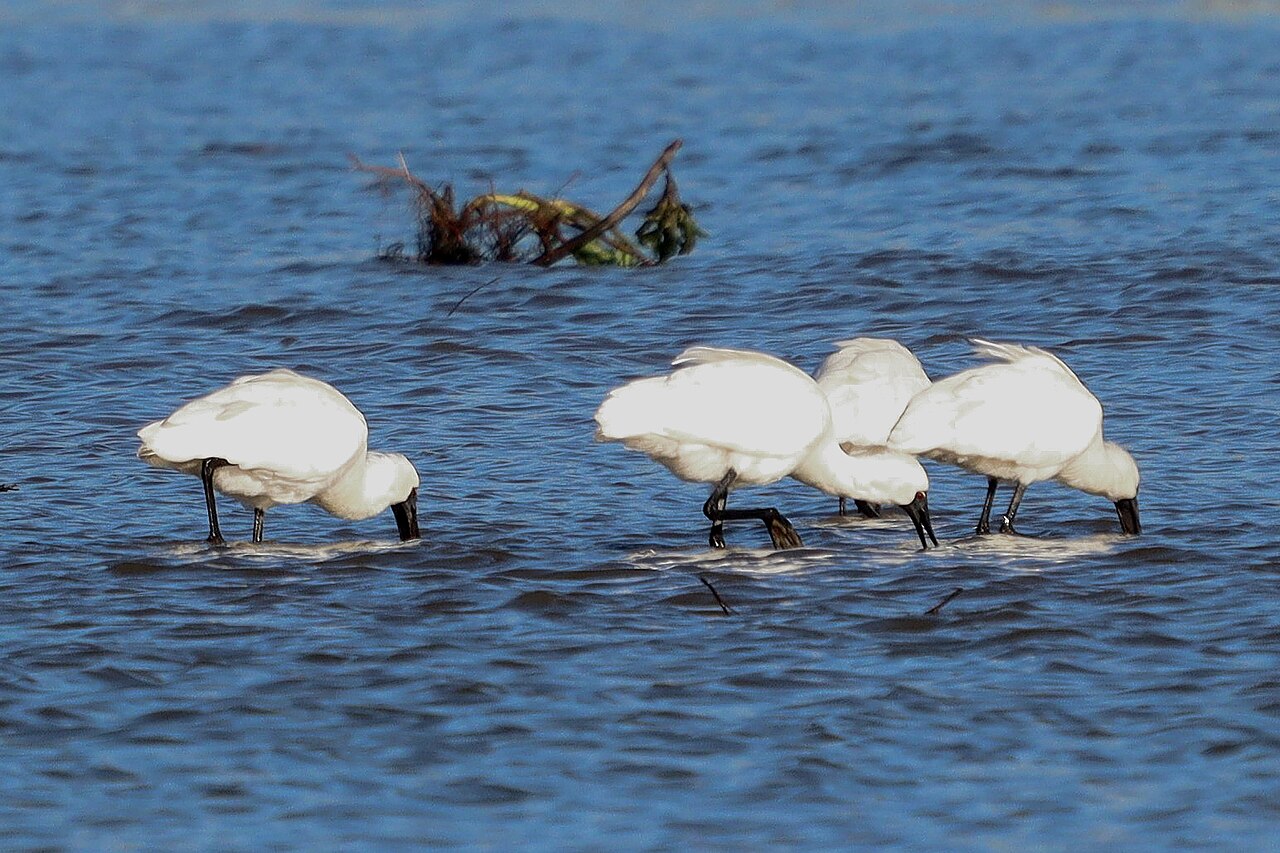
Spoonbills feeding at Pauatahanui inlet, New Zealand


Temperament
social and active
Flight Pattern
strong flier with steady wingbeats; flies with neck and legs fully extended
Social Behavior
Usually seen in small to large flocks, often mixed with ibises and herons at feeding and roost sites. Breeds colonially, building platform nests in trees, mangroves, or reedbeds near water. Pairs engage in courtship displays that include bill-clattering and crest-raising.
Migratory Pattern
Partial migrant
Song Description
Generally quiet, producing low grunts and snorts around colonies. Courtship and territorial interactions involve bill-clattering and soft guttural calls.
Plumage
Entirely white plumage with a long, shaggy nuchal crest in breeding season; sleek, smooth body feathers otherwise.
Diet
Takes small fish, shrimp, prawns, crabs, aquatic insects, and occasionally mollusks. Forages by sweeping the open bill side to side in shallow water, snapping shut when it contacts prey. May stir the substrate with its feet to flush prey and often feeds in loose lines with other waders.
Preferred Environment
Shallow margins of estuaries, tidal flats, brackish lagoons, rice fields, flooded pastures, and freshwater wetlands. Prefers calm, gently sloping shorelines with soft substrates and abundant small aquatic fauna.


