The Réunion harrier, also known as Réunion marsh harrier, is a species of bird of prey belonging to the marsh harrier group of harriers. It is now found only on the Indian Ocean island of Réunion, although fossil material from Mauritius has been referred to this species. It is known locally as the papangue or pied jaune. The Malagasy harrier of Madagascar and the Comoro Islands was previously treated as a subspecies of this bird but is increasingly regarded as a separate species. The Réunion harrier appears to be declining in numbers and it is classed as an endangered species.
Region
Mascarene Islands
Typical Environment
Today it survives only on Réunion, where it uses a mosaic of habitats including coastal marshes, open grasslands, sugarcane fields, and montane shrubland. It hunts low over open areas, often along field edges and gullies. Nesting typically occurs on the ground in dense vegetation or within crops, sometimes in secluded wetland patches. The species avoids dense closed forest but will work along forest margins and ravines. Human-altered landscapes can be used if there is sufficient cover and prey.
Altitude Range
Sea level to 2000 m
Climate Zone
Tropical
Ease of Keeping
Beginner friendly: 1/5
Known locally as the papangue or pied jaune, the Réunion harrier is the island’s only breeding raptor. It was once lumped with the Malagasy harrier but is now generally recognized as a distinct species. Fossil remains indicate it formerly occurred on nearby Mauritius. Its decline is driven by habitat loss, persecution, and low reproductive success in disturbed landscapes.


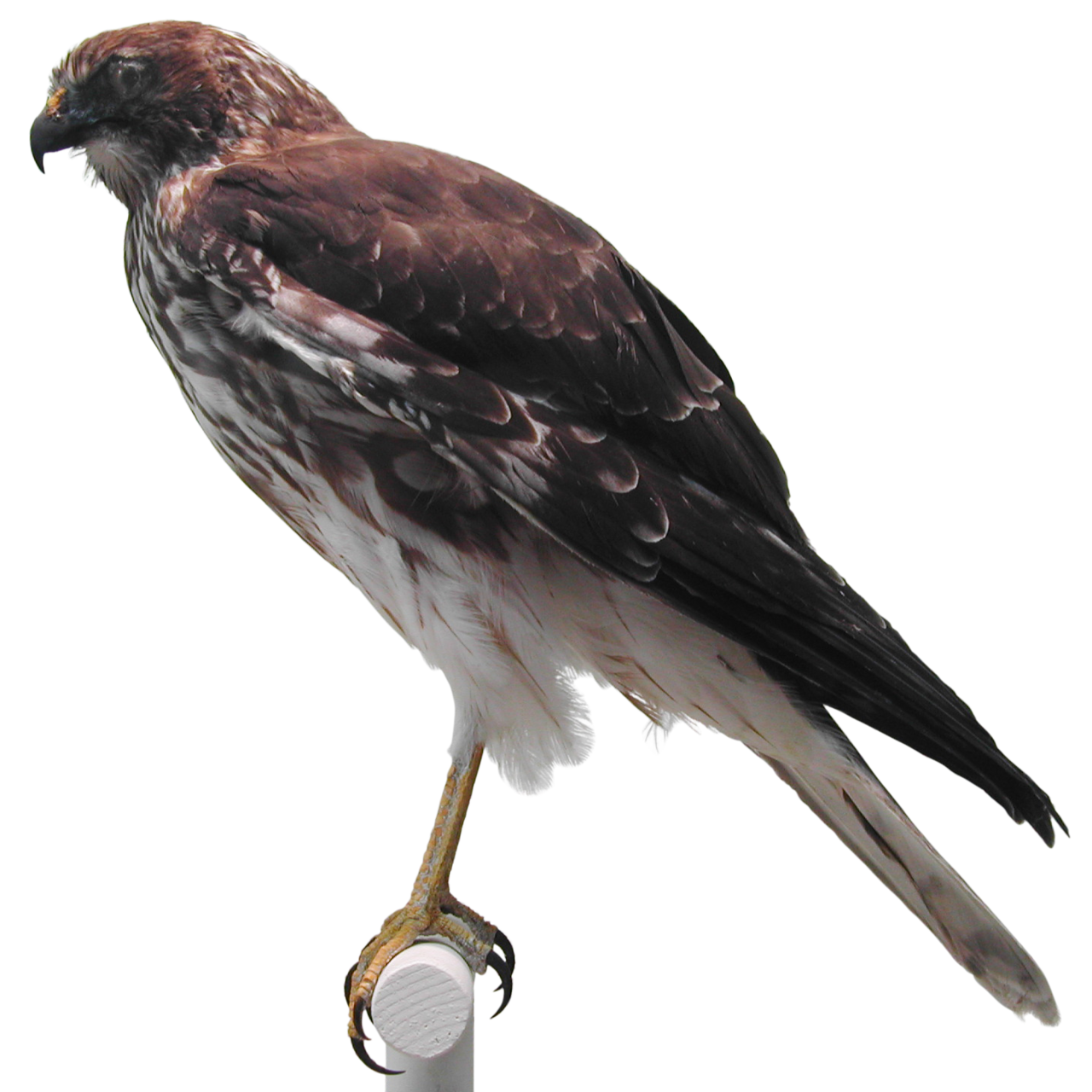
Specimen in Réunion Natural History Museum

Sub-fossil remains of a Réunion harrier 9–10 and other birds from Mauritius
Temperament
solitary and territorial
Flight Pattern
low quartering flight with buoyant glides
Social Behavior
Pairs are typically monogamous and defend nesting territories. Courtship includes aerial displays and mid-air food passes. Nests are placed on the ground in dense cover or crops, with the male provisioning the female and chicks during early brood-rearing.
Migratory Pattern
Resident
Song Description
Generally quiet, but gives sharp kek-kek alarm calls near the nest. During courtship, softer whistles and chattering notes may be heard between mates.
Plumage
Male is mostly grey with black wingtips and a contrasting pale underside; female is dark brown with buff streaking on the head and breast. All ages show a conspicuous white rump, long tail, and narrow wings typical of harriers. Juveniles are darker, often with warm buff markings on the head and underparts.
Diet
It preys on small birds, rodents, and lizards, and will also take large insects when available. The bird hunts by quartering low over open ground, using keen vision and surprise pounces. It may occasionally scavenge or take prey flushed by agricultural activity.
Preferred Environment
Often hunts over grasslands, marsh edges, and sugarcane fields, following hedgerows and ravines. Perches on poles or low trees to scan for prey and then resumes low, methodical flight over open terrain.