

The red-vented cockatoo, also known as the Philippine cockatoo and locally katala, abukay, agay, or kalangay, is a species of cockatoo. It is endemic to the Philippines, formerly found throughout the entire country, but due to the illegal wildlife trade, it is now locally extinct in most of its range with the only sizeable population remaining in Palawan and Sulu Archipelago. Remnant populations occur in the Polillo Islands, Bohol, and Samar. It is roughly the size and shape of the Tanimbar corella, but is easily distinguished by the red feathers around the vent. It is threatened by habitat loss and the cage-bird trade.
Region
Southeast Asia
Typical Environment
Occurs in the Philippine lowlands, favoring coastal forests, mangroves, and second-growth woodland. It forages in agricultural mosaics, including coconut groves and rice fields, and often visits fruiting trees in villages. Nesting typically occurs in cavities of large trees, sometimes in mangrove stands or along riverine forests. Communal roosts are frequently on small offshore islets that offer safety from predators and human disturbance.
Altitude Range
Sea level to 1000 m
Climate Zone
Tropical
Ease of Keeping
Beginner friendly: 1/5
Also called the Philippine cockatoo or katala, this species is famed for the distinctive red patch of feathers around its vent. It has suffered dramatic declines from trapping for the cage-bird trade and habitat loss, with strongholds now mainly in Palawan and parts of the Sulu Archipelago. Intensive community-led conservation, especially on Rasa Island, has led to localized recoveries.


Two in captivity from the illegal wildlife trade
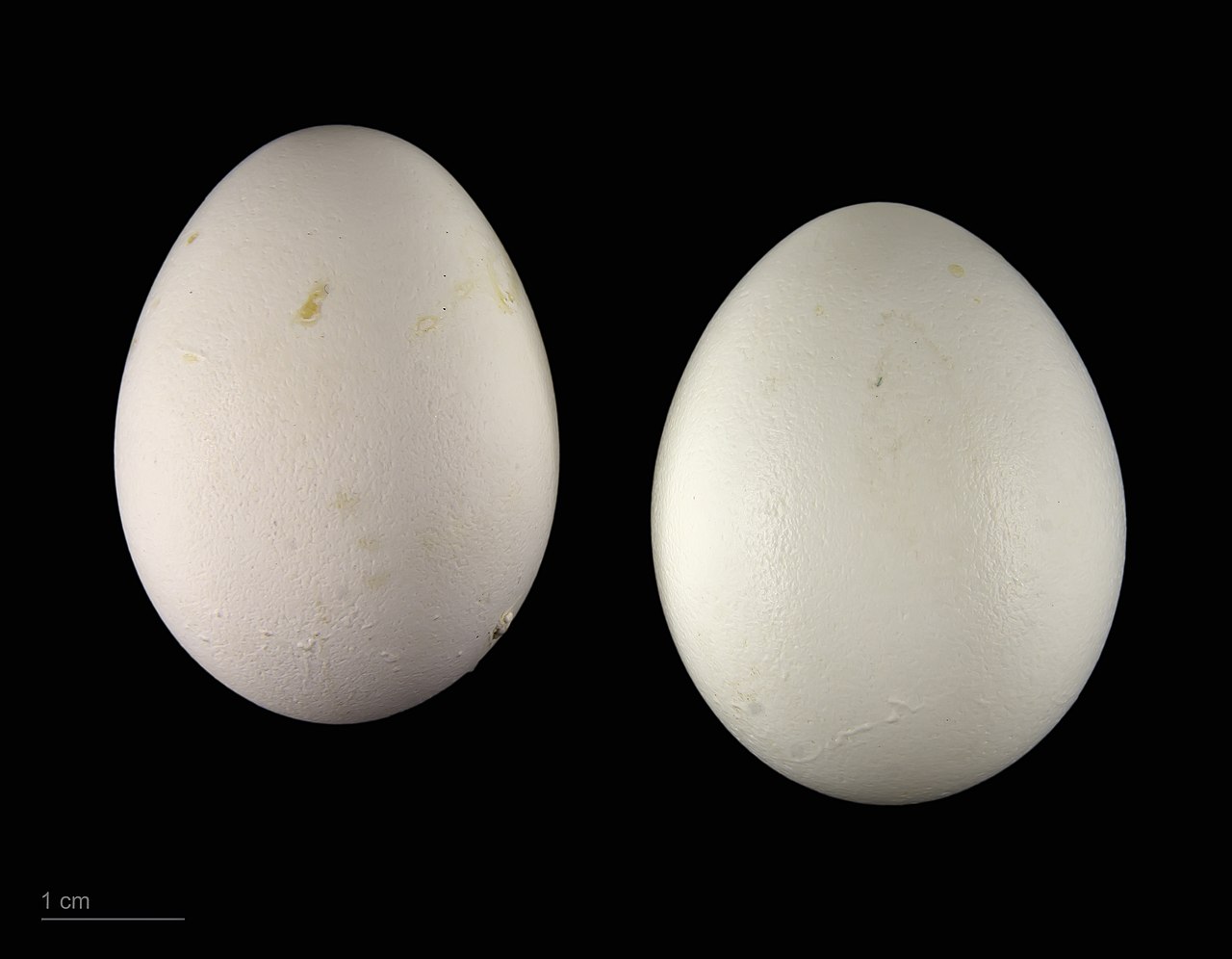
Two Philippine cockatoo eggs- MHNT
Temperament
social and noisy
Flight Pattern
strong flier with steady, direct wingbeats
Social Behavior
Usually seen in pairs or small family groups, gathering into larger flocks at favored roosts. Nests in tree cavities, with pairs defending the nest area but foraging more loosely with neighbors. Breeding typically coincides with the dry season when food is abundant.
Migratory Pattern
Resident
Song Description
Vocalizations are loud, harsh screeches and rasping calls that carry over long distances. Pairs use contact calls in flight and deliver excited, chattering bouts at roosts and feeding sites.
Plumage
Mostly white with a subtle yellow wash on the underwings and undertail; the undertail coverts around the vent are bright red. Short, expressive white crest; plumage is smooth and compact.
Diet
Feeds on seeds, fruits, nuts, flowers, and buds from native trees and mangroves. Frequently takes cultivated foods such as rice, corn, and tropical fruits when available. Uses its strong bill to crack hard seeds and husk nuts, and will glean buds and young shoots from canopy foliage.
Preferred Environment
Forages in mangrove edges, coastal forest canopy, and along forest–farmland interfaces. Often visits village fruit trees and agricultural fields near safe roosting sites.


