

The red-winged blackbird is a passerine bird of the family Icteridae found in most of North America and much of Central America. It breeds from Alaska and Newfoundland south to Florida, the Gulf of Mexico, Mexico, and Guatemala, with isolated populations in western El Salvador, northwestern Honduras, and northwestern Costa Rica. It may winter as far north as Pennsylvania and British Columbia, but northern populations are generally migratory, moving south to Mexico and the Southern United States.
Region
North America and northern Central America
Typical Environment
Occupies wetlands, marshes with cattails and bulrushes, wet meadows, and the edges of ponds and lakes. Also uses agricultural fields, pastures, and roadside ditches, especially outside the breeding season. Breeds from Alaska and Canada south through most of the United States into Mexico and Guatemala, with isolated populations farther into northern Central America. Winters broadly across the southern United States and Mexico, with some birds remaining resident where conditions are mild.
Altitude Range
Sea level to 2500 m
Climate Zone
Temperate
Ease of Keeping
Beginner friendly: 2/5
Males display bright red shoulder patches (epaulets) to defend territories and attract mates, while females are streaky brown for camouflage in marsh vegetation. They often form massive winter roosts numbering in the hundreds of thousands. Diet shifts seasonally, with more insects taken during breeding and more seeds and grains in winter. Common and adaptable, they sometimes come into conflict with farmers by feeding in crop fields.


Male seen from behind, showing the absence of the typical yellow bands below the red spots
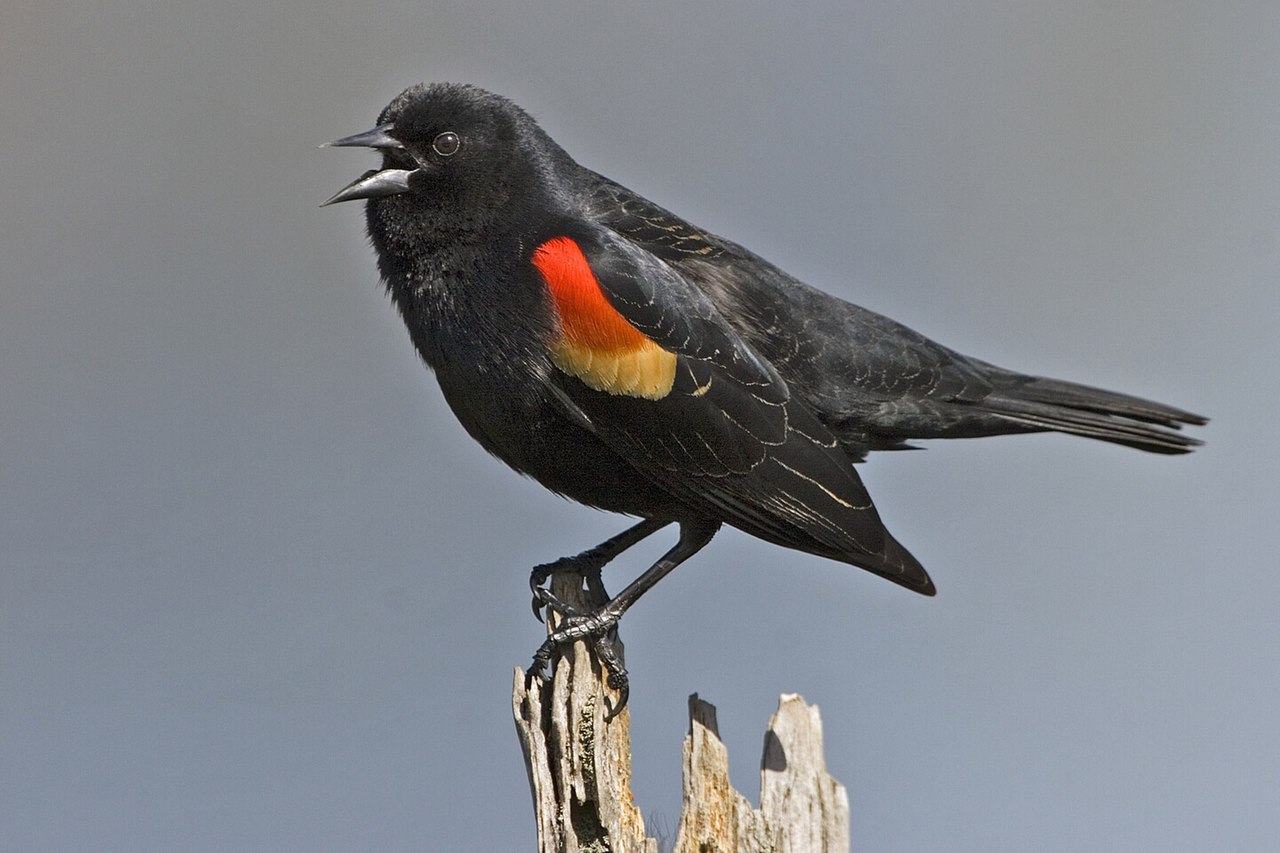
Male displaying his characteristic predominantly black plumage with the red spot on the wing bordered by the yellow band

The golden coloration on the wing of the female red-winged blackbird

Male red-winged blackbird singing


Wing feathers

Leucistic female, in Texas

The "perched display", with wings held away from the body, is an agonistic behavior of the red-winged blackbird.
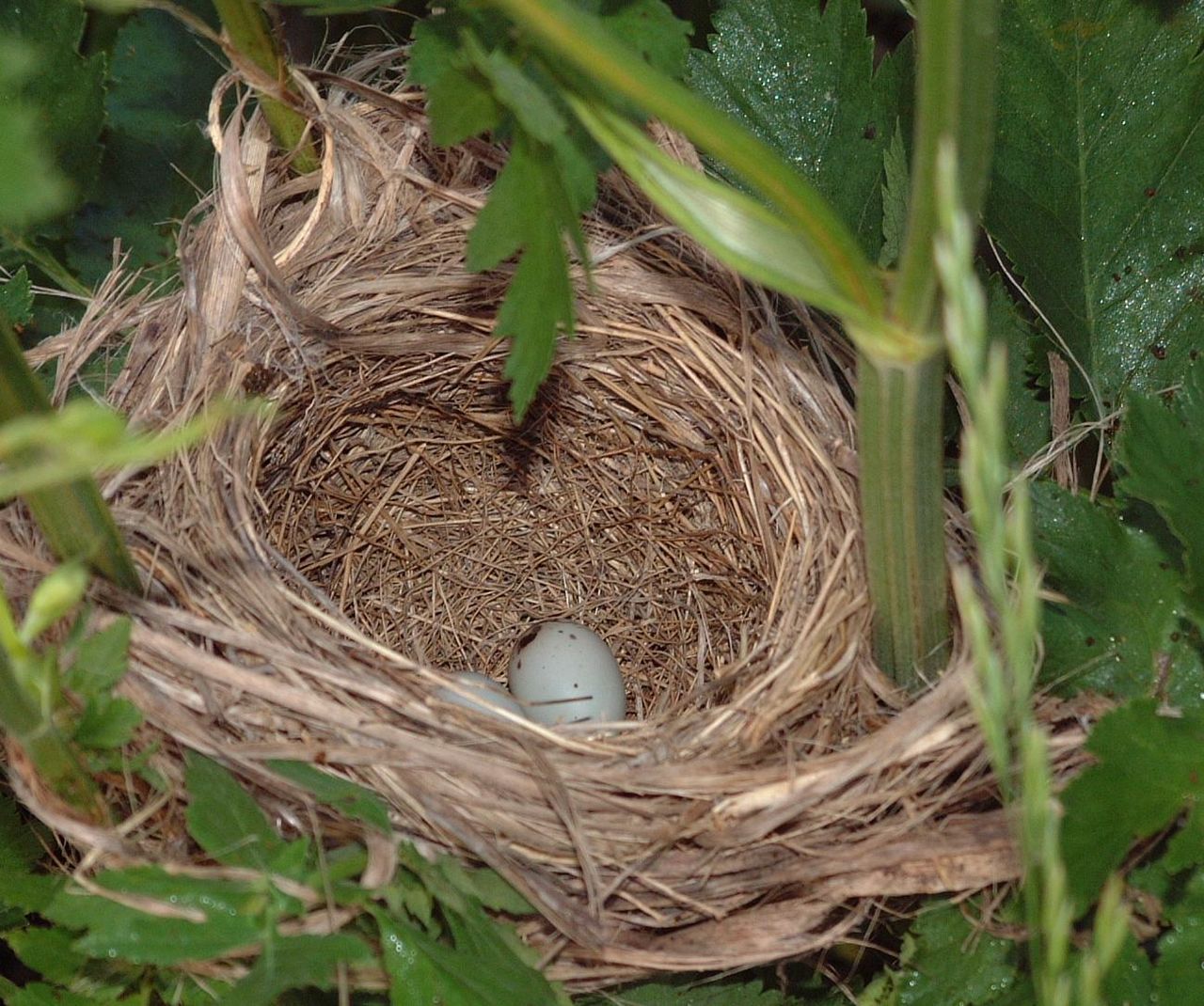
Nest with eggs

The raccoon is one of the known predators of this species.

Male red-winged blackbird mobbing an osprey

Flock flying in the twilight
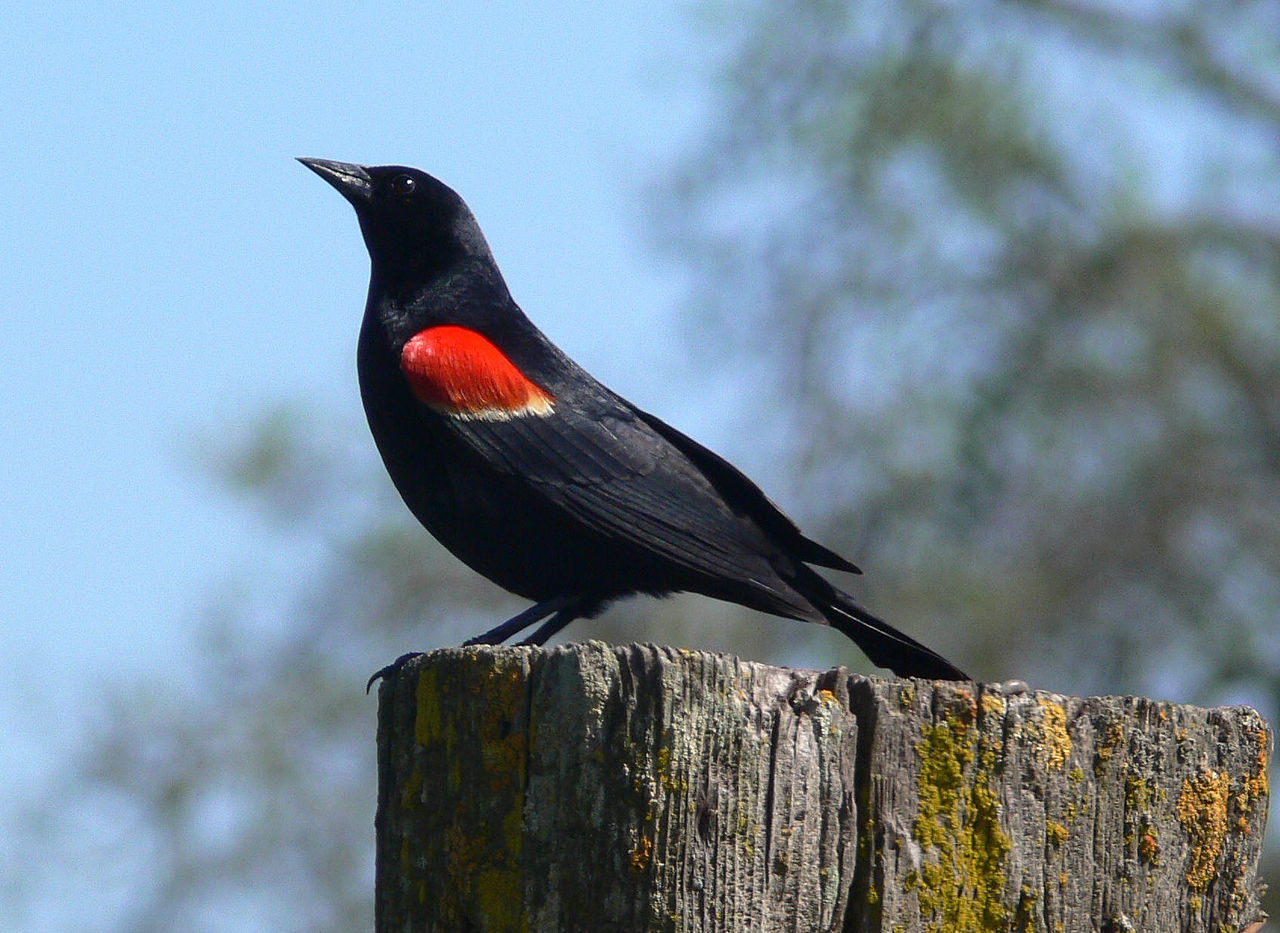
Male perched on a log


Temperament
social and territorial
Flight Pattern
strong flier with steady wingbeats
Social Behavior
Breeds in loose colonies in marshes, with males defending territories that may include multiple nesting females (polygyny). Nests are typically woven low over water among cattails or reeds. Outside the breeding season, forms large mixed-species flocks and communal roosts.
Migratory Pattern
Partial migrant
Song Description
The male’s song is a loud, buzzy gurgle often rendered as “conk-la-ree!” delivered from prominent perches. Calls include sharp checks and chattering notes, with females giving a rapid series of chatters near the nest.
Plumage
Males are glossy black with conspicuous red shoulder patches edged in yellow; females are heavily streaked brown with a paler eyebrow and underparts. Juveniles resemble females but with warmer tones and streaking.
Diet
Eats seeds and grains (including grasses, weeds, and crops like corn and rice), as well as insects such as beetles, caterpillars, and grasshoppers. During the breeding season, invertebrates form a larger proportion of the diet, providing protein for nestlings. Also takes spiders, snails, and occasionally small aquatic invertebrates.
Preferred Environment
Forages on the ground and low vegetation at wetland margins, in fields and pastures, and along ditches. In marshes, often clings to cattails and reeds to glean insects and seeds.


