
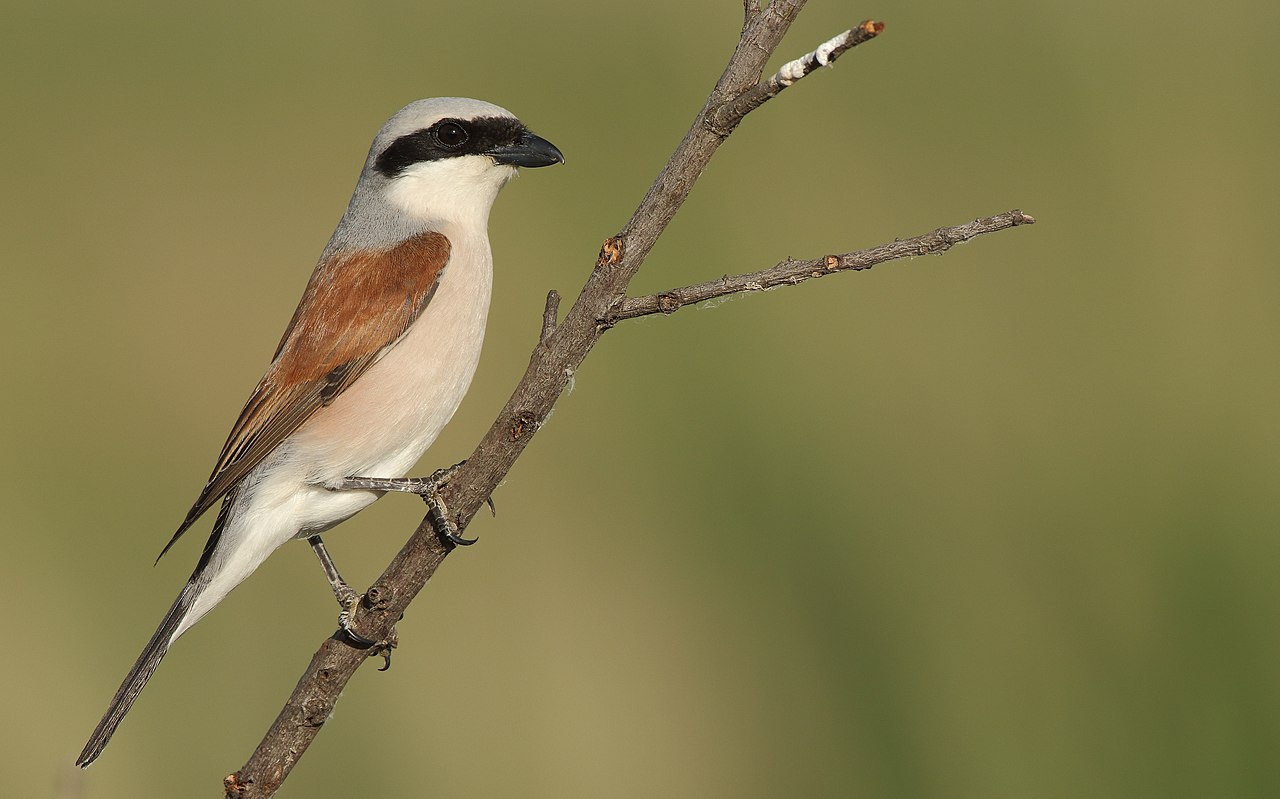
The red-backed shrike is a carnivorous passerine bird and member of the shrike family, Laniidae. Its breeding range stretches from Western Europe east to central Russia. It is migratory and winters in the eastern areas of tropical Africa and southern Africa.
Region
Western Palearctic
Typical Environment
Breeds across much of Europe and into western and central Asia in open country with hedgerows, scrub, and scattered trees. Prefers edge habitats, traditional farmland mosaics, and thorny bushes for perching and nesting. Avoids dense forests and highly urbanized areas. Winters in eastern and southern Africa, mainly in savanna and thornveld with abundant insects and lookout perches.
Altitude Range
0–2200 m
Climate Zone
Temperate
Ease of Keeping
Beginner friendly: 1/5
The red-backed shrike is famous for impaling prey on thorns or barbed wire to create a 'larder', aiding in storage and handling. Males show a striking grey head with a black mask and a rich chestnut back, while females are browner and finely barred. It has declined in parts of Western Europe due to agricultural intensification but remains widespread overall. During migration it can gather in loose groups at good feeding sites.


Temperament
solitary and territorial
Flight Pattern
short rapid wingbeats with direct, purposeful flights
Social Behavior
Breeding pairs defend territories, nesting low in dense shrubs or thorny bushes. Clutches typically contain 4–6 eggs, and both parents feed the young. Outside the breeding season, birds may gather loosely at rich feeding spots, especially during migration.
Migratory Pattern
Seasonal migrant
Song Description
Song is a soft, varied warble with harsh chattering notes and occasional mimicry of other species. Calls include sharp 'tchak' scolds and mechanical-sounding clicks when agitated.
Plumage
Male with grey head, bold black facial mask, rufous-red back, and pinkish to buff underparts; female and juvenile brownish with fine barring and more subdued tones.
Diet
Takes large insects such as beetles, grasshoppers, and wasps, along with small vertebrates including lizards, small mammals, and young birds. Hunts from prominent perches, dropping to the ground or sallying to catch prey. Often impales prey on thorns or wire to store and tear apart later.
Preferred Environment
Feeds in open country with scattered shrubs, hedgerows, and field margins that provide lookout perches. In winter, frequents acacia-dominated savannas and thorn scrub.


