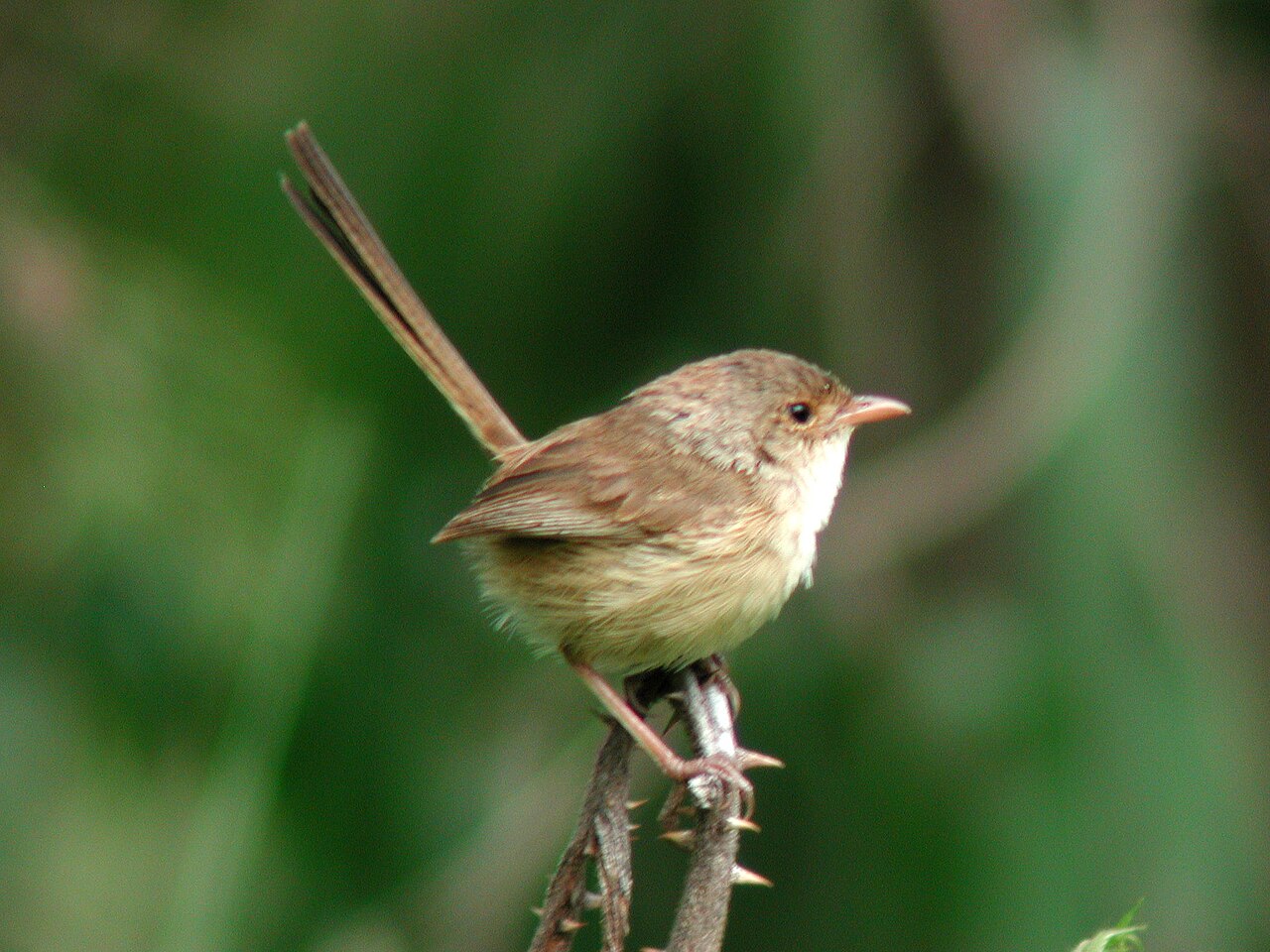
The red-backed fairywren is a species of passerine bird in the Australasian wren family, Maluridae. It is endemic to Australia and can be found near rivers and coastal areas along the northern and eastern coastlines from the Kimberley in the northwest to the Hunter Region in New South Wales. The male adopts a striking breeding plumage, with a black head, upperparts and tail, and a brightly coloured red back and brown wings. The female has brownish upperparts and paler underparts. The male in eclipse plumage and the juvenile resemble the female. Some males remain in non-breeding plumage while breeding. Two subspecies are recognised; the nominate M. m. melanocephalus of eastern Australia has a longer tail and orange back, and the short-tailed M. m. cruentatus from northern Australia has a redder back.
Region
Northern and Eastern Australia
Typical Environment
Occurs from northwest Australia across the tropical north and down the eastern seaboard to at least the Hunter Region of New South Wales. Favors open woodlands, tropical savanna, coastal heath and scrub, mangrove margins, and riparian thickets. Often found in rank grass and low, dense shrub layers that provide cover and nest sites. Frequently uses early successional regrowth after fire and edges of cane fields or pasture with scattered shrubs.
Altitude Range
Sea level to 800 m
Climate Zone
Tropical
Ease of Keeping
Beginner friendly: 1/5
This tiny wren is famous for the male’s striking breeding plumage: a vivid red back contrasting with a glossy black head and body, while females stay brown and buff. Some males remain in female-like plumage even while breeding, a strategy thought to reduce aggression from rivals. They live in small cooperative groups that defend territories and raise multiple broods in a season. Their constantly cocked tail and quick, active movements make them easy to spot in low shrubs.


Male in flight

Eclipse plumage of male

Imperata cylindrica,a preferred habitat

Female (left) and male in Cairns, Queensland.
Temperament
social and active
Flight Pattern
short rapid wingbeats, low to the ground
Social Behavior
Lives in small territorial groups, typically a dominant breeding pair with helpers. Builds domed nests low in dense grass or shrubs and may raise multiple broods in a season. Courtship includes display postures and close following of females, and extra-pair matings are common within the group-based social system.
Migratory Pattern
Resident
Song Description
Song is a thin, high-pitched series of trills and tinkling notes delivered from low perches. Calls include sharp chips and soft contact notes used to keep groups coordinated in dense cover.
Plumage
Male in breeding season is glossy black with a bright red back and rump; wings brown; tail long and often cocked. Females and juveniles are warm brown above with paler, buffy underparts and a duller tail. Non-breeding (eclipse) males resemble females but may retain darker features.
Diet
Primarily eats small insects and other arthropods such as beetles, caterpillars, ants, and spiders. Forages by gleaning from leaves and twigs and by searching the ground and low vegetation. Occasionally takes small seeds or berries but animal prey dominates the diet.
Preferred Environment
Feeds in low, dense shrubs, grass tussocks, and edges of woodland and scrub. Often forages in pairs or small groups, moving quickly and staying close to cover.