

The razorbill is a North Atlantic colonial seabird and the only extant member of the genus Alca of the family Alcidae, the auks. It is the closest living relative of the extinct great auk. Historically, it has also been known as "auk", "razor-billed auk" and "lesser auk".
Region
North Atlantic
Typical Environment
Razorbills breed on rocky sea cliffs and offshore islands across the North Atlantic, including eastern Canada and Maine, Greenland, Iceland, the Faroe Islands, the British Isles, and coastal Norway down to western France. After breeding, they disperse widely at sea, wintering along the northwest Atlantic from New England to the Grand Banks and in the northeast Atlantic from the North Sea to the Bay of Biscay, with occasional movements into the western Mediterranean. They favor shelf waters and areas with strong tidal fronts where small fish concentrate. Non-breeding birds can remain far offshore for months.
Altitude Range
Sea level to 200 m
Climate Zone
Temperate
Ease of Keeping
Beginner friendly: 1/5
The razorbill is the only living member of the genus Alca and the closest extant relative of the extinct great auk. It is a superb underwater pursuit diver, using its wings to ‘fly’ through the water to chase schooling fish. Breeds in dense cliff colonies but spends most of the year far offshore. Vulnerable to threats such as oil spills, bycatch, and prey shifts from warming seas.


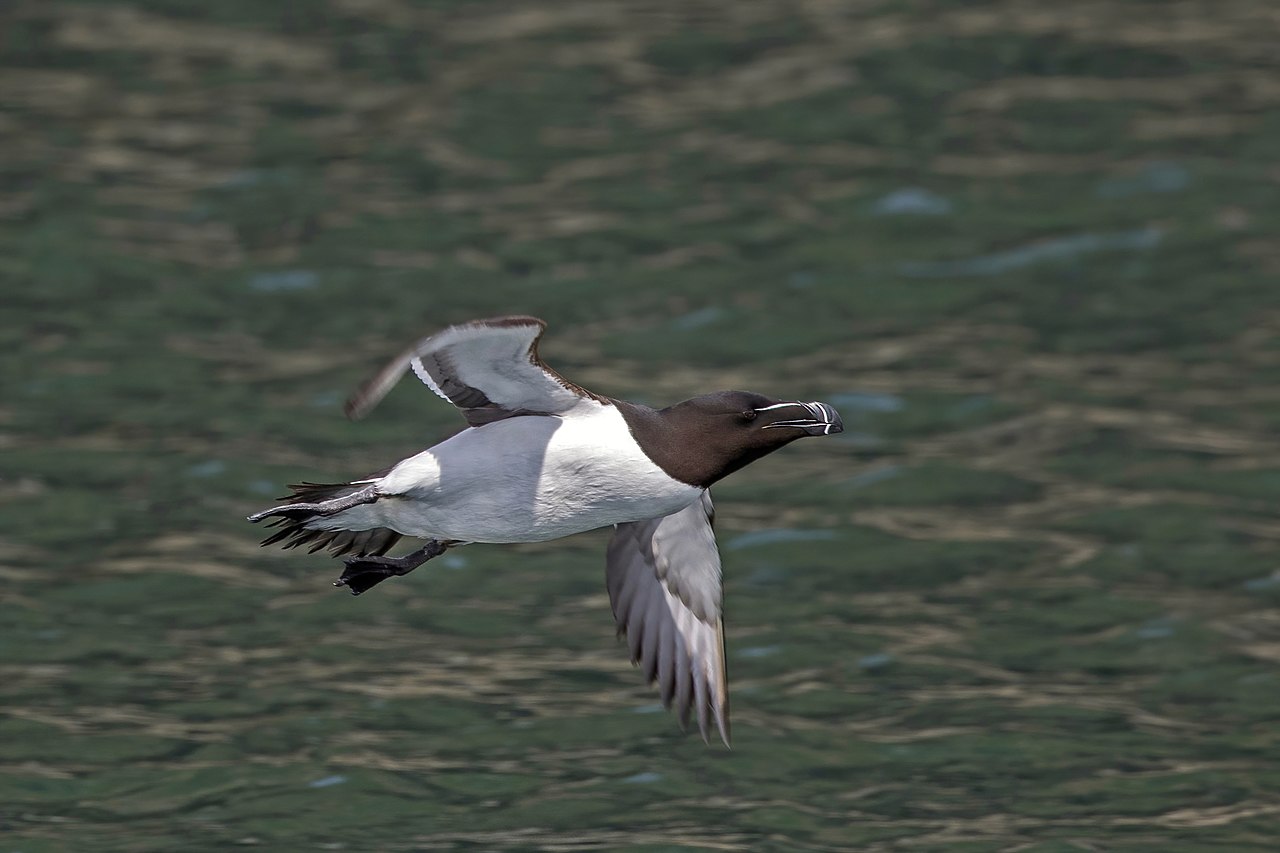
In flight off Skomer Island


Taking off from water
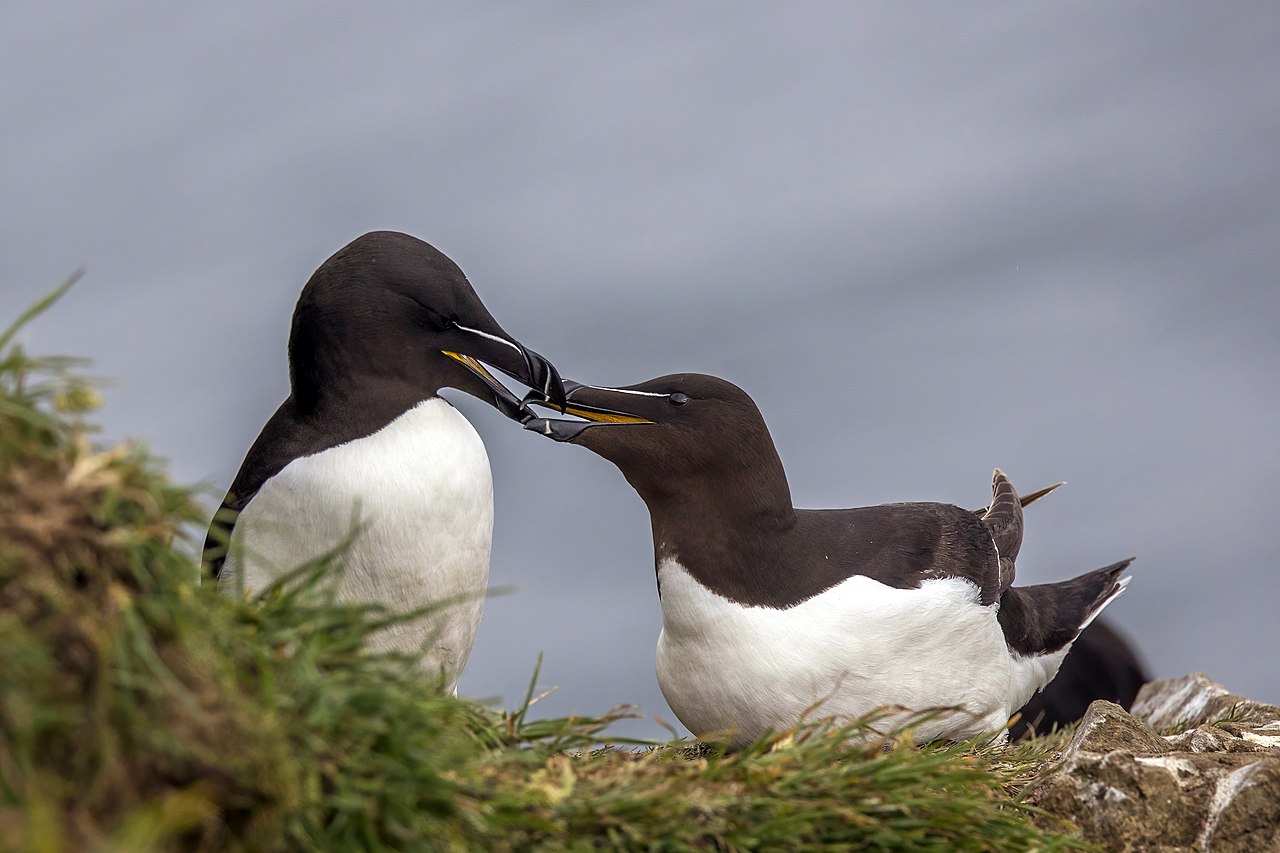
Courting on Skomer Island

Banded chick on Gannet Island, Labrador

Egg

Razorbills on Machias Seal Island Migratory Bird Sanctuary
Temperament
colonial on breeding cliffs, wary and elusive at sea
Flight Pattern
short rapid wingbeats, flying low over the water
Social Behavior
Breeds in dense colonies on cliffs and rocky islets, nesting in crevices or under boulders. Lays a single egg; both parents incubate and feed the chick. Pairs are often long-term and show strong site fidelity. Chicks depart the nest at night by leaping to the sea and are escorted by the male.
Migratory Pattern
Seasonal migrant
Song Description
Vocal at colonies with low croaks, grunts, and harsh rattling calls. At sea they are mostly quiet, giving occasional guttural notes during social interactions.
Plumage
Glossy black upperparts with clean white underparts and a sharp color demarcation; in breeding season the face is dark with a fine white line from the bill to the eye, while non-breeding birds show more white on the face and throat.
Diet
Primarily small schooling fish such as sandeels, capelin, sprat, and young herring, supplemented by small crustaceans. Hunts by pursuit diving, using rapid wing strokes underwater. Typical foraging dives are tens of meters deep, with the ability to reach greater depths when prey is scarce. Prey is swallowed underwater or brought to the surface to manipulate.
Preferred Environment
Forages over continental shelf waters, tidal fronts, and areas of upwelling where baitfish aggregate. During breeding, often feeds within commuting distance of colonies but may range widely when conditions require.


