

The Raso lark is a small passerine bird with a highly restricted range, being found only on Raso islet in the Cape Verde Islands. This critically endangered member of the family Alaudidae lives in very arid terrain, and is considered one of the least known birds in the Western Palaearctic region, due to its remoteness and the lack of much ornithological study on the archipelago as a whole.
Region
Cape Verde Archipelago
Typical Environment
Restricted almost entirely to the low, rocky, and very arid Raso islet in the Barlavento (northern) group of Cape Verde. It uses open stony plains, sparse grass tussocks, and lava flats with scattered low shrubs. Ground cover is typically minimal, and breeding is closely tied to brief green flushes after rain. Birds forage and nest on the ground, often under grass clumps or stones for shade and concealment. Conservation measures have focused on maintaining these open, predator-free habitats and, where feasible, creating a backup population on nearby islands.
Altitude Range
Sea level to 200 m
Climate Zone
Arid
Ease of Keeping
Beginner friendly: 1/5
This island endemic survives on a single tiny, arid islet and its numbers swing dramatically with rainfall. It typically breeds only after good rains when ephemeral grasses and insects appear. Males often have noticeably longer, slightly decurved bills than females. Intensive conservation has included predator control and attempts to establish a second population on nearby islands.




Temperament
generally wary but can be approachable in open terrain
Flight Pattern
low, undulating flight with short rapid wingbeats; occasional brief song flights
Social Behavior
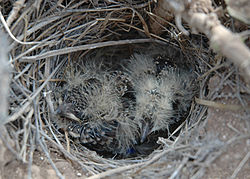
Often seen singly or in small groups; more dispersed and territorial during breeding. Nests are shallow ground scrapes hidden beneath grass tufts or stones. Breeding is opportunistic and typically follows rainfall, with clutch size and success varying with resource availability.
Migratory Pattern
Resident
Song Description
A soft, musical series of trills, twitters, and whistles, reminiscent of other larks but quieter. Songs are delivered from the ground or during short fluttering song flights. Calls include thin, high 'tsip' notes used in contact and alarm.
Plumage
Sandy-brown upperparts heavily streaked with darker brown; paler, lightly streaked breast and whitish belly. Feathers appear worn and dusty in arid seasons, aiding camouflage against rocky ground.
Diet
Takes small seeds and a variety of invertebrates, including beetles, termites, and caterpillars. In wetter periods it increases insect intake; in dry spells it relies more on seeds and any available plant material. Forages by walking and pecking on open ground, occasionally probing among stones and grass bases.
Preferred Environment
Open, sparsely vegetated plains, lava flats, and gravelly slopes where prey is visible and accessible. Often feeds near ephemeral green patches after rains and around sheltered microhabitats that hold moisture and insects.


