

The plumbeous hawk is a species of bird of prey in the family Accipitridae.
Region
Amazon Basin and adjacent foothills
Typical Environment
Occurs in humid lowland and foothill rainforests of northern South America, including parts of Brazil, Colombia, Ecuador, Peru, and Bolivia, with possible occurrence in Venezuela. It prefers mature terra firme forest but also uses várzea edges, tall secondary growth, and forested river corridors. Typically keeps to the interior or mid-canopy, where it can remain inconspicuous. It is most often seen along forest edges or quiet tracks where perches allow ambush hunting. Human disturbance generally reduces detectability.
Altitude Range
0–1200 m
Climate Zone
Tropical
Ease of Keeping
Beginner friendly: 1/5
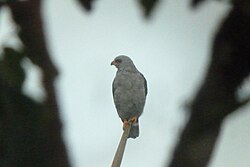
The plumbeous hawk is a secretive forest raptor of northern Amazonia, often detected by its mellow whistles rather than by sight. It favors dense lowland rainforest and hunts by ambush from shaded perches. Formerly placed in Leucopternis, it is now the sole species in the genus Cryptoleucopteryx. Habitat loss is its main threat, though it remains locally fairly widespread.


Temperament
solitary and secretive
Flight Pattern
short rapid wingbeats with brief glides; occasional soaring above canopy
Social Behavior
Usually encountered alone or in pairs, especially during breeding. Builds a stick nest high in the canopy; clutch is typically small, and both adults share incubation and care. Displays territorial behavior around nest sites, but otherwise remains unobtrusive.
Migratory Pattern
Resident
Song Description
Vocalizations are soft, whistled notes given singly or in short series from concealed perches. Calls carry at dawn and dusk through the forest and may include plaintive, descending whistles.
Plumage
Mostly uniform slaty-gray with slightly paler underparts and a darker tail showing narrow pale bands and a whitish tip.
Diet
An ambush predator feeding mainly on small birds, lizards, frogs, and large insects. It also takes small mammals when available. Prey is usually seized in quick dashes from a perch, sometimes after a short glide through gaps in the canopy.
Preferred Environment
Hunts along forest edges, light gaps, river margins, and interior perches with clear strike paths. Often selects shaded, mid-level perches that afford wide views into understory clearings.


