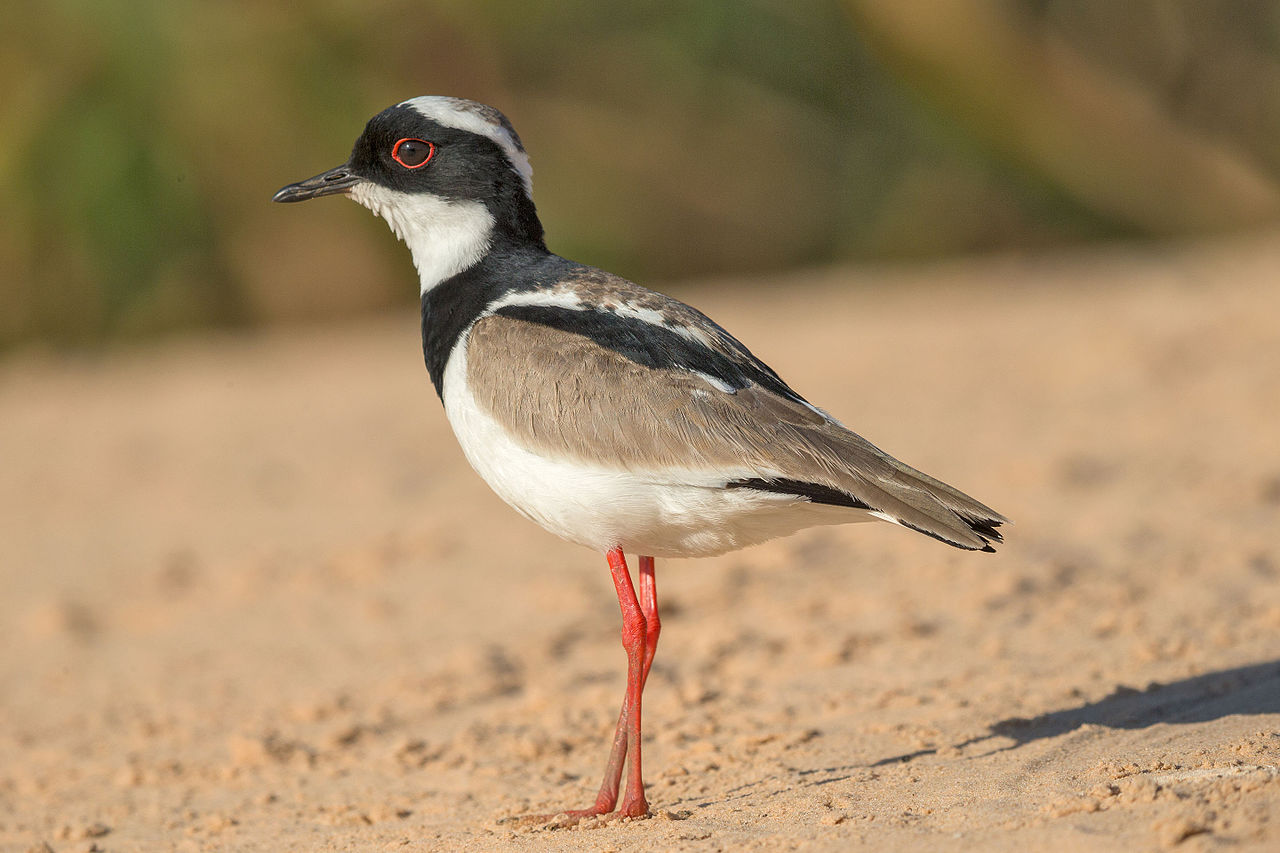
The pied honeyeater is a species of bird in the family of honeyeaters Meliphagidae and the sole species in the genus Certhionyx. This species is also known as the black and white honeyeater or western pied honeyeater.
Region
Australian arid interior
Typical Environment
Occurs across arid and semi-arid inland Australia, especially in mulga (Acacia) shrublands, chenopod plains, and sandplain country. It frequents flowering Eremophila, Grevillea, Hakea, and mistletoe, and uses dry creeklines and open woodlands when blooms are abundant. After good rains it can irrupt into areas where it is otherwise scarce, including mallee and pastoral lands. It avoids dense forests and urban centers, favoring open, sparsely vegetated habitats with nectar sources.
Altitude Range
Sea level to 800 m
Climate Zone
Arid
Ease of Keeping
Beginner friendly: 1/5
The pied honeyeater is the only species in the genus Certhionyx and is adapted to Australia’s arid interior. It is highly nomadic, moving widely to track flowering shrubs like Eremophila after rain. Males show a striking black-and-white contrast with a bold white wing patch that flashes in flight. They often appear suddenly in numbers when conditions are favorable, then vanish when blossoms fade.


North, A 1909, p. 90 Pied honeyeater nest
Temperament
often nomadic; wary but active around flowering shrubs
Flight Pattern
short rapid wingbeats with swift, direct flights between shrubs
Social Behavior
Usually seen singly or in pairs, but forms loose groups where nectar is abundant. Builds a small cup nest in shrubs or low trees, often after rainfall triggers flowering. Courtship involves display flights and song from exposed perches.
Migratory Pattern
Partial migrant
Song Description
Song is a series of clear, piping whistles and soft trills delivered from a perch. Calls include sharp chips and sweet descending notes, more frequent during breeding and when defending rich nectar sources.
Plumage
Male is sharply pied with glossy black upperparts and a bold white wing panel; tail shows white edges. Female is brownish-grey with fine streaking and a paler underbody, with a smaller, duller wing patch.
Diet
Primarily feeds on nectar from Eremophila, Grevillea, Hakea, and mistletoes, probing flowers with its curved bill. Supplements diet with small insects and spiders gleaned from foliage or hawked in short flights. Will also take lerp and honeydew when available.
Preferred Environment
Feeds in open shrublands and along dry creeklines where flowering shrubs and small trees are spaced. Often forages methodically through flowering bushes, moving quickly between rich blooms.