
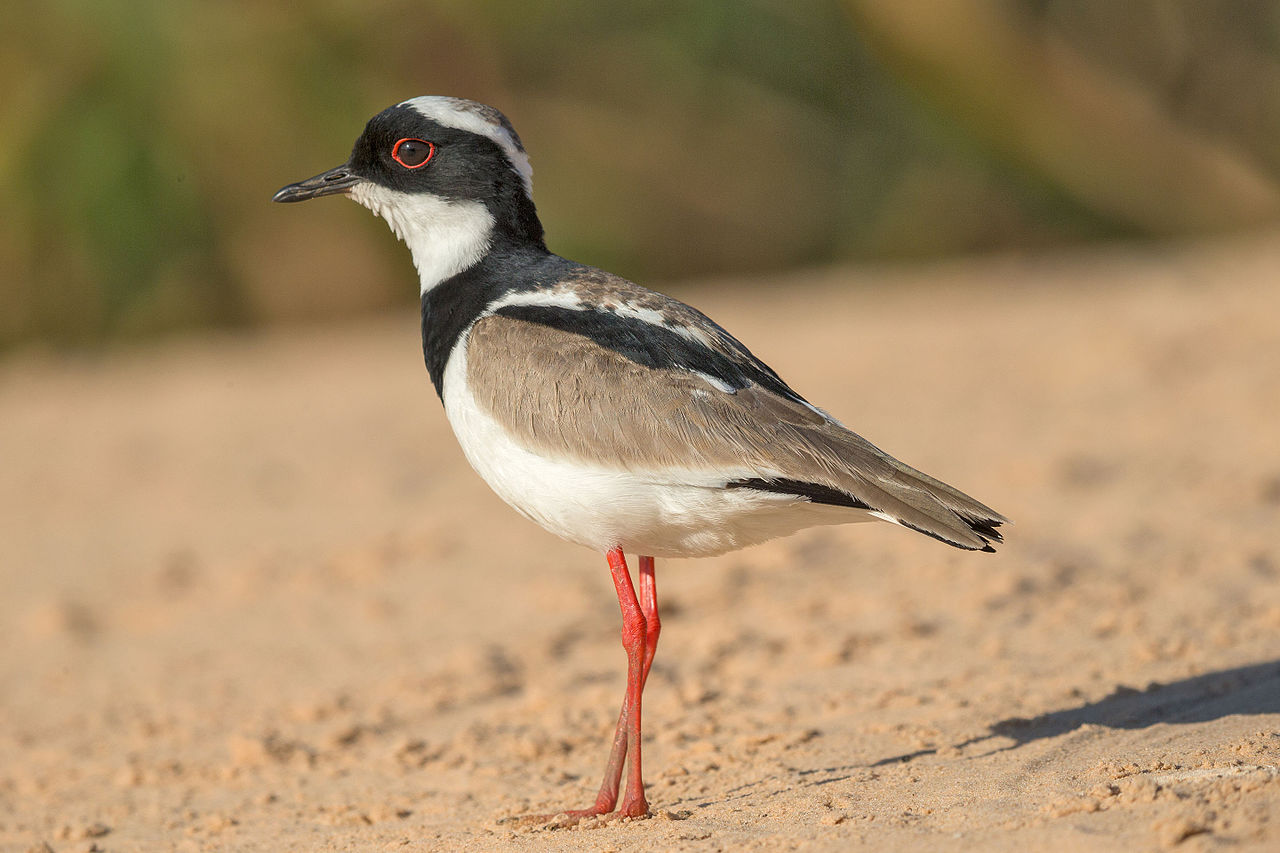
The pied plover, also known as the pied lapwing, is a species of bird in the family Charadriidae. It is a bird of least concern according to the IUCN and can be found in northern South America. The species name cayanus refers to Cayenne, the capital of French Guiana, where the pied plover can be found.
Region
Amazon Basin and the Guianas
Typical Environment
Found along large lowland rivers and their islands across northern South America, especially within the Amazon Basin and the Guianas. It prefers open, sandy or gravelly riverbanks, beaches, and mid-channel sandbars with sparse vegetation. The species is typically tied to seasonal river dynamics, shifting locally as water levels rise and fall. Occasional records occur on lagoon margins and reservoir shorelines, but it is most numerous on broad natural river systems.
Altitude Range
Sea level to 600 m
Climate Zone
Tropical
Ease of Keeping
Beginner friendly: 1/5
Also called the pied lapwing, this shorebird is the sole member of the genus Hoploxypterus. It favors wide, open river sandbars where it nests in a shallow scrape on bare sand, relying on camouflage. Both parents guard the nest and perform distraction displays to deter predators. The species is currently of Least Concern and is locally common along major rivers.


Temperament
alert and moderately territorial
Flight Pattern
strong flier with rapid wingbeats, often low over water
Social Behavior
Often seen in pairs or small loose groups on expansive sandbars. Nests are shallow scrapes in open sand where 2–3 well-camouflaged eggs are laid. Both sexes incubate and defend the territory, employing distraction displays when threatened.
Migratory Pattern
Resident
Song Description
Vocal, especially in flight, giving clear whistled notes and sharp, piping alarm calls. Calls carry over open water and are used to maintain contact between mates and to signal intruders.
Plumage
Striking pied pattern with clean white underparts cut by a bold black breast band; upperparts are pale brownish to gray with contrasting black-and-white head markings.
Diet
Feeds primarily on small invertebrates such as insects, insect larvae, small crustaceans, and worms gleaned from wet sand and shallow water. It runs and pauses to pick items from the surface and occasionally probes soft substrates. Foraging is opportunistic, concentrating where receding water exposes fresh sand or stranded prey.
Preferred Environment
Open, sunlit sandbars, river edges, and shallow shorelines with minimal vegetation. Frequently forages at the waterline and on damp sand where prey is most accessible.


