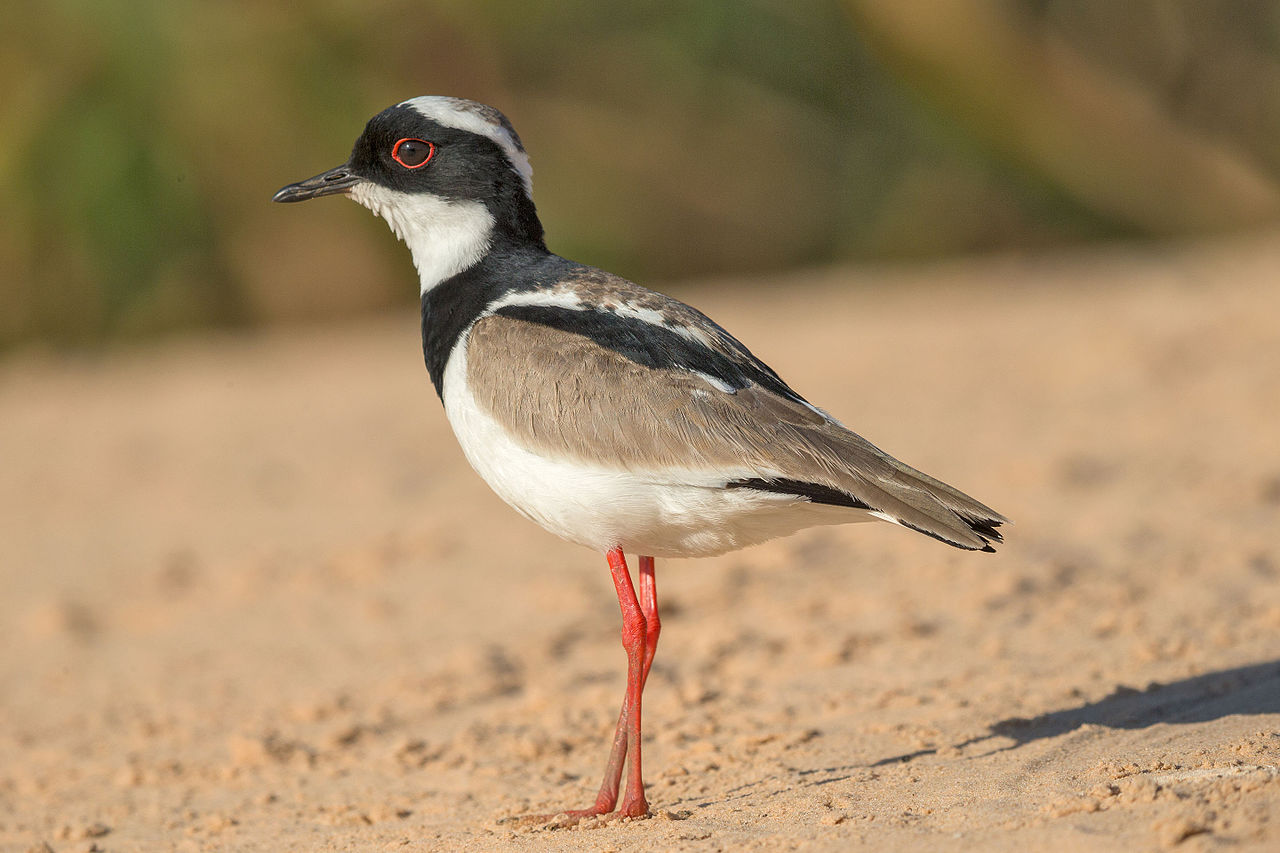
The pied kingfisher is a species of water kingfisher widely distributed across Africa and Asia. Originally described by Carl Linnaeus in 1758, it has five recognised subspecies. Its black and white plumage and crest, as well as its habit of hovering over clear lakes and rivers before diving for fish, make it distinctive. Males have a double band across the breast, while females have a single broken breast band. They are usually found in pairs or small family groups. When perched, they often bob their head and flick up their tail.
Region
Africa and South Asia
Typical Environment
Common along clear freshwater rivers, lakes, reservoirs, canals, and wetlands, and tolerant of brackish estuaries and mangroves. Prefers open water with exposed perches such as reeds, posts, or branches from which to hunt. Frequently uses human-made habitats including irrigation works and urban water bodies. Nests are excavated in vertical sand or clay banks near water, often in small colonies.
Altitude Range
Sea level to 2400 m
Climate Zone
Tropical
Ease of Keeping
Beginner friendly: 1/5
The pied kingfisher is one of the few kingfishers capable of true hovering, beating its wings rapidly to suspend over clear water before plunge-diving for fish. Males show a distinctive double breast band, while females have a single broken band. They often nest colonially in burrows tunneled into sandy or earthen banks and sometimes exhibit cooperative breeding with helpers. Despite their striking black-and-white plumage, they can be surprisingly inconspicuous against sun-glittered water.


Temperament
social and active
Flight Pattern
frequent hovering with rapid wingbeats; direct, low flight over water
Social Behavior
Usually seen in pairs or small family groups and may roost communally. Excavates nesting burrows in sandy or earthen banks close to water. In some populations, helpers assist breeding pairs, and complex mating systems can occur.
Migratory Pattern
Partial migrant
Song Description
Calls are sharp, rattling chatters and dry ticks given in flight and from perches. Vocalizations are rapid and mechanical-sounding, often carrying over open water.
Plumage
Boldly patterned black-and-white with a shaggy crest; clean white underparts with dark breast bands and barred flanks.
Diet
Primarily small fish, which are captured by plunge-diving from a hover or perch. Also takes aquatic insects, crustaceans, and occasional amphibians. Prey is usually beaten against a perch and swallowed headfirst to avoid fin spines.
Preferred Environment
Hunts over clear, open water where visibility is good. Uses shoreline perches, buoys, or reed stems, and often forages above shallow margins and calm reaches of rivers or lakes.