

The pied currawong is a black passerine bird native to eastern Australia and Lord Howe Island. One of three currawong species in the genus Strepera, it is closely related to the butcherbirds and Australian magpie of the family Artamidae. Six subspecies are recognised. It is a robust crowlike bird averaging around 48 cm (19 in) in length, black or sooty grey-black in plumage with white undertail and wing patches, yellow irises, and a heavy bill. The male and female are similar in appearance. Known for its melodious calls, the species' name currawong is believed to be of indigenous origin.
Region
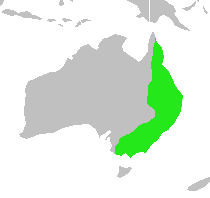
Eastern Australia
Typical Environment
Occurs from northern Queensland through New South Wales to eastern Victoria, and on Lord Howe Island. Inhabits eucalypt forests, wet and dry sclerophyll woodlands, rainforest edges, and coastal heath. Readily uses human-modified habitats including farmland, urban parks, and suburban gardens. Often moves downslope or coastward in winter, becoming common in lowland towns and cities. Roosts and nests high in tall trees, especially eucalypts.
Altitude Range
Sea level to 1800 m
Climate Zone
Temperate
Ease of Keeping
Beginner friendly: 1/5
The pied currawong is a robust, crowlike songbird endemic to eastern Australia and Lord Howe Island, with six recognised subspecies. It has a rich, melodious call that carries over long distances and inspired its common name. An adaptable omnivore, it thrives in forests and cities alike and often makes seasonal movements from uplands to coastal lowlands. Its nest predation on smaller birds is well known, yet it also disperses seeds by consuming native fruits.


Subspecies nebulosaSwifts Creek, Victoria

Lord Howe Island subspecies crissalis


Pied currawong taking care of its chicks

Pied currawongs are omnivorous and opportunistic — picnic time, Carnarvon Gorge

Pied currawong feeding channel-billed cuckoo juvenile

Regurgitated pellets of pied currawong.
Temperament
bold and opportunistic
Flight Pattern
strong flier with deep wingbeats and short glides
Social Behavior
Forms monogamous pairs in the breeding season and small to medium flocks outside it. Builds a sturdy stick bowl high in a tree; the female incubates while both parents feed the young. Often forages in loose groups and will gather at abundant food sources, including urban picnic areas.
Migratory Pattern
Partial migrant
Song Description
Rich, ringing whistles and fluting notes, often rendered as a descending ‘curra-wong’. Calls carry far and are given from prominent perches; includes mellow contact calls and louder territorial phrases.
Plumage
Glossy black to sooty black with crisp white patches in the wings and white undertail coverts; white tip to tail visible in flight.
Diet
Takes large insects, spiders, and other invertebrates, along with small vertebrates such as lizards and the eggs and nestlings of smaller birds. Eats a variety of native and introduced fruits and berries and will scavenge carrion or human food scraps. Opportunistic and adaptable, switching diet with seasonal availability of prey and fruit.
Preferred Environment
Forages in tree canopies, on trunks and branches, and on the ground in open areas. Common in woodland edges, forest clearings, orchards, and suburban parks and gardens.


