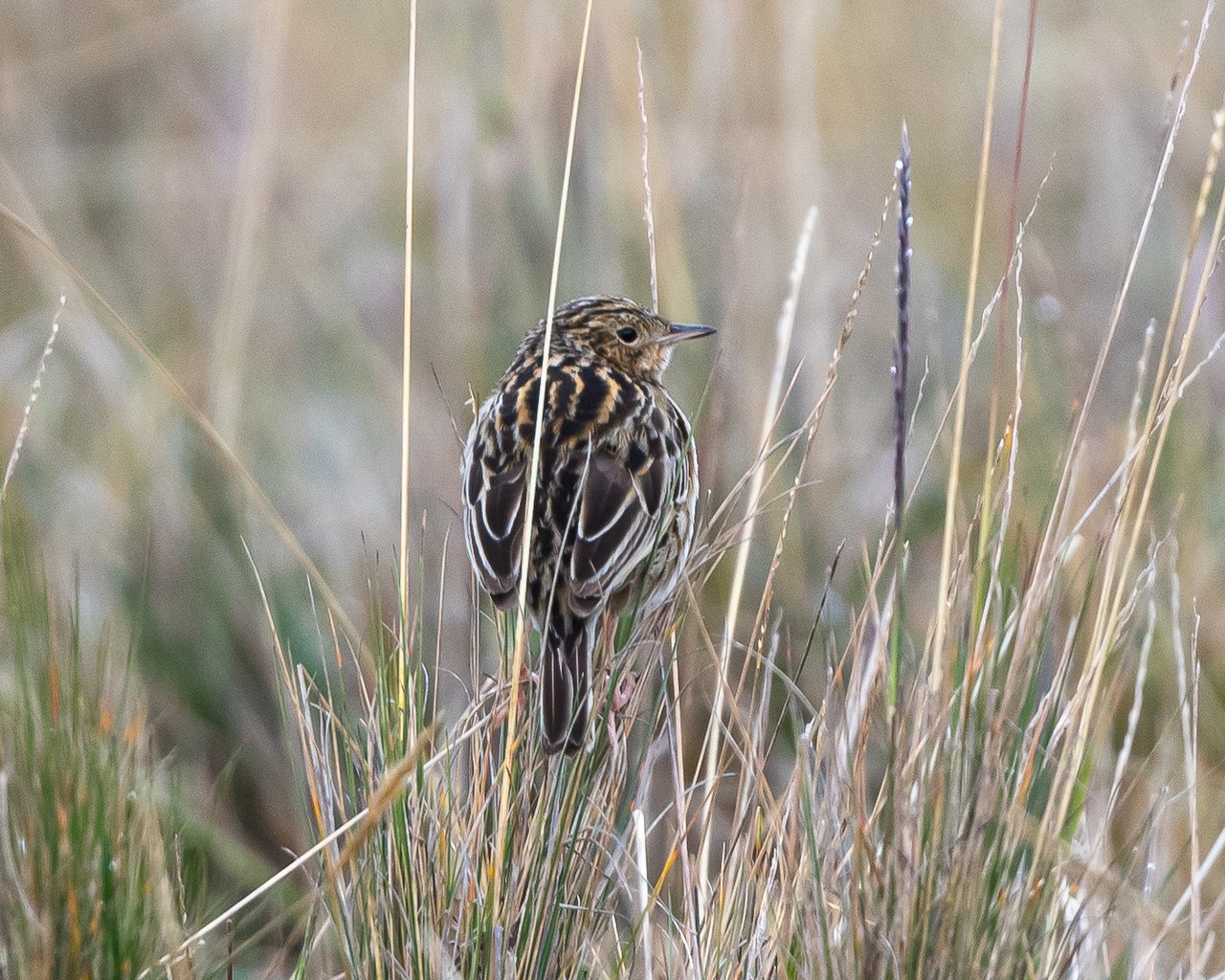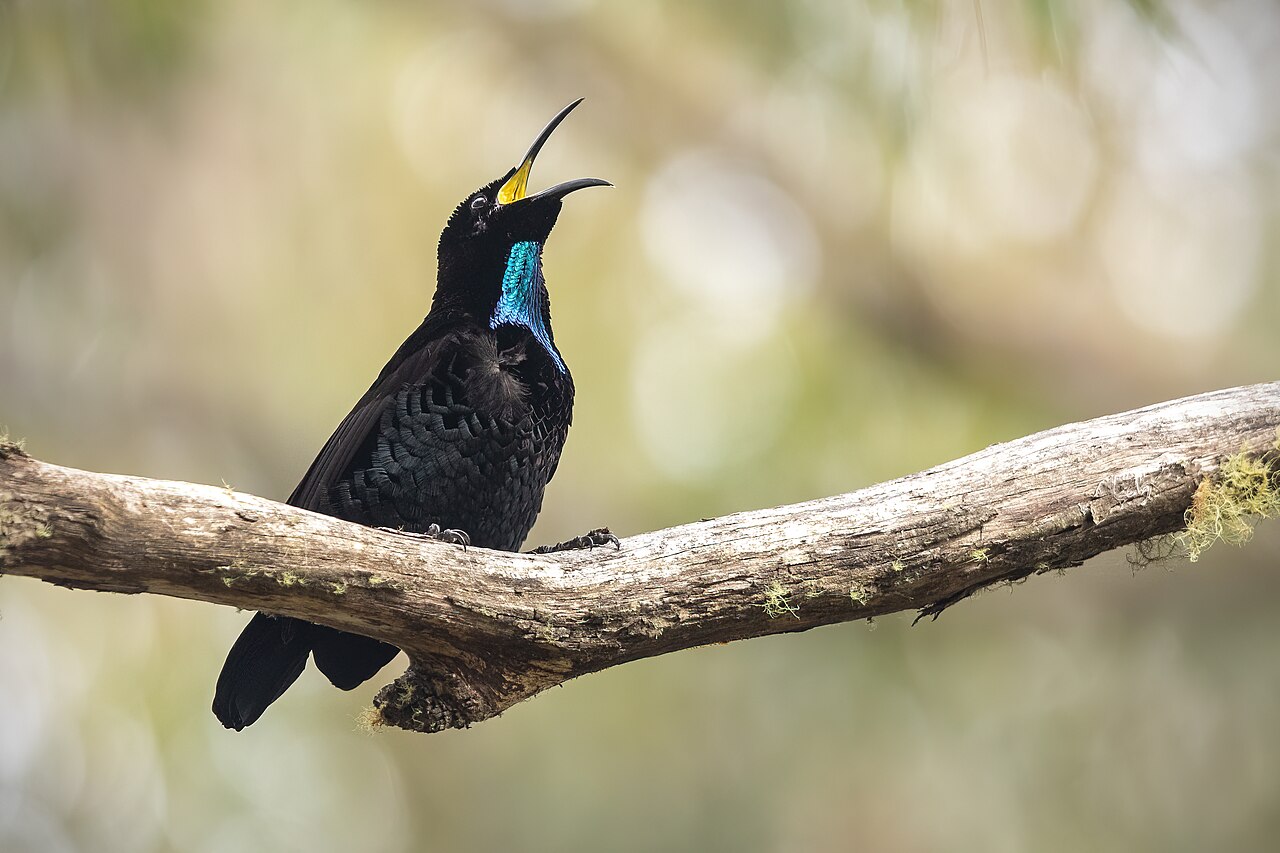
The paradise riflebird is a passerine bird of the family Paradisaeidae. It is one of four riflebird species in the genus Ptiloris. It is found in subtropical, temperate rainforests in eastern Australia. The species is sexually dimorphic; the male is black with iridescent blue-green patches, while the female is gray-brown and white.
Region
Eastern Australia
Typical Environment
Occurs in subtropical and temperate rainforests of southeastern Queensland and northeastern New South Wales, including upland and lowland tracts. It favors mature rainforest with dense canopy, but also uses edges, gullies, and adjacent wet sclerophyll forest. Birds may venture into regrowth and riparian corridors where fruiting trees and arthropods are abundant. They are most often detected by voice and display activity in mid- to upper-canopy layers.
Altitude Range
Sea level to 1200 m
Climate Zone
Subtropical
Ease of Keeping
Beginner friendly: 1/5
The paradise riflebird is a bird-of-paradise known for the male’s dramatic courtship display, where he raises his wings to reveal a velvety black silhouette and flashes an iridescent blue-green throat shield. Females choose mates based on these displays and vocal performances. The common name “riflebird” is said to reference the glossy, dark plumage reminiscent of the uniforms of the British Rifle Brigade.


Male paradise riflebird perching

Adult female paradise riflebird in Queensland, Australia

Paradise riflebird pauses for a brief moment while searching for insects


Temperament
solitary and territorial
Flight Pattern
short rapid wingbeats
Social Behavior
Polygynous; males display at traditional perches to attract females and do not assist with nesting. Females build a cup nest and rear the young alone. Territorial interactions among males include posturing and loud calls around display sites.
Migratory Pattern
Resident
Song Description
Vocalizations include loud, ringing whistles and rasping notes, often repeated in sequences during display. Males also produce mechanical sounds with wing movements while advertising from exposed perches.
Plumage
Male is velvety black with intense iridescent blue-green on the crown and a triangular throat-breast shield; feathers appear glossy and metallic in display. Female is brown above with buff and white underparts heavily barred and scalloped, giving a mottled appearance.
Diet
Feeds primarily on insects and other arthropods gleaned from bark, vines, and foliage, including beetles, caterpillars, and spiders. Also consumes fruits and berries from rainforest trees and vines, and occasionally nectar. Foraging is methodical, often involving probing crevices and flicking through clusters of leaves.
Preferred Environment
Mostly forages in the mid to upper canopy, especially along rainforest edges, gaps, and fruiting trees. Will descend to lower strata when following prey or exploiting seasonal fruiting events.