

Pallas's sandgrouse is a medium to large bird in the sandgrouse family.
Region
Central Asia
Typical Environment
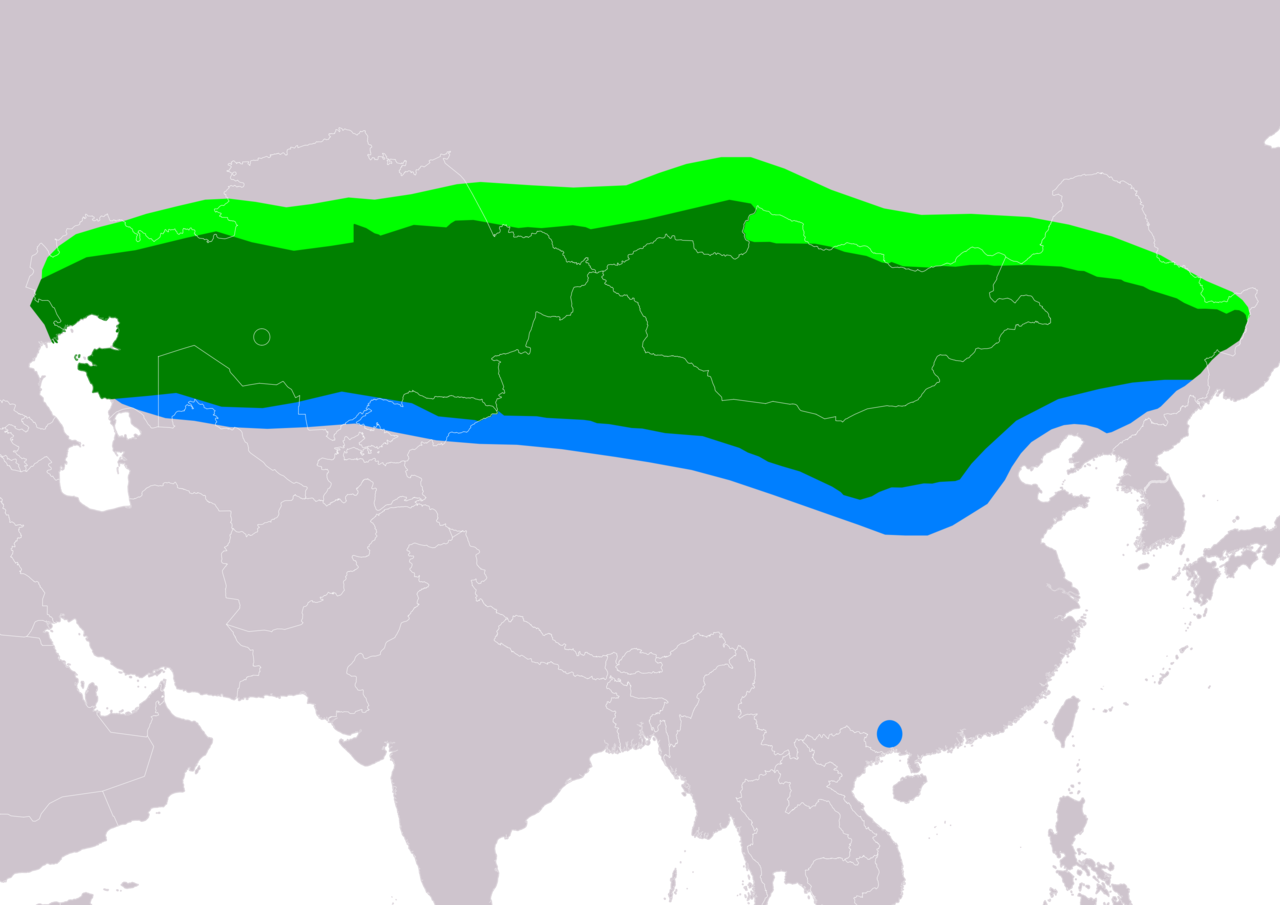
Breeds across the arid and semi-arid steppes from Kazakhstan and southern Russia through Mongolia to northern China. Prefers open, sparsely vegetated steppe and semi-desert with scattered shrubs and gravelly or sandy substrates. Nests on the ground in shallow scrapes with minimal cover. Highly nomadic outside the breeding season and undertakes long daily movements to drink. In irruption years, it wanders widely and can reach as far as western Europe.
Altitude Range
0–2500 m
Climate Zone
Arid
Ease of Keeping
Beginner friendly: 1/5
Pallas's sandgrouse is a medium to large bird of the Central Asian steppes, famed for long, fast flights to waterholes. Like other sandgrouse, adults soak their belly feathers to carry water back to their chicks. Its genus name refers to its unusual, partially fused toes adapted for running over sandy and stony ground. In some years it irrupts far west into Europe, appearing suddenly in large flocks.


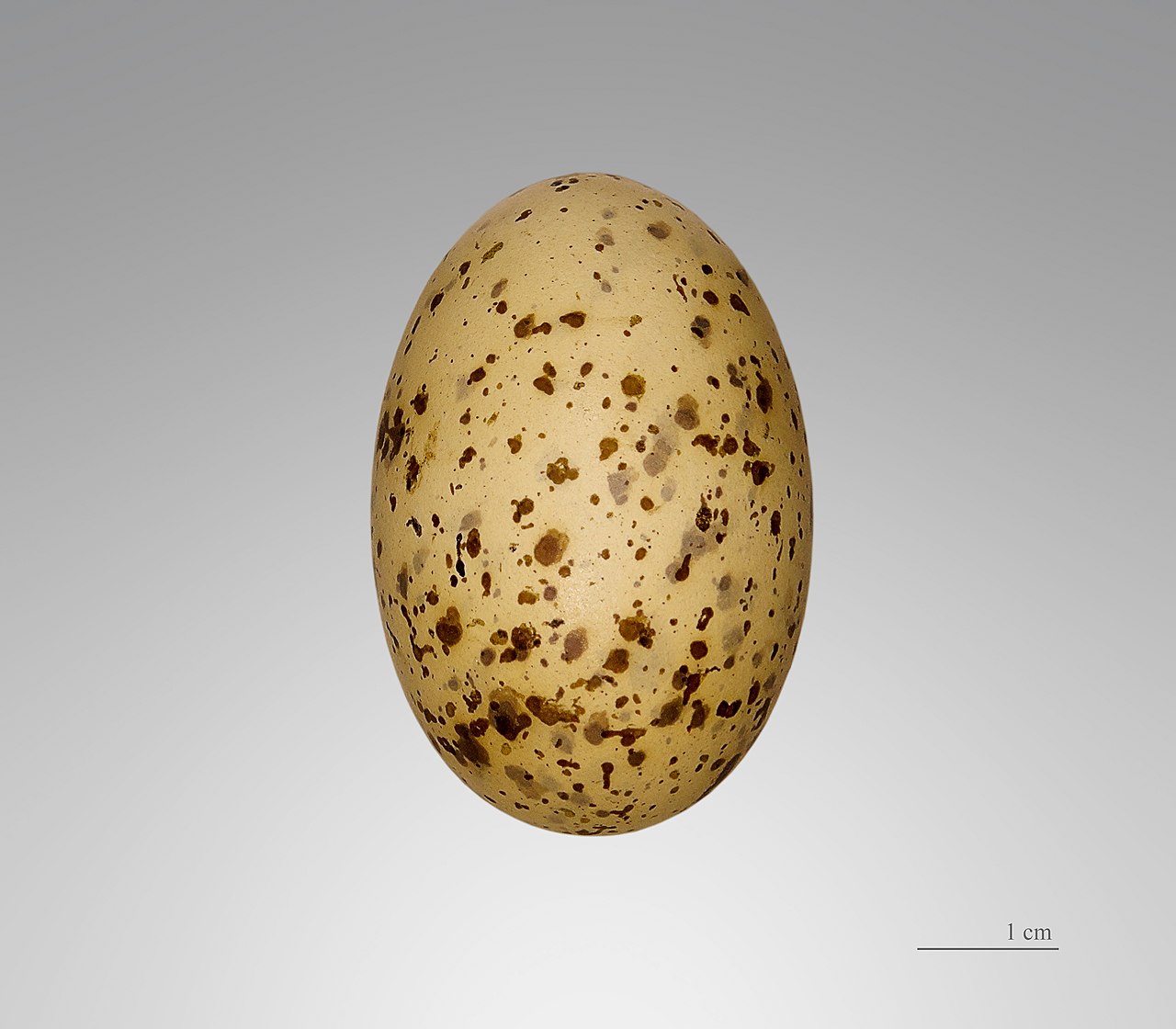
Syrrhaptes paradoxus egg
Temperament
social and active
Flight Pattern
strong flier with rapid, direct wingbeats
Social Behavior
Forms flocks outside the breeding season and congregates at traditional watering sites at dawn. Pairs are typically monogamous, nesting on the ground in a simple scrape with minimal lining. Both sexes incubate, and adults transport water to the chicks using specially adapted belly feathers.
Migratory Pattern
Partial migrant
Song Description
Vocalizations are ringing, dove-like calls given in flight, often heard as flocks pass overhead to water. Typical notes are clipped and resonant, carrying far across open steppe. At watering sites, soft, cackling contact calls are common.
Plumage
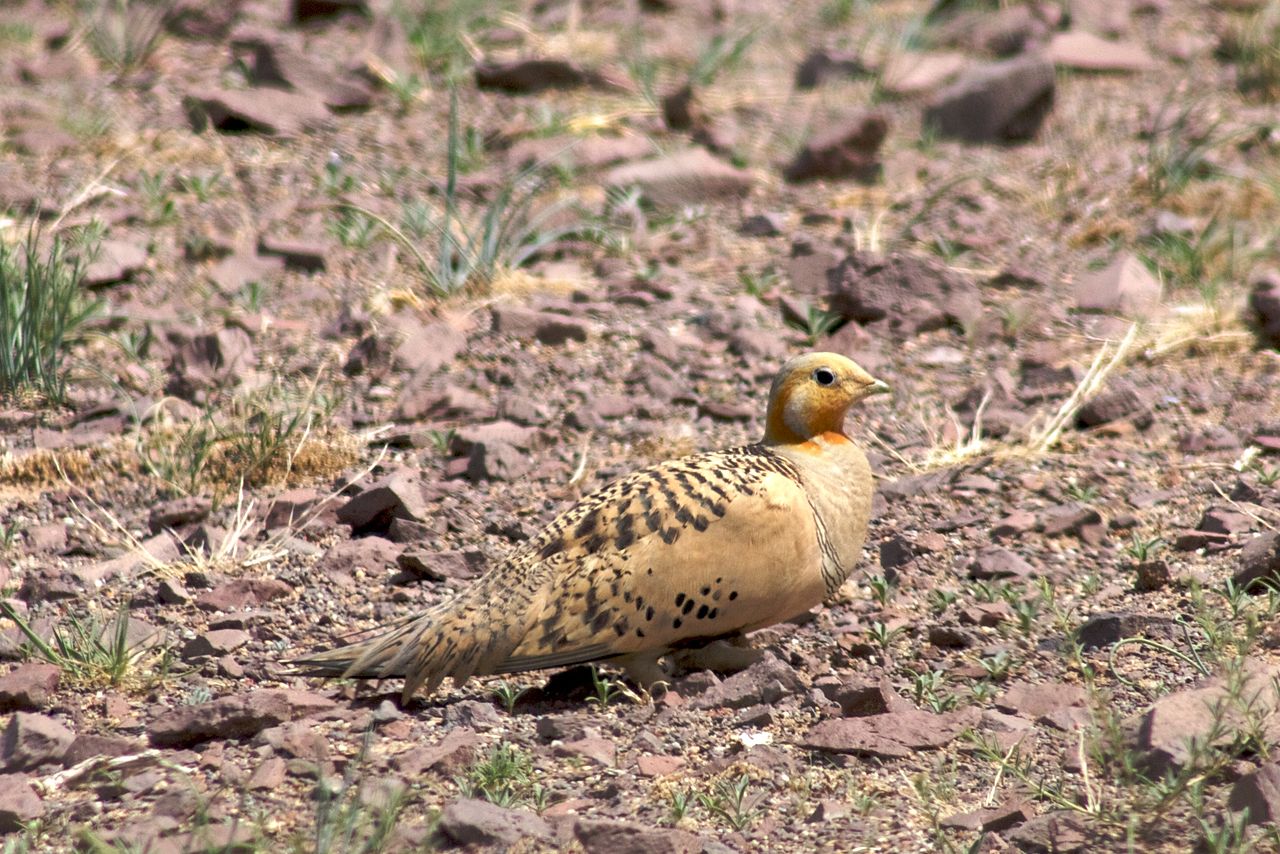
Sandy to buff upperparts heavily barred and vermiculated, with smooth, compact contour feathers. Males show a warm buff chest with a narrow black breast-band and plainer greyish belly; females are more densely barred overall. Underwings appear dark in flight, contrasting with pale upperwings. Tail is long and pointed with extended central streamers.
Diet
Primarily granivorous, taking hard seeds of grasses and forbs such as chenopods and Artemisia. Also consumes buds and green shoots, especially in spring. Occasional small invertebrates may be taken incidentally, but plant material dominates. Grit is swallowed to aid in grinding tough seeds.
Preferred Environment
Feeds on open ground in steppe and semi-desert, often near sparse shrub cover or stony patches where seeds accumulate. Frequently forages along tracks, field margins, and around watering areas. Requires access to surface water and may travel long distances to drink.


