
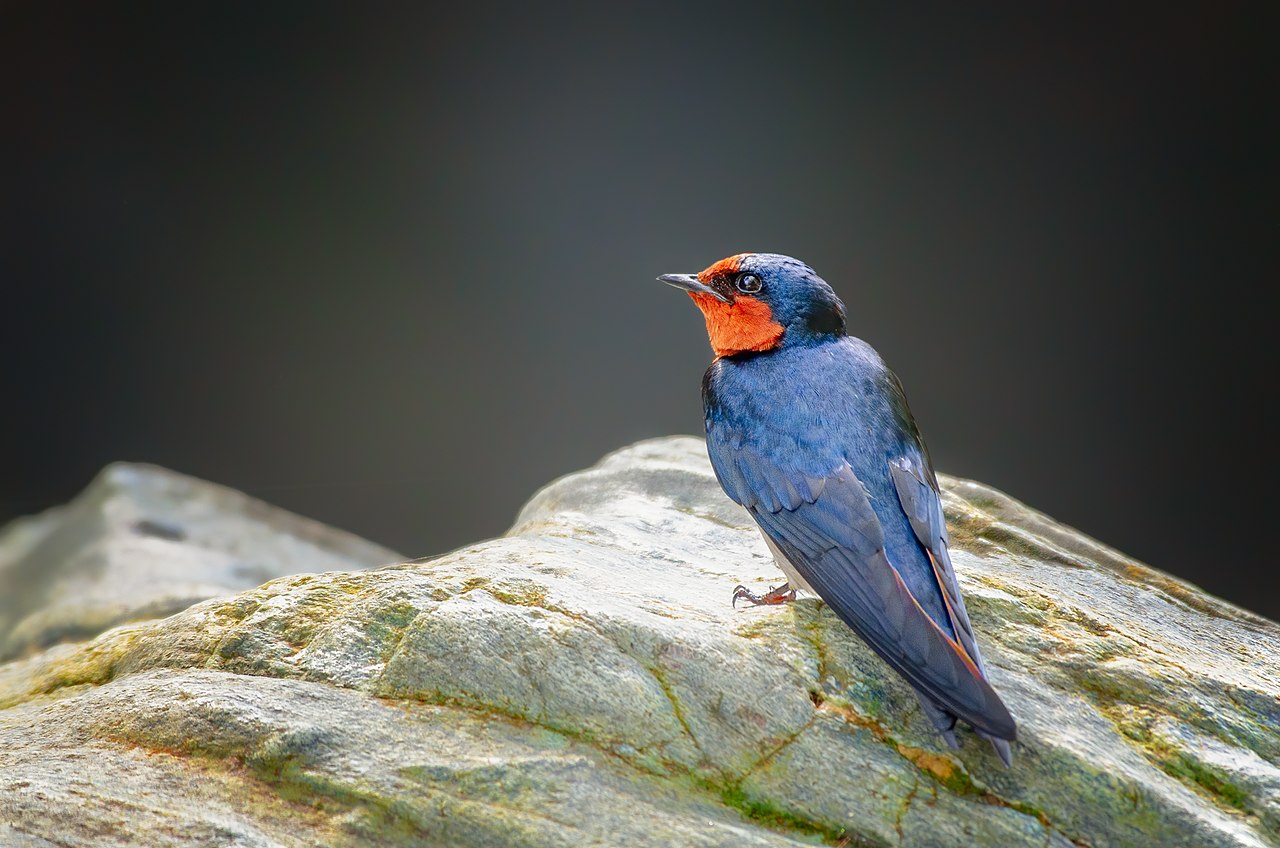
The Pacific swallow is a small passerine bird in the swallow family Hirundinidae. It breeds in tropical southern Asia and the islands of the south Pacific. It is resident apart from some local seasonal movements. This bird is associated with coasts, but is increasingly spreading to forested uplands. It was formerly treated as conspecific with hill swallow, the welcome swallow and the Tahiti swallow.
Region
Tropical South and Southeast Asia to the Western Pacific
Typical Environment
Found from the Indian subcontinent and Southeast Asia through Indonesia, the Philippines, and many islands of the western and central Pacific. It frequents coastal zones, mangroves, harbors, and lagoons, but readily uses inland open areas, rice fields, and forest edges. The species adapts well to settlements and is common around villages, towns, and ports. It often expands into foothills and uplands where suitable open foraging spaces and nesting substrates exist.
Altitude Range
Sea level to 1800 m
Climate Zone
Tropical
Ease of Keeping
Beginner friendly: 1/5
This small swallow often nests on human-made structures, building neat mud cup nests under bridges, piers, and eaves. It is an agile aerial insect-hunter and spends much of the day on the wing over water and open country. Its relatively short, shallowly forked tail helps distinguish it from the longer-tailed welcome swallow where ranges overlap.


At Misamis Oriental, Philippines


Temperament
social and active
Flight Pattern
short rapid wingbeats with agile glides
Social Behavior
Typically breeds in pairs or loose colonies, often on buildings, bridges, and cliff ledges. Both sexes build the mud cup nest and share incubation and chick-rearing. Multiple broods may be raised in a season, and nests are sometimes reused.
Migratory Pattern
Resident
Song Description
A soft, twittering series of chirps and trills, interspersed with thin buzzy notes. Calls are most frequent during active foraging and around the nest.
Plumage
Glossy blue-black upperparts with rufous forehead and throat, a narrow dark breast band, and pale buff to whitish underparts. Tail is short with a shallow fork and small pale spots on the outer feathers.
Diet
Primarily small flying insects such as flies, midges, mosquitoes, winged ants, and beetles. It catches prey on the wing with quick twists and turns, often low over water or open ground. Occasionally it sallies from perches like wires or boat rigging to snatch passing insects.
Preferred Environment
Most often forages over coastlines, estuaries, rivers, and rice paddies, as well as along forest edges and clearings. It frequently hunts around harbors, villages, and along roads where insects concentrate.


