The Pacific robin, is a red-breasted Australasian robin in the passerine bird genus Petroica found in Melanesia and Polynesia. It is similar in plumage to the scarlet robin of Australia, and until recently the two were considered conspecific until split in 1999 by Schodde and Mason. Thirteen subspecies of Pacific robin are currently recognised, and these subspecies display considerable variation in plumage, foraging preferences, and habitat. The Norfolk robin was previously considered a subspecies of the Pacific robin, but is now considered a distinct species.
Region
Southwest Pacific
Typical Environment
Found across Melanesia and parts of western Polynesia, including the Solomon Islands, Vanuatu, New Caledonia, Fiji, and Samoa. It inhabits primary and secondary forests, forest edges, and wooded gardens. The species favors shaded understory and midstory perches from which it launches short sallies for prey. On some islands it persists in disturbed habitats, provided there is sufficient tree cover and perching sites.
Altitude Range
Sea level to 1800 m
Climate Zone
Tropical
Ease of Keeping
Beginner friendly: 1/5
The Pacific robin is a small Australasian robin famous for the male’s bright red or orange breast and the female’s subtler brown tones. It occupies many Pacific islands, with notable variation in plumage and habits among its numerous subspecies. Despite the name, it is only distantly related to the European robin; its foraging involves short sallies from low perches to snatch insects.


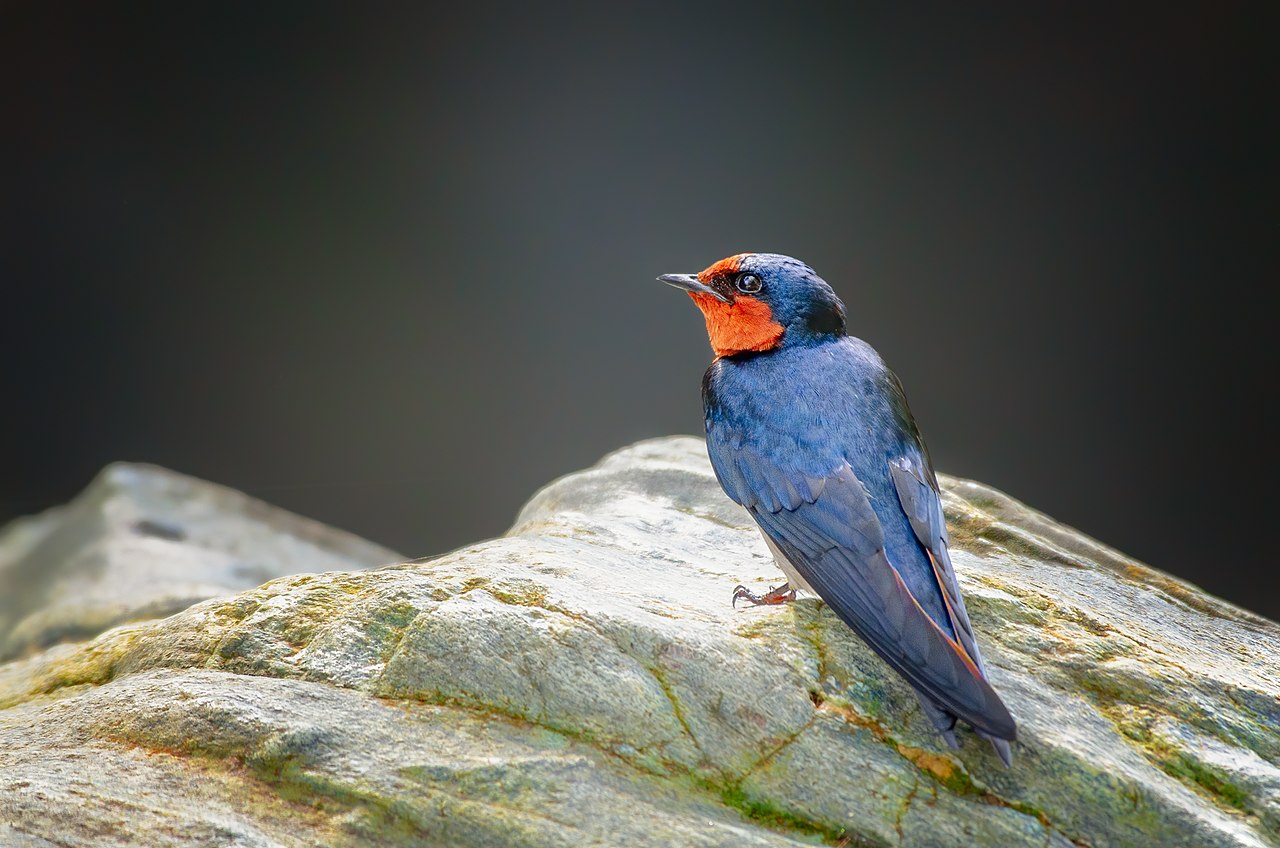
Male Pacific robin, central Viti Levu, Fiji
Temperament
solitary and territorial
Flight Pattern
short rapid wingbeats
Social Behavior
Typically forms territorial pairs during the breeding season, maintaining small defended areas. Nests are neat cups placed on horizontal branches, forks, or tree ferns, built from fine fibers and spider webs. Pair bonds may persist across seasons on some islands, with both adults provisioning the young.
Migratory Pattern
Resident
Song Description
A clear, high-pitched series of tinkling notes and short trills delivered from low to mid-level perches. Calls include sharp ticks and soft contact chips, with pace and pitch varying among island populations.
Plumage
Males are glossy black above with a vivid red to orange breast and a clean whitish lower belly; a narrow white wing bar or patch is often present. Females are brown above with a buffy to pale orange wash on the breast and lighter underparts. Both sexes have fine, neat feathering suited to a sally-gleaning lifestyle.
Diet
Primarily small insects and other arthropods such as beetles, moths, caterpillars, and spiders. It often watches from a low perch before darting out to snatch prey from foliage or the ground. Occasional small fruits or seeds may be taken opportunistically, but animal prey dominates.
Preferred Environment
Feeds in shaded understory, along forest edges, and in semi-open woodlands and gardens with scattered trees. Often forages from eye level down to near the ground, using exposed perches and fallen logs as vantage points.