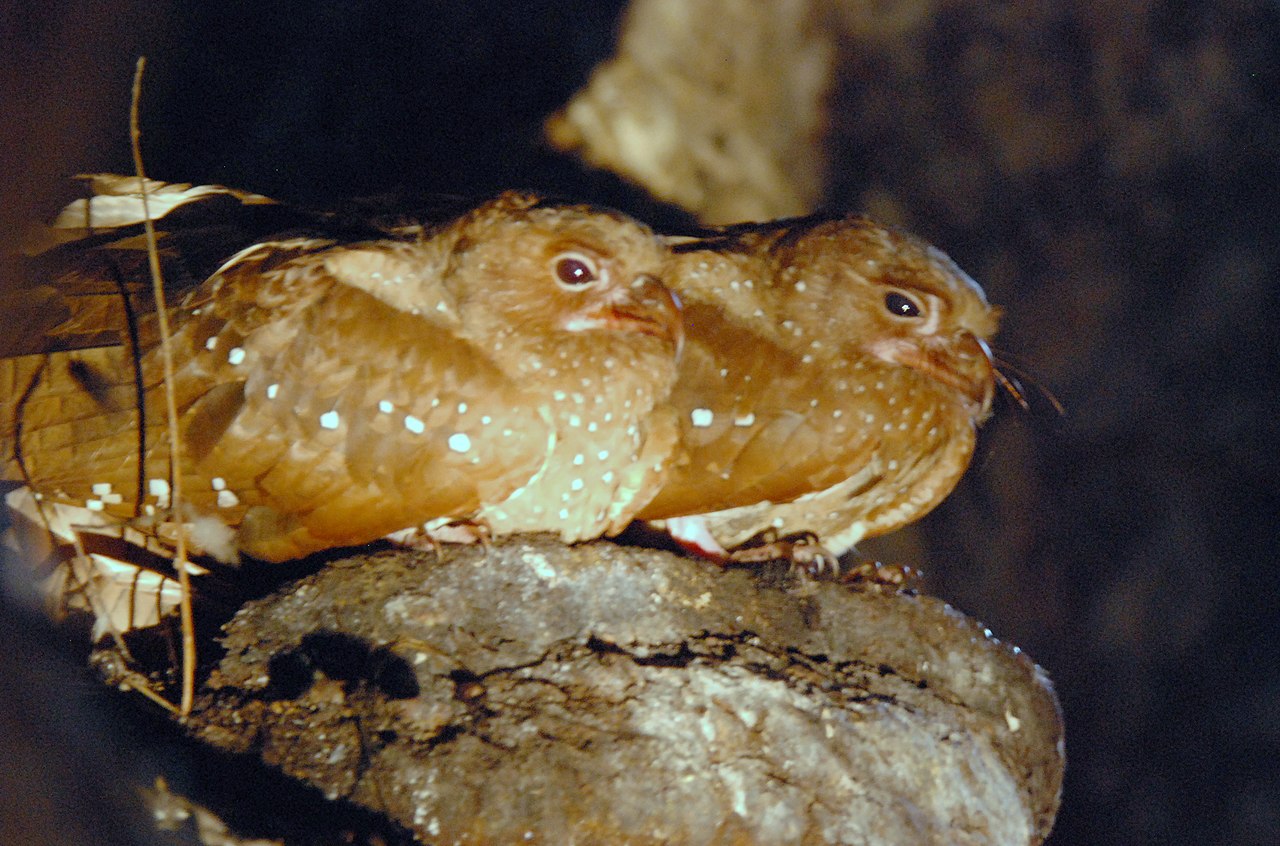
The ochre-striped antpitta is a species of bird in the family Grallariidae. It is found in Colombia, Ecuador, and Peru.
Region
Western Amazon Basin and eastern Andean foothills
Typical Environment
Occurs on the east slope of the Andes and adjacent foothills in southern Colombia, eastern Ecuador, and northern Peru. Prefers humid evergreen forest with a dense understory, including thickets of bamboo and Heliconia. Most frequently found on or near the forest floor along ravines, stream edges, and mossy gullies. It favors intact primary forest but can persist locally in mature secondary forest with sufficient cover.
Altitude Range
400–1500 m
Climate Zone
Tropical
Ease of Keeping
Beginner friendly: 1/5
This shy ground-dweller of the antpitta family is far more often heard than seen, delivering mellow, whistled phrases from dense undergrowth. It hops on long legs through leaf litter, occasionally following army ants to pick off flushed invertebrates. Voice is the most reliable way to detect it, as it avoids open areas and remains in shadowy thickets. It inhabits the eastern Andean foothills of Colombia, Ecuador, and Peru.


Temperament
solitary and territorial
Flight Pattern
short rapid wingbeats, low to the ground
Social Behavior
Generally encountered alone or as pairs, maintaining territories in dense understory. Nests are placed low, with both sexes likely sharing incubation and care of the young. Courtship and pair bonding are subtle and often detected only by duet-like exchanges of song.
Migratory Pattern
Resident
Song Description
Gives clear, mellow whistles delivered singly or in brief series, often descending slightly in pitch. Phrases carry well at dawn and dusk through dense forest. Calls include soft notes used for contact between mates.
Plumage
Warm brown upperparts with an ochraceous to buff underbody heavily striped with darker streaks; throat and breast show bold, linear markings. Feathers are soft and dense, giving a rounded, compact look typical of antpittas.
Diet
Primarily consumes arthropods such as beetles, ants, spiders, and other leaf-litter invertebrates. Will take small vertebrates like tiny frogs on occasion. May glean from low vegetation but mostly forages by hopping and picking prey from the ground. Sometimes attends army-ant swarms to capture fleeing insects.
Preferred Environment
Feeds on the shaded forest floor in areas with deep leaf litter and tangled understory. Often forages along stream banks, ravines, and bamboo or Heliconia patches where cover is dense. Uses quiet, methodical movements to remain concealed while hunting.