
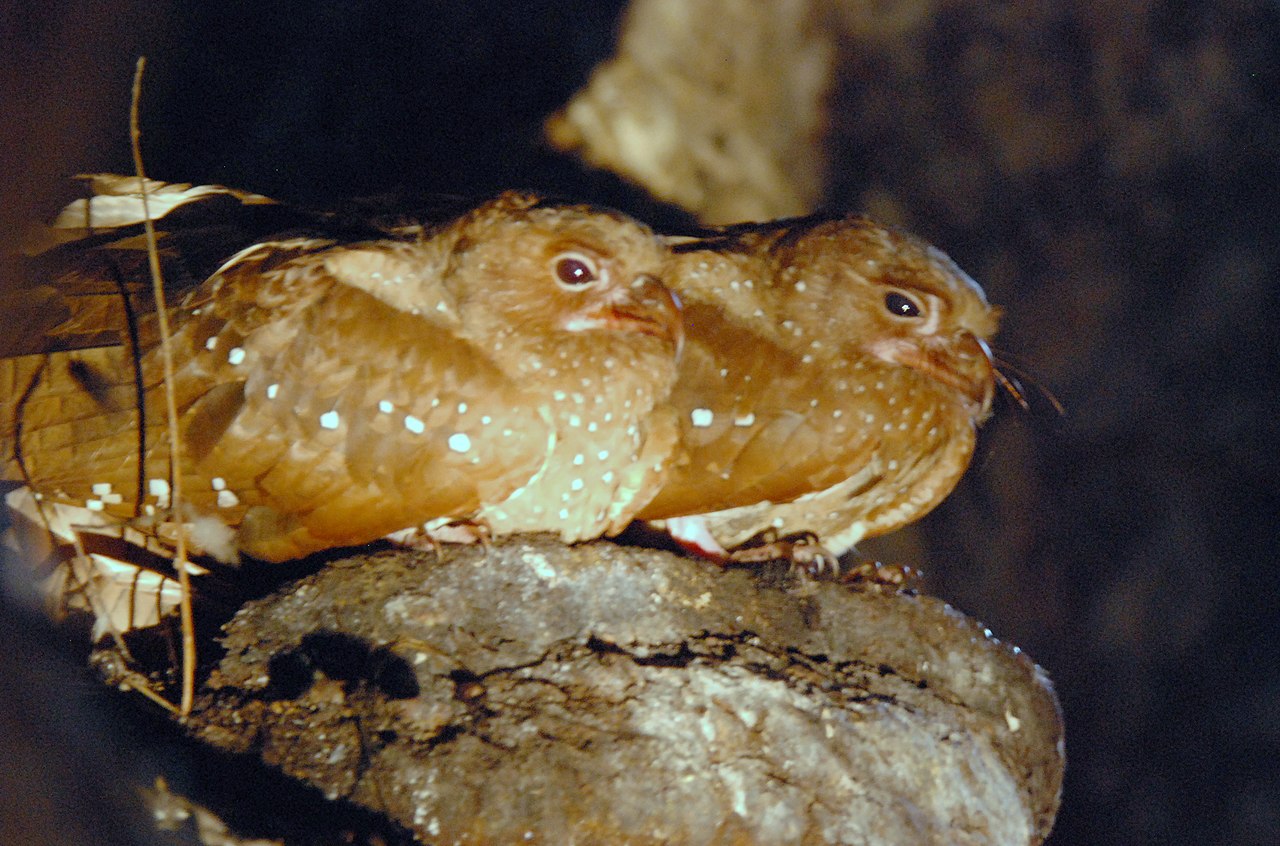
The oilbird, locally known as the guácharo, is a bird species found in the northern areas of South America including the Caribbean island of Trinidad. It is the only living species in the genus Steatornis, the family Steatornithidae, and the order Steatornithiformes. Nesting in colonies in caves, oilbirds are nocturnal feeders on the fruits of the oil palm and tropical laurels. They are the only nocturnal flying fruit-eating birds in the world. They forage at night, with specially adapted eyesight. However, they navigate by echolocation in the same way as bats, one of the few birds to do so. They produce a high-pitched clicking sound of around 2 kHz that is audible to humans.
Region
Northern South America and Trinidad
Typical Environment
Oilbirds occur from Trinidad and northern Venezuela through the coastal ranges and Andean foothills of Colombia, Ecuador, Peru and adjacent regions. They roost and breed strictly in caves—often in extensive karst systems—within humid evergreen forests. Foraging takes them across lowland and montane forests, and they can travel tens of kilometers nightly to reach fruiting trees. They favor landscapes where suitable caves lie within reach of abundant fruit resources.
Altitude Range
0–2400 m
Climate Zone
Tropical
Ease of Keeping
Beginner friendly: 1/5
The oilbird (guácharo) is the world’s only nocturnal, flying frugivore, feeding almost entirely on fatty palm and laurel fruits. It nests in large colonies deep inside caves and uses audible echolocation clicks to navigate in total darkness. Chicks become extremely fat on the oily diet and were historically rendered for lamp oil—hence the name. Its specialized vision and bristle-framed gape help it pluck and swallow whole fruits during night foraging flights.


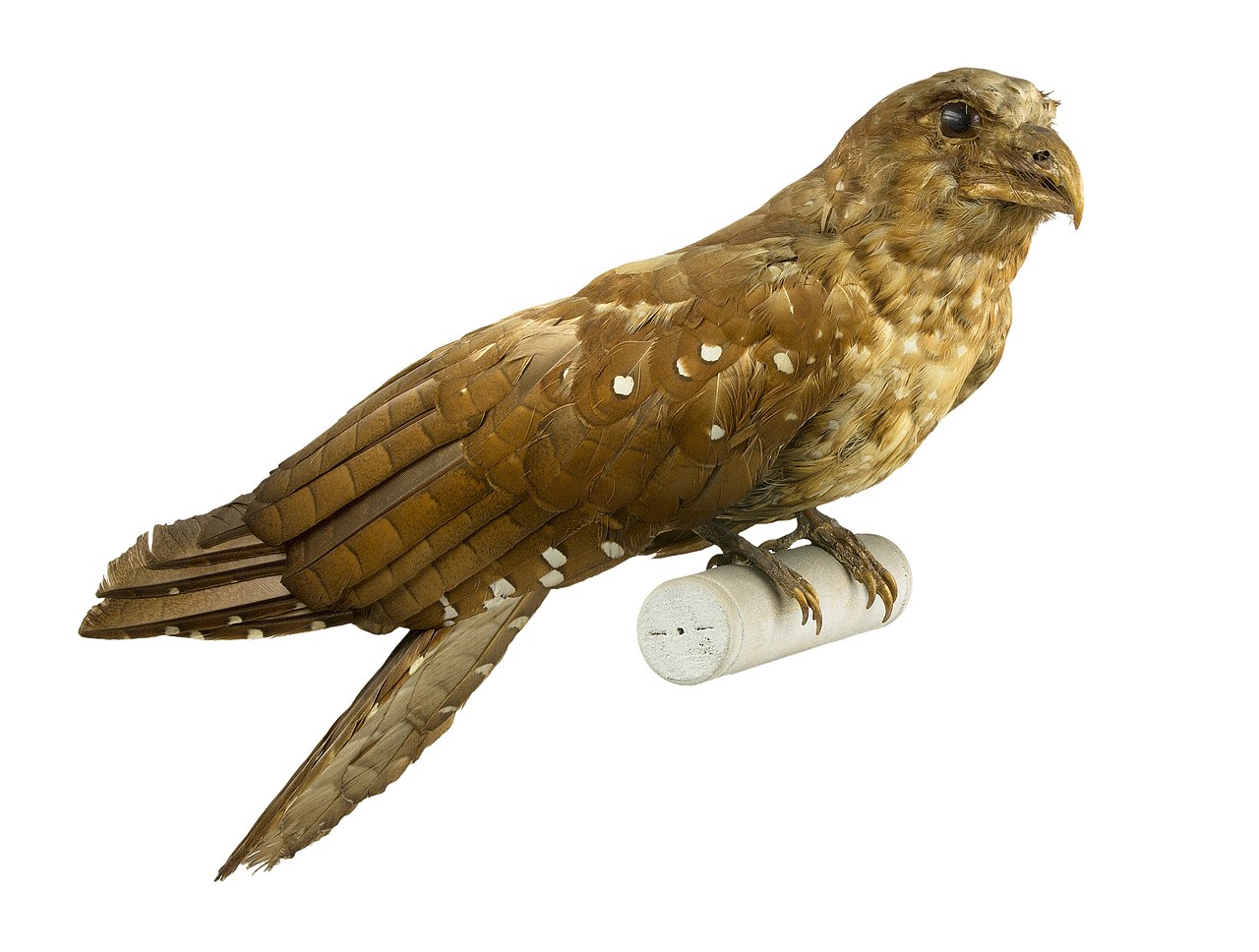
Steatornis caripensis – MHNT


Temperament
social and noisy in colonies
Flight Pattern
strong and agile, with long shallow wingbeats; capable of quick maneuvering near cave entrances
Social Behavior
Oilbirds nest in dense colonies on rocky ledges inside caves, where pairs form and defend small territories around the nest site. Both parents incubate 2–4 eggs and feed the young by regurgitation. Chicks accumulate heavy fat reserves before fledging, a consequence of the lipid-rich diet.
Migratory Pattern
Resident
Song Description
In caves they emit loud screeches, grating calls, and chattering notes. For navigation they produce rapid series of audible clicks around 2 kHz used for short‑range echolocation in darkness.
Plumage
Rufous-brown to chestnut with numerous bold white spots edged in black across wings and body; soft, loose-textured feathers.
Diet
Primarily fatty fruits of palms and laurels, which are swallowed whole and later regurgitated as pits. They forage by plucking fruit while hovering or by brief perches in the canopy. Their movements disperse large seeds over long distances, making them important seed dispersers. They rarely, if ever, take animal matter.
Preferred Environment
Feeds in mature humid forests, along forested valleys and ridges where fruiting trees are abundant. Typically forages within flight range of the colony’s cave roosts and along habitual nocturnal flyways.


