The northern rough-winged swallow is a small, migratory swallow. It is very similar to the southern rough-winged swallow, Stelgidopteryx ruficollis.
Region
North and Central America
Typical Environment
Breeds widely across much of the United States, southern Canada, and northern Mexico, wintering south through Mexico, Central America, and the Caribbean. Favors open areas near water such as rivers, lakes, ponds, and streams, but also uses agricultural fields, gravel pits, and urban settings. Nests are placed in small burrows or cavities in vertical banks, culverts, or pipes. Often forages low over water and along forest edges and clearings.
Altitude Range
0–2500 m
Climate Zone
Temperate
Ease of Keeping
Beginner friendly: 1/5
Named for the tiny serrations on the outer wing feathers (most evident in males), which feel rough to the touch. It often nests singly or in loose groups in burrows in earthen banks, road cuts, quarries, or drain pipes, readily using human-made structures. Compared with other swallows, it is drabber and less colonial. It is very similar to the southern rough-winged swallow but breeds farther north.


An adult Northern Rough-winged swallow (right) feeds its young.

Northern Rough-winged Swallow photographed in central Maine, the northeastern limit of the species' breeding range.
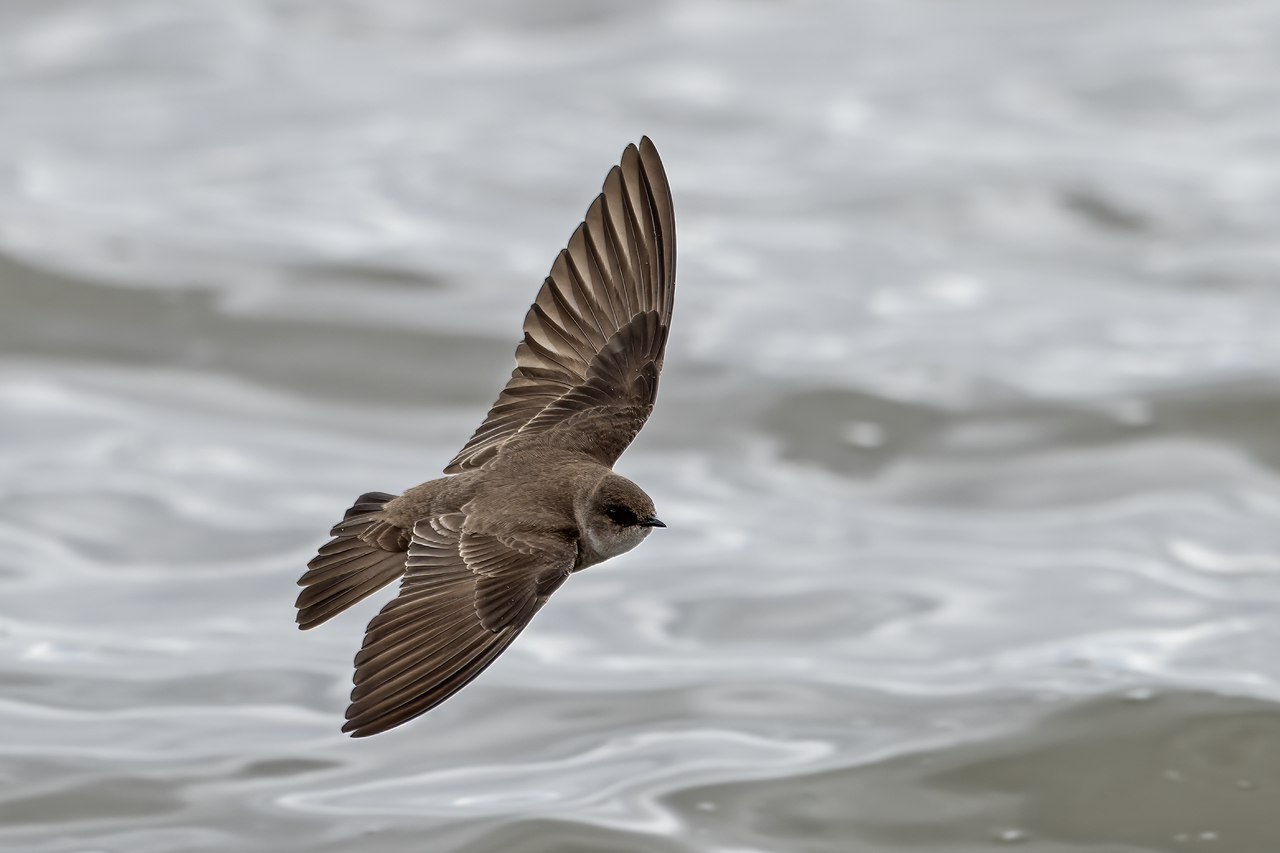
In flight over the impoundment at the Heinz NWR in Philadelphia
Temperament
generally quiet, loosely social
Flight Pattern
agile flier with short rapid wingbeats and buoyant glides
Social Behavior
Typically nests singly or in small, loose aggregations rather than dense colonies. Forms small foraging flocks outside the breeding season and may mix with other swallow species. Pairs are monogamous; nests are placed in self-excavated or appropriated burrows and lined with grasses and feathers.
Migratory Pattern
Seasonal migrant
Song Description
Vocalizations are soft, dry, and burry, including trills and rasping brrrt notes. Song and calls are subdued compared with other swallows, often heard as gentle, rough-edged chatters near nest sites.
Plumage
Plain brown above with a slightly duskier throat and breast, grading to paler, buffy underparts; under tail coverts whitish. Feathers lack strong gloss; overall appearance smooth and uniform. Tail slightly notched.
Diet
Feeds almost entirely on flying insects such as flies, bees, wasps, beetles, ants, and mayflies. Often takes emergent aquatic insects over rivers and lakes. Occasionally gleans insects from surfaces in flight. Diet shifts with local availability and season.
Preferred Environment
Usually forages low over open water, along stream corridors, and around ponds. Also hunts above open fields, roadways, and edges of woodlands, especially where insect concentrations are high.