
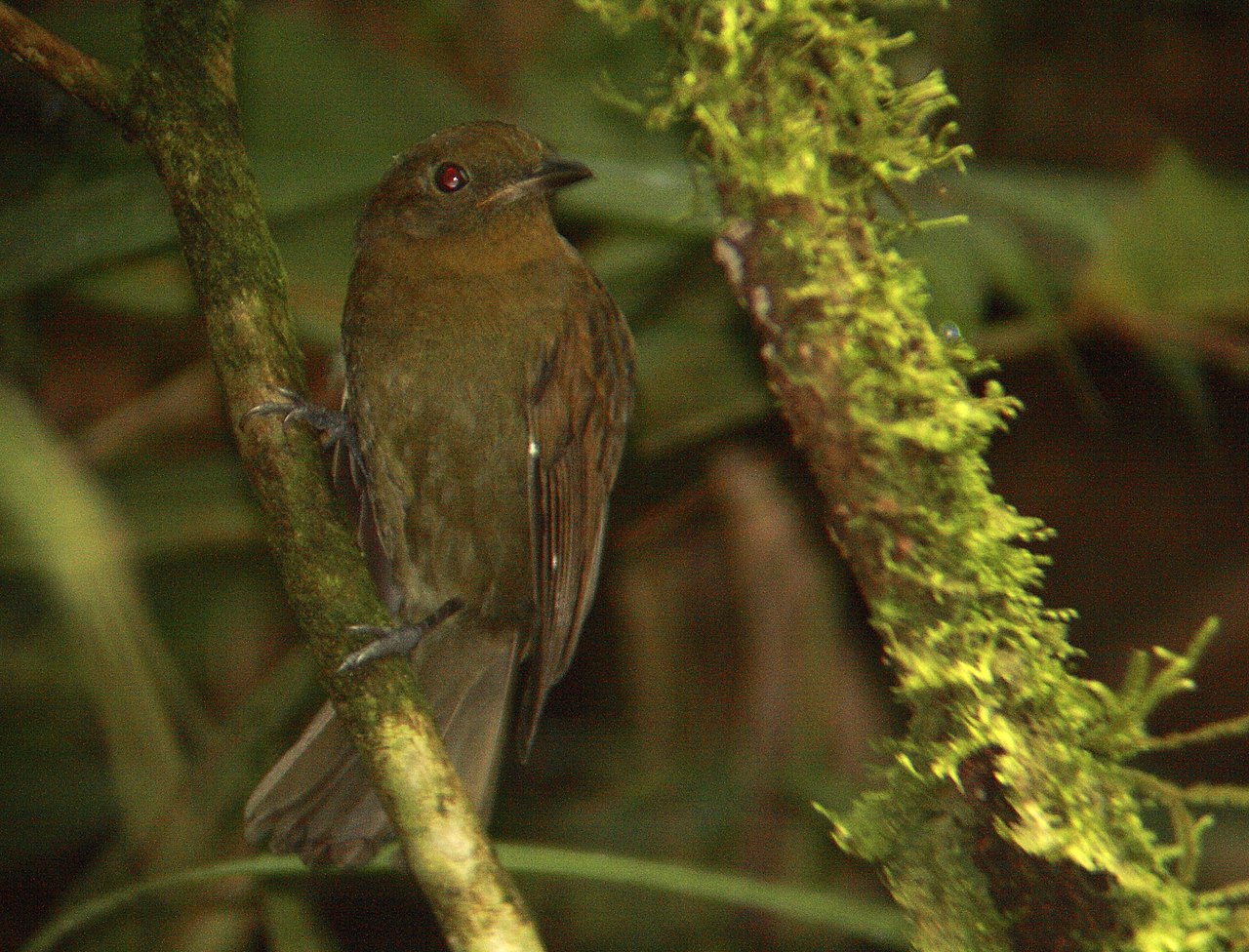
The northern schiffornis, or northern mourner,, is a species of Neotropical bird in the family Tityridae, the tityras, becards, and allies. It is found in Mexico, every Central American country except El Salvador, and in Colombia, Ecuador, and Peru.
Region
Mesoamerica to the western Andean foothills
Typical Environment
Occurs from southern Mexico through all Central American countries except El Salvador, continuing into western Colombia, Ecuador, and northwestern Peru. Inhabits humid lowland and foothill evergreen forests, as well as mature second growth with a closed canopy. Most frequent in the shaded understory and midstory, along ravines and streams. Tends to avoid highly fragmented or open habitats.
Altitude Range
Sea level to 1500 m
Climate Zone
Tropical
Ease of Keeping
Beginner friendly: 1/5
Also called the northern mourner, this species belongs to the Neotropical family Tityridae. It favors dense, shady forest interiors and is more often heard than seen, thanks to its mournful, whistled song. The species name references the Verapaz region of Guatemala, part of its core Middle American range.


Temperament
shy and retiring
Flight Pattern
short rapid wingbeats through dense understory
Social Behavior
Usually solitary or in pairs, maintaining territories within dense forest. Sometimes joins mixed-species flocks in the midstory. Nest is typically a suspended cup hidden in low vegetation; clutch size is small, often 1–2 eggs. Both sexes are involved in territorial defense and care.
Migratory Pattern
Resident
Song Description
Song is a clear, mournful series of descending whistles, often delivered from concealed perches. Calls include soft, plaintive notes that carry through the understory, making it easier to detect by ear than by sight.
Plumage
Plain, soft-feathered and uniform, with olive-brown to grayish-olive body and slightly rufescent wings; underparts dull olive-gray without strong contrast.
Diet
Takes a variety of arthropods including insects and spiders, gleaned from foliage and branches or taken in short sallies. Also consumes small fruits and berries, especially when insect prey is less abundant. Foraging is methodical and deliberate rather than acrobatic.
Preferred Environment
Feeds in the shaded understory and midstory of humid forest, along stream corridors and in well-vegetated gullies. Occurs at forest edges and in older secondary growth if a closed canopy is present.


