

The northern bald ibis, hermit ibis, or Waldrapp is a migratory Old World ibis found in open areas such as grasslands, rocky mountains, and semi-deserts, often close to running water. This 70–80 cm (28–31 in) glossy black ibis, which, unlike many members of the ibis family, is non-wading, has an unfeathered red face and head, and a long, curved red bill. It breeds colonially on coastal or mountain cliff ledges, where it typically lays two to three eggs in a stick nest, and feeds on lizards, insects, and other small animals.
Region
Northwest Africa and the Mediterranean Basin
Typical Environment
Today the stronghold is along Morocco’s Atlantic coast, especially around Souss-Massa National Park and Tamri, with small reintroduced populations in parts of Europe. Historically it bred across the Mediterranean and Middle East, including Turkey and Syria. It favors open steppe, semi-deserts, and grazed pasture near cliffs or rocky outcrops, often within reach of running water. Colonies use coastal or inland cliff faces for nesting and roosting while commuting to nearby feeding grounds.
Altitude Range
Sea level to 2000 m
Climate Zone
Arid
Ease of Keeping
Beginner friendly: 2/5
Also called the Waldrapp or hermit ibis, this species was revered in ancient Egypt and nearly vanished from the Middle East in recent decades. It nests on cliff ledges and forages in open, semi-arid habitats rather than wetlands, unusual for an ibis. Intensive conservation in Morocco and reintroduction projects in Europe have helped the population recover from the brink.


Wild ibis in Souss-Massa National Park, Morocco
![Gesner's 1555 woodcut of the northern bald ibis[10]](https://upload.wikimedia.org/wikipedia/commons/thumb/e/e4/Nbibis0371crop.jpg/500px-Nbibis0371crop.jpg)
Gesner's 1555 woodcut of the northern bald ibis[10]

Close-up of an adult's head

Part of a flock in the Souss Massa stronghold
![—Tagged Syrian breeders migrated south through Yemen in 2006 and returned via Eritrea.[34]—Birds from Birecik visited the Syrian colony at Palmyra.[35]](https://upload.wikimedia.org/wikipedia/commons/thumb/2/25/Ibismap_2003.png/500px-Ibismap_2003.png)
—Tagged Syrian breeders migrated south through Yemen in 2006 and returned via Eritrea.[34]—Birds from Birecik visited the Syrian colony at Palmyra.[35]

Geronticus eremita - MHNT

A young bird

The steppes around the Oued Massa are favoured feeding areas
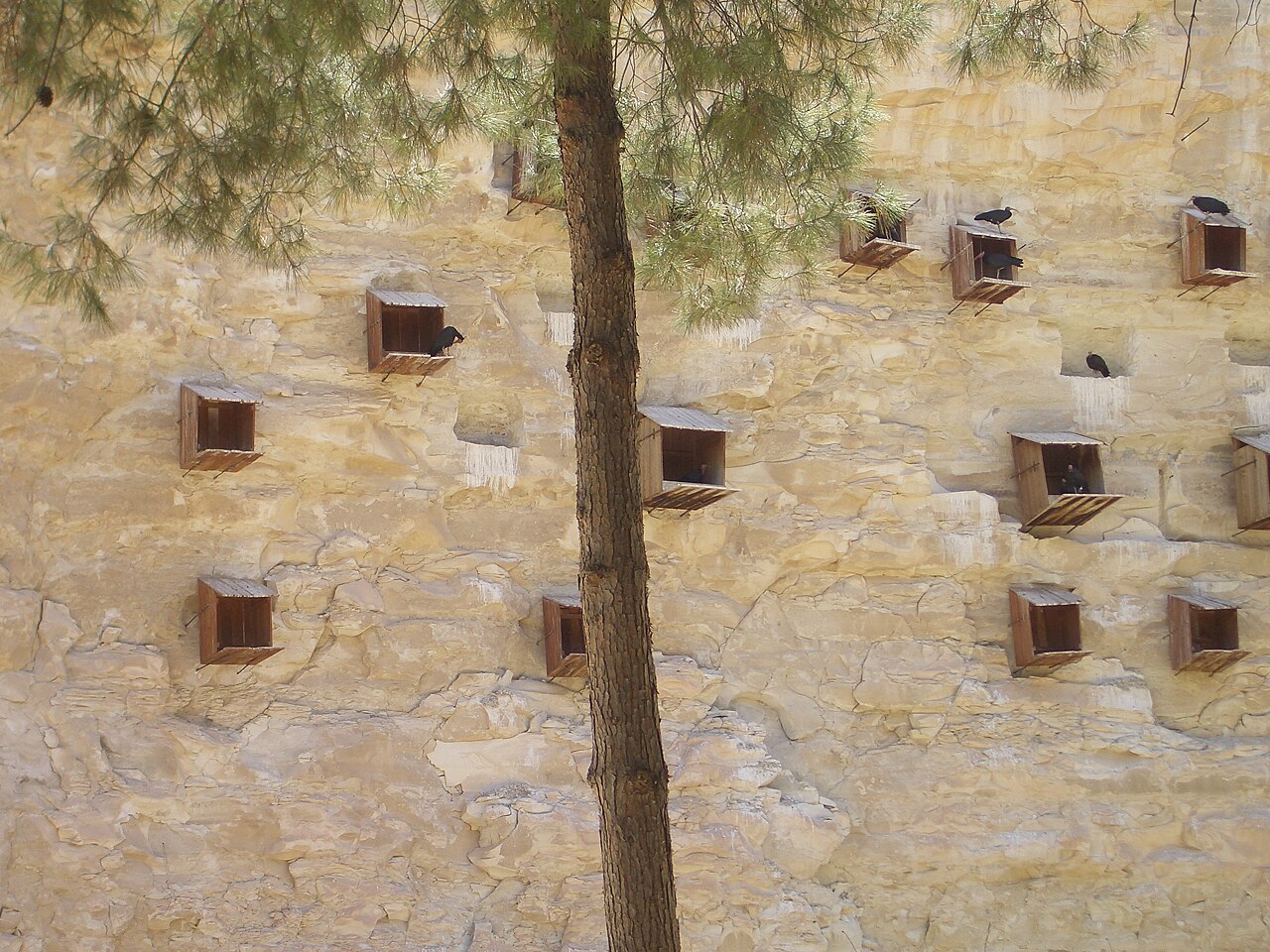
Artificial nests at the Birecik colony

Adult feeding a chick

Tiergarten Schönbrunn in Vienna is running a successful breeding programme for reintroduction

The Austrian reintroduction

Waldrapp aviary near Lake Constance

Location of the Rif mountains

Northern bald ibis in Egyptian hieroglyphs.
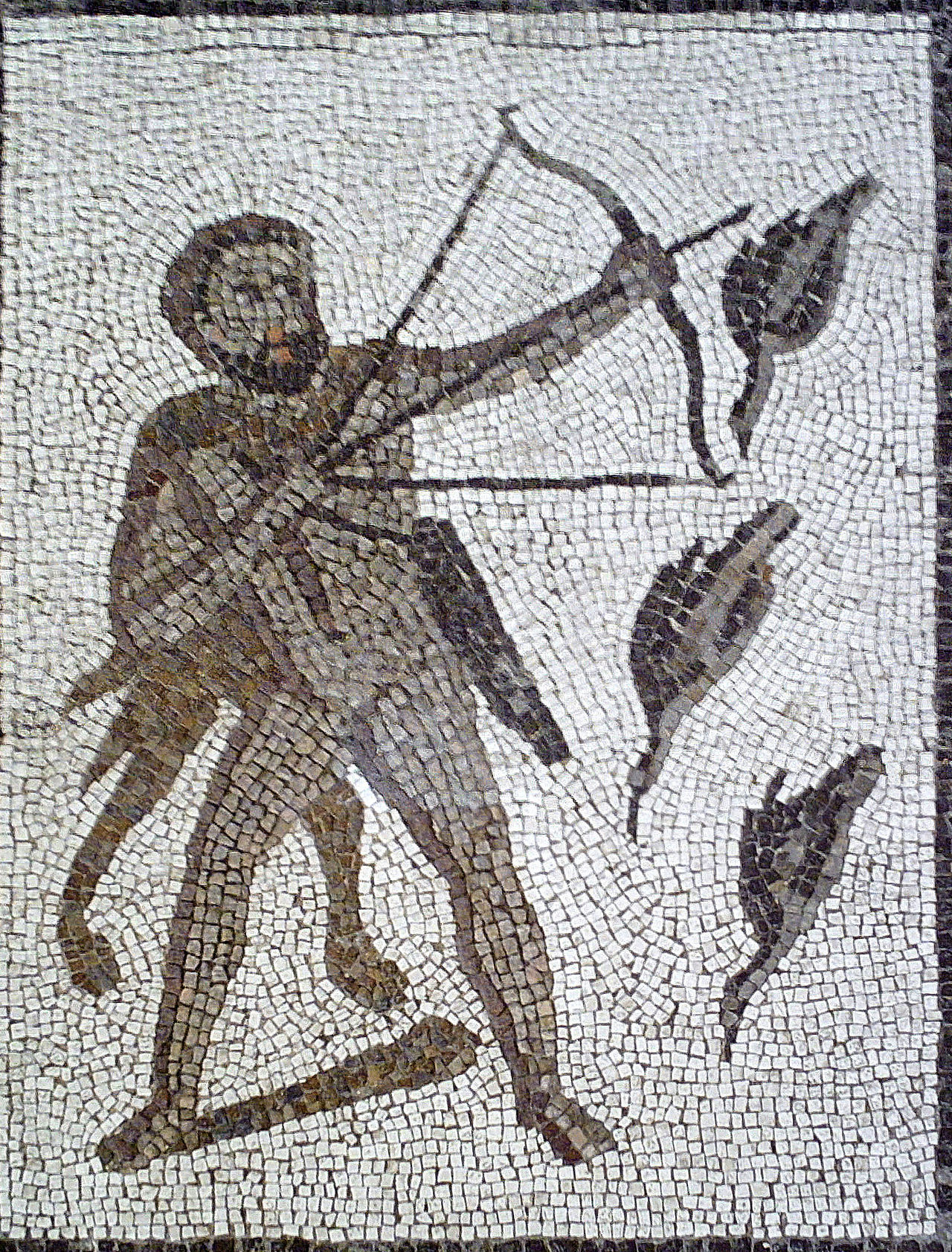
Heracles fights the Stymphalian birds

Illumination in a manuscript from 1562 at St. Gallen
Temperament
social and active
Flight Pattern
strong flier that soars on thermals and travels in V-formations
Social Behavior
Breeds colonially on cliff ledges, where pairs build stick nests and typically lay two to three eggs. Pairs are generally monogamous within a season and show strong site fidelity. Outside breeding, birds roost communally and forage together in loose groups across open ground.
Migratory Pattern
Partial migrant
Song Description
Vocalizations are guttural croaks and grunts, often given during displays at the colony. Calls carry well over cliff faces and help maintain contact within groups in flight.
Plumage
Glossy black with bronze-green to purplish iridescence and a shaggy nape crest.
Diet
Primarily takes large insects and their larvae, such as beetles, grasshoppers, and caterpillars, gleaned from soil and short vegetation. It also consumes spiders, scorpions, and earthworms, and occasionally small vertebrates like lizards and small rodents. The long decurved bill probes soft ground and crevices in search of prey.
Preferred Environment
Feeds in open habitats with short swards, including pastures, fallow fields, riverbanks, and semi-desert flats. Often forages near human-modified landscapes where grazing keeps vegetation low, but it rarely wades in water.


