

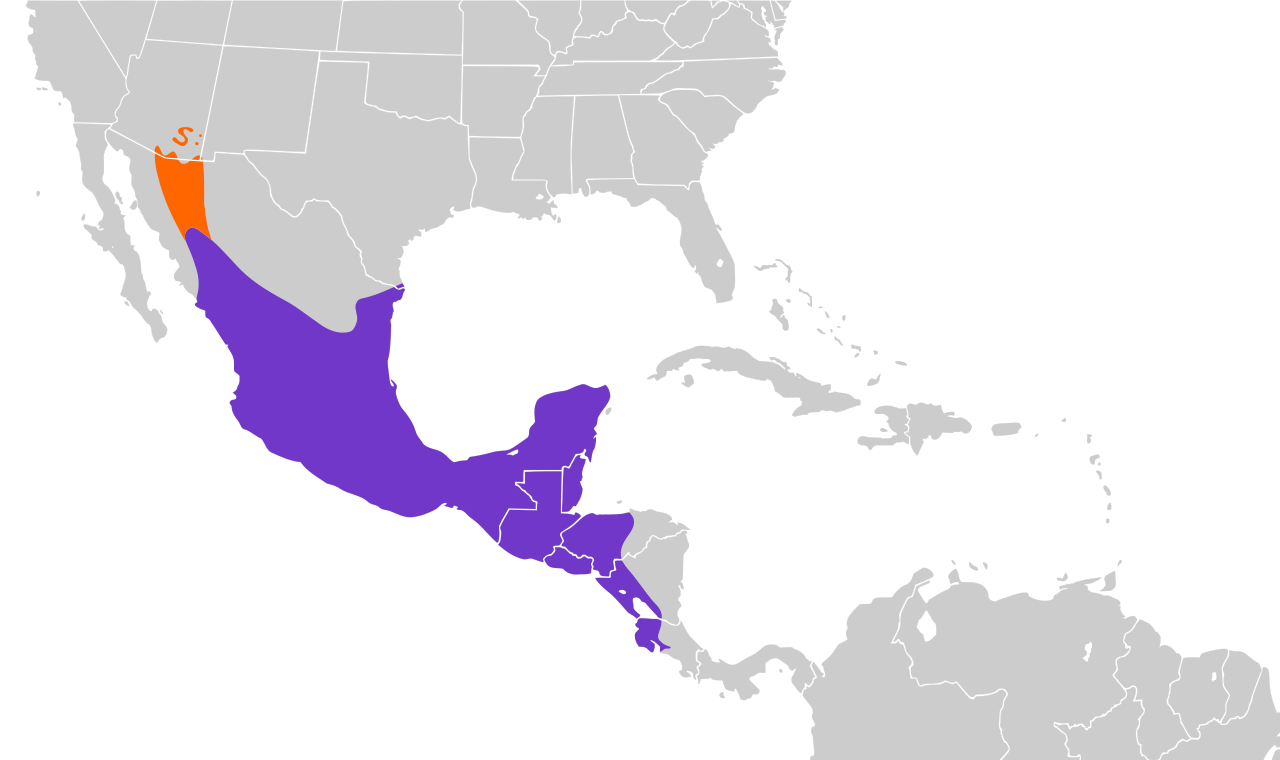
The northern beardless tyrannulet is a small passerine bird in the tyrant flycatcher family. It breeds from southeasternmost Arizona and Texas of the United States through Mexico and Central America to northwestern Costa Rica.
Region
Southwestern United States, Mexico, and Central America
Typical Environment
Occurs from southeastern Arizona and southern Texas through much of Mexico and Central America to northwestern Costa Rica. It favors arid to semi-arid scrub, thorn forest, open woodland, second growth, and edges of riparian corridors. Common in mesquite, acacia, and other thorny lowland habitats, as well as dry tropical forest margins. It adapts well to disturbed areas with scattered trees and dense shrub layers.
Altitude Range
Sea level to 2000 m
Climate Zone
Subtropical
Ease of Keeping
Beginner friendly: 1/5
Despite its name, the 'beardless' part refers to reduced rictal bristles around the bill compared with many flycatchers. It often flicks its tail and wings while foraging, a useful field clue. This tiny tyrant flycatcher glean‑feeds among leaves and makes short sallies to snatch small insects.


In Cano Negro, Costa Rica, on 12 March 2024.
Temperament
active and unobtrusive
Flight Pattern
short rapid wingbeats with brief sallies
Social Behavior
Usually seen singly or in pairs, sometimes joining mixed-species flocks in the non-breeding season. Pairs maintain small territories during breeding. The nest is a small, well-camouflaged cup of plant fibers placed low to mid-level in shrubs or small trees. Typical clutches are small and both adults attend the young.
Migratory Pattern
Resident
Song Description
Voice is a series of high, thin chips and short trills delivered in quick sequences. Calls are sharp, high-pitched tsip notes often repeated, giving a bright, tinkling quality.
Plumage
Plain olive-gray to grayish-olive upperparts with paler, grayish underparts and a whitish throat; two subtle pale wing bars and slightly darker wings.
Diet
Primarily small insects and other arthropods such as beetles, flies, caterpillars, and spiders. It glean-feeds from leaves and twigs, hover-gleans to pick prey from foliage, and occasionally makes short aerial sallies. Small amounts of soft fruit may be taken opportunistically.
Preferred Environment
Feeds in the mid to lower canopy of thorn scrub, mesquite, and open woodland edges. Often forages along riparian thickets, hedgerows, and second-growth patches with dense leaf cover.


