
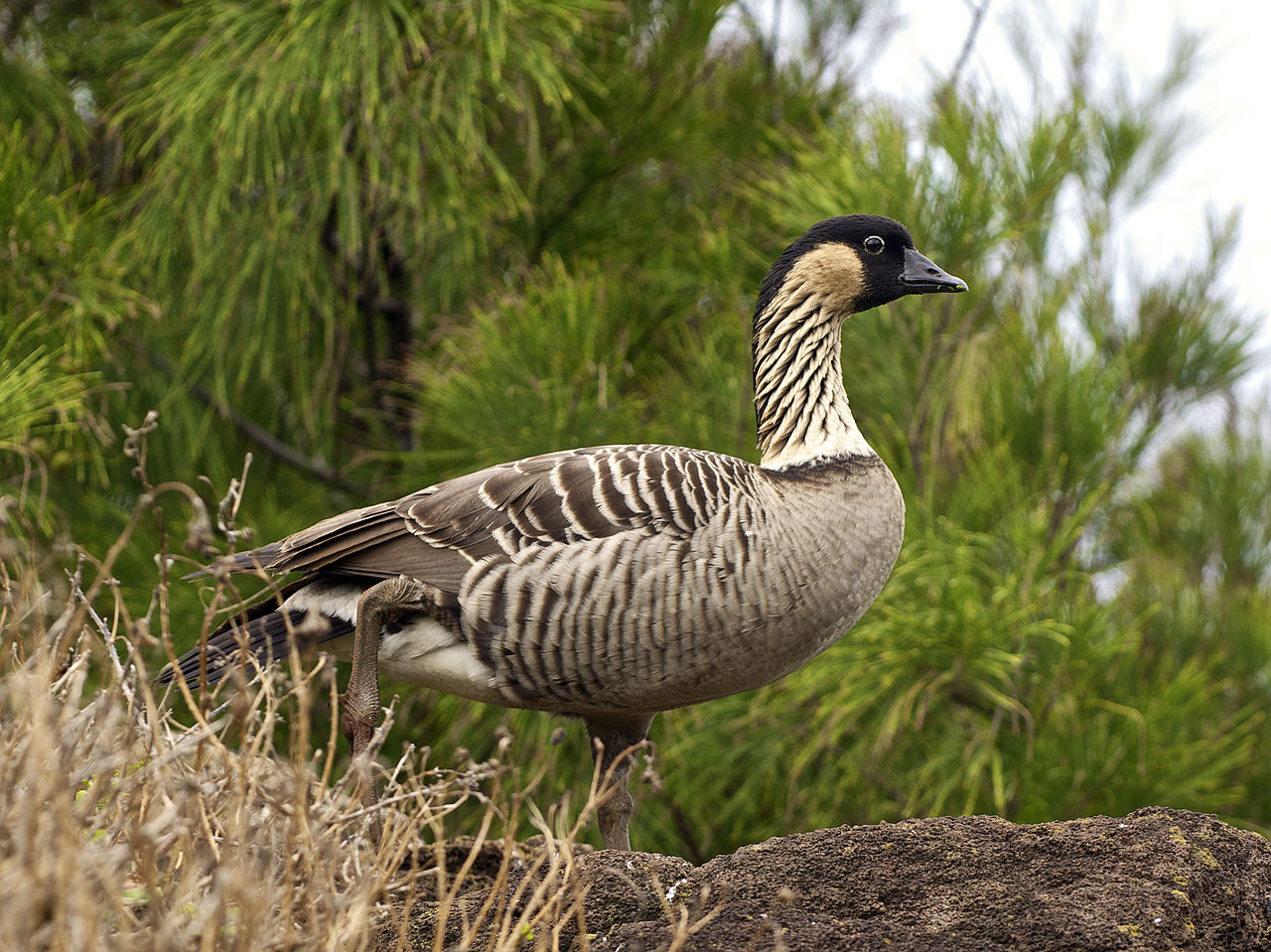
The Nene, also known as the nēnē or the Hawaiian goose, is a species of bird endemic to the Hawaiian Islands. The Nene is exclusively found in the wild on the islands of Maui, Kauaʻi, Molokai, and Hawaiʻi. In 1957, it was designated as the official state bird of the state of Hawaiʻi.
Region
Hawaiian Islands
Typical Environment
Occurs mainly on Hawaiʻi, Maui, Kauaʻi, and Molokaʻi, with populations concentrated in protected areas. Prefers open shrublands, native grasslands, pastures, and recent lava flows where low vegetation allows grazing. Often found in and around national parks such as Hawaiʻi Volcanoes and Haleakalā. Will use coastal dunes and agricultural lands when available, especially in non-breeding periods.
Altitude Range
Sea level to 2500 m
Climate Zone
Tropical
Ease of Keeping
Beginner friendly: 3/5
Also called the Hawaiian goose, the nēnē is Hawaii’s state bird and the world’s rarest goose. It nearly went extinct in the mid-20th century but rebounded through intensive captive breeding and reintroduction. Its partially reduced foot webbing helps it walk on rugged lava flows and grasslands. Nēnē are largely terrestrial and often seen grazing in family groups.


Nēnē egg specimens


Temperament
social and alert, territorial during breeding
Flight Pattern
strong flier but often travels on foot; powerful, direct wingbeats
Social Behavior
Typically forms long-term monogamous pairs and remains in family groups outside peak breeding. Nests on the ground in concealed vegetation or among lava rocks, with clutch care shared by both parents. Breeding generally occurs during late fall to spring, with goslings walking and feeding soon after hatching.
Migratory Pattern
Resident
Song Description
Vocalizations are a series of soft, nasal honks and calls, including the characteristic nay-nay that gives the species its name. Pairs and family groups call to maintain contact, especially when moving through vegetation.
Plumage
Buff to brown body with strong dark barring; creamy, deeply furrowed neck feathers; black head and hindneck with pale cheeks.
Diet
Primarily grazes on grasses, leaves, and sedges, supplemented by seeds, flowers, and berries such as ʻōhelo. Uses a grazing strategy similar to other geese, clipping low vegetation. Will forage in pastures and along roadside verges where short grasses are abundant.
Preferred Environment
Feeds in open habitats with low vegetation, including native shrublands, volcanic cinder flats, and managed grasslands. Also forages at the margins of lava flows and occasionally in agricultural fields.


