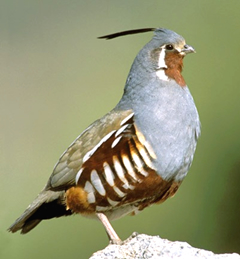
The mountain pygmy owl, or northern pygmy owl, is a small species of owl from the family Strigidae. They reside throughout southern Arizona, New Mexico and Mexico.
Region
Southwestern United States and Mexico
Typical Environment
Occurs in montane forests from southeastern Arizona and southern New Mexico south through the Sierra Madre ranges of Mexico to at least Oaxaca, with localized populations in highland pine-oak and mixed conifer zones. Prefers mature forests with a mosaic of openings, forest edges, and riparian corridors. Uses natural cavities and old woodpecker holes for nesting. Generally absent from lowland deserts and dense unbroken rainforest.
Altitude Range
1200–3200 m
Climate Zone
Highland
Ease of Keeping
Beginner friendly: 1/5
This tiny owl is active by day as well as at dusk, and is famously bold for its size. It has striking false eye spots on the back of the head that may confuse predators. Mountain Pygmy-Owls are often mobbed by small songbirds, which can help birders locate them. Despite their size, they can take prey nearly as large as themselves.


Temperament
bold yet secretive and territorial
Flight Pattern
short rapid wingbeats with swift, direct dashes between perches
Social Behavior
Largely solitary outside the breeding season and maintains small territories. Pairs form in late winter to spring, nesting in tree cavities, often those excavated by woodpeckers. Clutch sizes are typically small, and both adults provision the young. They may cache excess prey in concealed spots.
Migratory Pattern
Resident
Song Description
The song is a steady series of clear, hollow toots given at regular intervals, often carrying far in still mountain air. Calls include rapid chatter and high-pitched whistles, especially during territorial exchanges. Vocal activity peaks at dawn and dusk.
Plumage
Compact owl with fine white streaking and spotting on a warm brown mantle and head; underparts white with brown streaks. Tail is relatively long with distinct pale bars. Nape shows prominent dark patches bordered by pale that form 'false eyes.' Feathers are dense and soft, aiding silent flight.
Diet
Takes small birds, mice, voles, shrews, small lizards, and large insects. Hunts from low to mid-level perches, making swift sallies to seize prey. Frequently uses surprise to grab songbirds attracted by its presence and will cache surplus prey. Diet composition varies seasonally with availability.
Preferred Environment
Feeds along forest edges, clearings, and riparian thickets within pine-oak and mixed conifer habitats. Often hunts from exposed perches near openings that provide good sight lines.