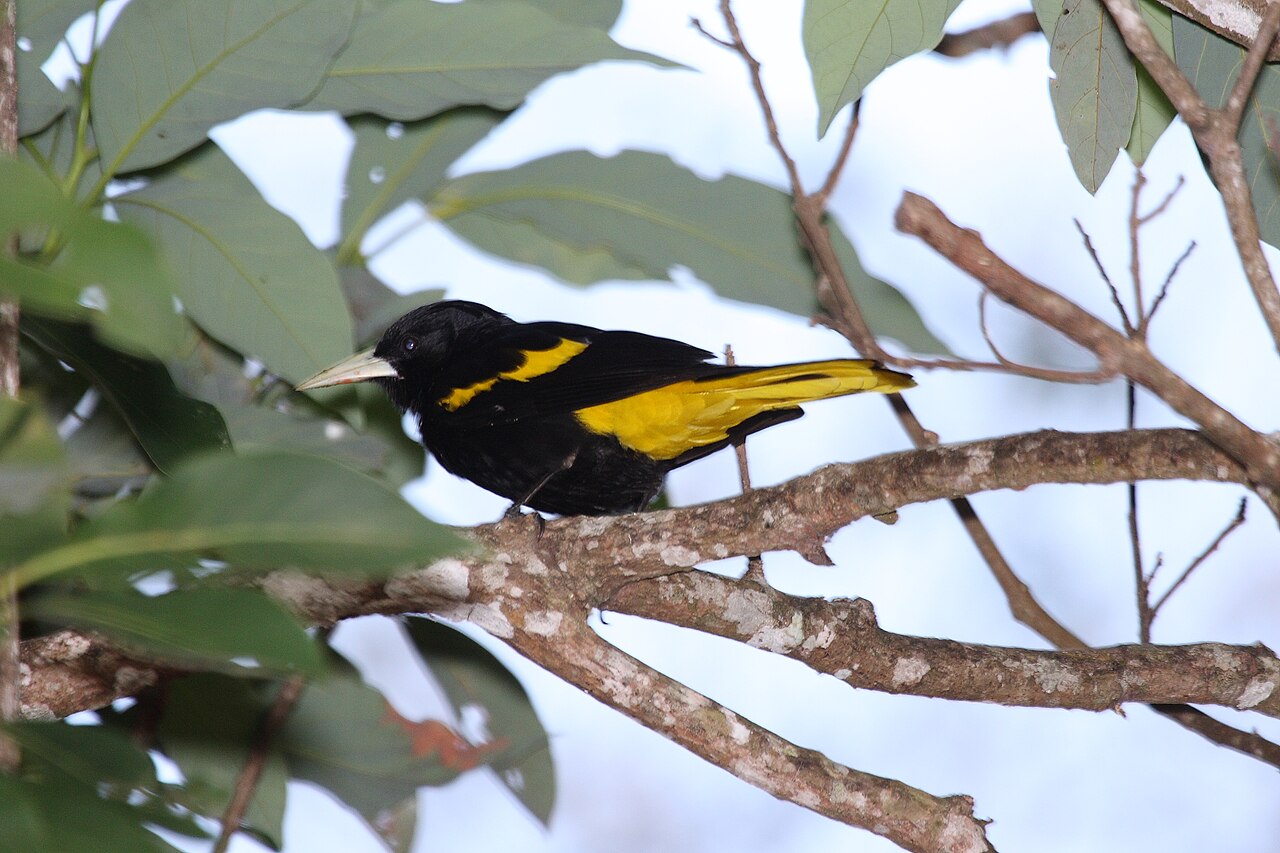
Meves's starling or Meves's glossy-starling, is a species of starling in the family Sturnidae. It is found in Angola, Botswana, Malawi, Mozambique, Namibia, South Africa, Zambia, and Zimbabwe.
Region
Southern Africa
Typical Environment
Occurs across Angola, Namibia, Botswana, Zambia, Zimbabwe, Malawi, Mozambique, and northeastern South Africa. It favors mopane and mixed acacia-commiphora woodland, riverine woodland, and dry savanna with scattered trees. The species is scarce in treeless grassland, dense rainforest, and true desert interiors. It adapts well to lightly settled areas, including parks and farmyards near suitable woodland. Seasonal movements are mostly local in response to food availability and rainfall.
Altitude Range
Sea level to 1600 m
Climate Zone
Subtropical
Ease of Keeping
Beginner friendly: 2/5
Named after the German ornithologist Gustav Meves, Meves's starling is a long-tailed glossy starling of southern Africa's mopane woodlands. It often forages near large mammals, seizing insects they flush from grass. The species is frequently confused with Burchell's starling, but has a distinctly longer, more graduated tail and a cooler blue-green sheen.


Temperament
social and active
Flight Pattern
direct flight with rapid wingbeats and brief glides
Social Behavior
Often seen in small flocks or family parties and joins larger mixed-species groups at abundant food sources. Nests in tree cavities, including natural holes and old barbet or woodpecker nests. Pairs defend the immediate nest area while foraging communally nearby, with both sexes sharing incubation and chick-rearing.
Migratory Pattern
Resident
Song Description
Vocal repertoire includes mellow whistles, chatters, and metallic notes. Calls carry well across open woodland and are often delivered from exposed perches. Song bouts are interactive, with pairs or flock mates exchanging phrases.
Plumage
Uniform glossy, metallic plumage with a blue-green to violet sheen; long, graduated tail; wings and back show subtle bronzy tones in good light.
Diet
Takes a wide range of arthropods, including beetles, termites, caterpillars, and grasshoppers. Also eats fruits and berries, such as figs, and occasionally flower nectar. Opportunistically gleans small vertebrates or snatches prey flushed by livestock and wild ungulates.
Preferred Environment
Forages on the ground beneath trees, in low foliage, and along edges of woodland and riparian corridors. Frequently visits mopane stands and open savanna with scattered shrubs and trees, as well as villages and farmyards where food is accessible.