
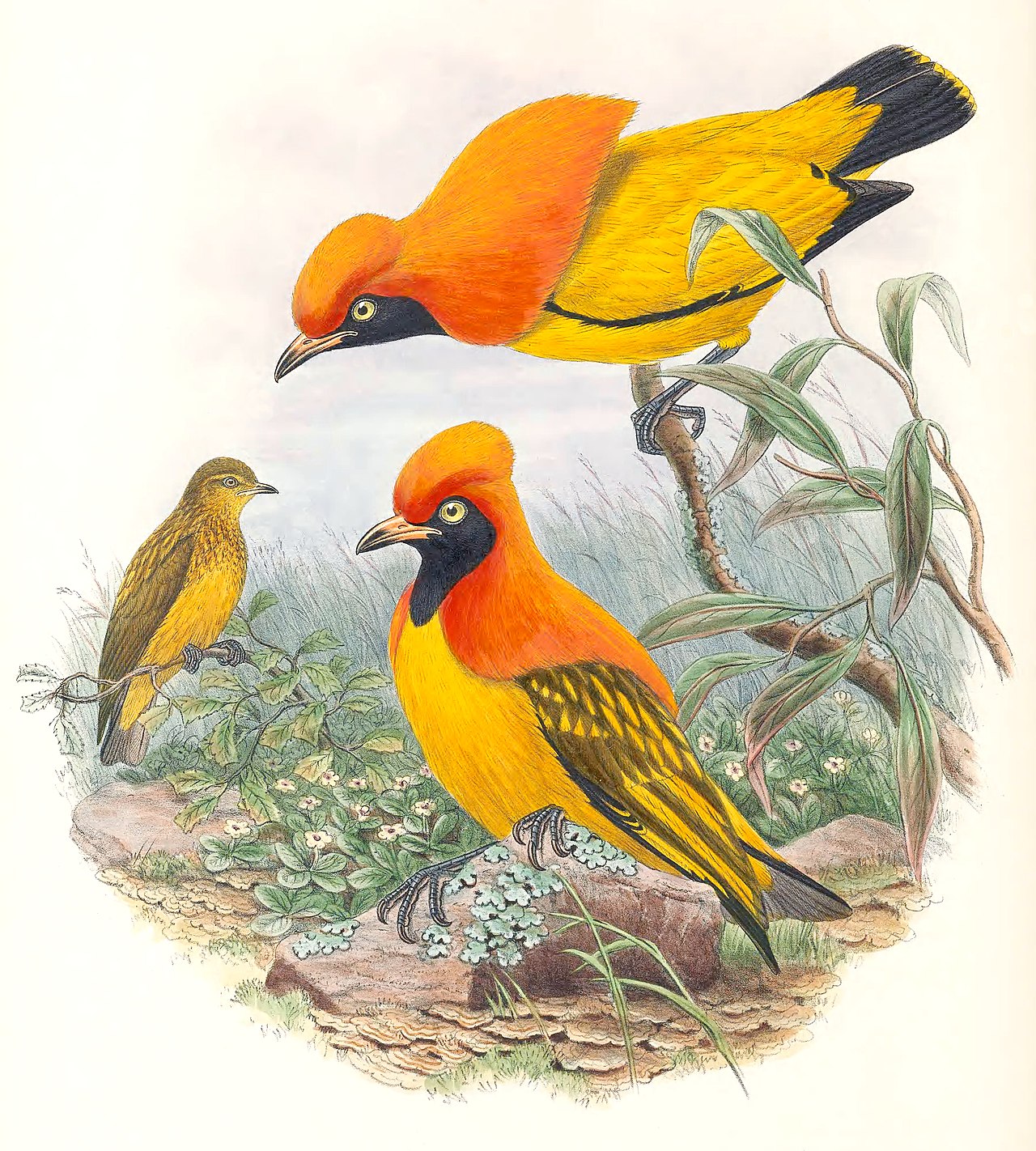
The masked bowerbird is endemic to rainforests of New Guinea. It is one of the most brilliantly coloured bowerbirds. The male is a medium-sized bird, up to 25cm long, with flame orange and golden yellow plumage, elongated neck plumes and yellow-tipped black tail. It builds an "avenue-type" bower with two side walls of sticks. The female is an olive brown bird with yellow or golden below.
Region
New Guinea
Typical Environment
Occurs in lowland and foothill rainforests, including primary forest, edges, and mature secondary growth. It frequents the mid-story to canopy where fruiting trees are abundant. Males build bowers on the shaded forest floor within territories that offer good visibility for displays. The species tolerates lightly disturbed forest but depends on intact tracts for breeding.
Altitude Range
0–1500 m
Climate Zone
Tropical
Ease of Keeping
Beginner friendly: 1/5
Masked bowerbirds are renowned for the male’s vivid flame-orange and golden plumage and an avenue-type bower used to court females. Males decorate their bowers with bright fruits, leaves, and other colorful items, carefully arranging them to enhance visual display. The species is restricted to New Guinea’s rainforests and is one of the most striking members of the bowerbird family. Females are more cryptic, aiding camouflage while nesting.

Temperament
solitary and territorial
Flight Pattern
short rapid wingbeats through dense forest
Social Behavior
Males are polygynous and maintain display territories centered on an avenue-style bower made of two parallel walls of sticks. They meticulously decorate bowers with vividly colored items and perform elaborate postures and calls to attract females. Females select mates based on the display and then nest and rear young alone.
Migratory Pattern
Resident
Song Description
Vocalizations include sharp whistles, chattering notes, and buzzy calls delivered during displays. Males may incorporate mimicry and a varied repertoire to enhance courtship. Calls carry well through the understory near the bower.
Plumage
Male with flame-orange to golden-yellow body, elongated neck plumes, and a contrasting dark facial mask; tail black with yellow tips. Female olive-brown above with yellowish to golden tones below and fine streaking, providing excellent camouflage.
Diet
Primarily consumes fruits and berries, especially figs and other canopy fruit. Supplements diet with insects and other small invertebrates, particularly during breeding when protein needs are higher. Forages methodically among fruiting trees and occasionally on the ground near bowers.
Preferred Environment
Feeds in the mid-story and canopy of rainforest, visiting fruiting trees along forest edges and clearings. Will also utilize secondary growth with adequate fruit resources.


